
Latimer Tuition

Find an A-Level Biomedical Science tutor

Compare online tutors for Biomedical Science, Medical Science and related Level 3 courses. Start with the exact qualification, awarding body and current unit.

  • One-to-one tuition
  • Pay as you go
  • Direct tutor contact
A-Level Biomedical Science is used as a broad label, but it is not one universal UK qualification. Compare tutors against the learner’s exact Medical Science, Biomedical Science or related Level 3 course, awarding body, unit and assessment type. Use current profile rates and availability, or ask Latimer for a course-fit shortlist. Latimer currently offers pay-as-you-go tutoring, direct tutor contact and a free introductory meeting before paid lessons.

The send button becomes available when the enquiry form has loaded.

A-Level Biomedical Science tuition enquiry

Tell us the subject, level and priorities to submit a free matching request.

Your contact details

We will use these details to reply to this enquiry.

Tutoring details

Choose a subject and level to describe the tutoring request.

I'm looking for

  • Biomedical Sciences
  • A Level
Change subject or level
Subject

Choose at least one subject.

Required. Choose at least one option.
Level

Choose at least one level.

Required. Choose at least one option.

Free matching request choose a subject and level pay as you go when lessons begin.

We use your contact details to reply to this enquiry. See our Privacy Policy for other uses.

How one-to-one tuition can help

  • Subject expertise matched to the learner’s course and level
  • Clear explanations, worked examples and targeted practice
  • Lessons focused on the named topics, question types and assessed skills

Available tutors

Compare Biomedical Science tutors

Review each tutor’s current rate, availability, subject background and stated level experience. Before enquiring, confirm that the profile fits the learner’s exact qualification, awarding body, unit and assessment type. A Biomedical Science degree alone does not prove experience with every Level 3 course or professional registration as a biomedical scientist.

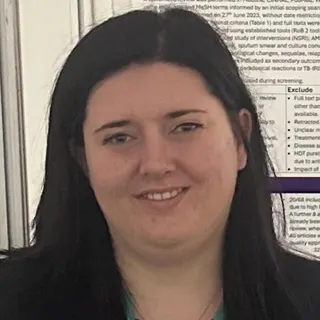
Portrait of Gemma Skellern

Gemma Skellern

Mathematics and Science Specialist

Liverpool, United Kingdom

£40.00 per hourDBS checkediAccepting enquiries
BiologyBiomedical SciencesChemistryHuman Biology+5 more
  • Over 3 years' of online tutoring experience in Mathematics and Science.
  • Gemma holds a first class degree for her Bachelors of Science in Microbiology from the University of Chester.
  • Gemma also holds a distinction grade for her Masters of Science in Global Health from Liverpool School of Tropical Medicine.
  • Gemma is a full-time dedicated tutor.
  • Received the highest overall mark achieved by a student on the part time MSc Global Health programme in 2023.
  • Holds A-Levels in Chemistry, Biology, and Mathematics.
  • Holds A*, A*, A, A for Mathematics, Chemistry, Biology, and Physics at GCSE level.
  • Volunteers as a brownie and guide leader in her free time.

Gemma is a maths and science tutor with 3+ years’ online tutoring experience in GCSE/iGCSE Maths and KS3–A Level Biology and Chemistry. First-class Microbiology BSc and MSc Global Health (distinction), exam-focused and supportive.

Send a quick enquiry from here and the Latimer Tuition team will pass it on to Gemma.

Start with the exact course, not a generic label

The phrase A-Level Biomedical Science is used broadly, but it does not point to one standard UK-wide syllabus. In England’s GCE framework, Biomedical Science is not listed as a standalone A level. Closely related current qualifications include Level 3 Medical Science qualifications from Pearson and WJEC/Eduqas, while A-level Biology is a separate qualification.

The exact course is therefore the starting point for tutor choice. Provide the qualification title, awarding body, current unit and whether the next task is an external exam, an internally assessed assignment, practical-method work or general concept learning. That information is more useful than the broad subject label alone.

Use the live tutor cards to compare rate, availability, subject background and stated level experience. When the course title or shortlist is unclear, Latimer’s matching service can use the subject, level, goals, timing, schedule and budget to recommend up to three tutors, with no obligation to book. Tuition is currently pay-as-you-go, with no starting package or long-term tie-in.

  • Exact qualification title and awarding body
  • Current unit and whether the work is externally or internally assessed
  • Upcoming assessment, recent feedback and priority topics
  • Schedule, budget and preferred teaching approach

How to compare tutors and get started

There are two practical ways to begin. You can browse current profiles and message a tutor directly, or submit a matching request when the course is niche, the qualification name is unclear or several credentials appear relevant. Include the exact qualification, awarding body, unit, assessment type, goal, timing and budget so that the conversation starts with course fit.

Latimer currently allows families to communicate with tutors before deciding whether to proceed and offers a free introductory meeting before paid lessons. Use that conversation to discuss availability, teaching approach, current rate and how the tutor would diagnose the learner’s needs. A useful plan is then agreed from the learner’s actual work rather than from a fixed package or promised outcome.

  • 1. Check current profiles, rates and stated course experience.
  • 2. Send an enquiry or matching brief with exact course details.
  • 3. Discuss fit, availability and lesson approach before committing.
  • 4. Use the first lesson to diagnose subject and assessment needs.
  • 5. Agree practice, feedback and communication expectations.
  • 6. Review progress and adjust the plan.

Rates, tutor backgrounds and what you are paying for

Tutors set their own hourly rates, so the price shown on the current profile is the relevant figure for comparison. At this page’s 12 August 2026 review, Latimer’s general guidance placed many student, graduate, teaching-assistant and full-time tutor categories at about £20–£30 per hour, and current or retired teachers, examiners and lecturers at about £25–£50 per hour. Those are platform-wide guide bands, not a Biomedical Science average, quotation or guarantee.

Latimer currently describes tuition as pay-as-you-go, with no starting package or long-term tie-in. Its current FAQs say tutors generally use a 24-hour cancellation policy; lesson changes are arranged directly with the tutor, and short-notice refunds or rescheduling remain at the tutor’s discretion. Confirm those expectations before the first paid booking. Price should still be weighed alongside the learner’s exact course and assessment need. The most expensive credential is not automatically the best fit: a subject graduate, teacher, examiner or laboratory specialist may each be useful for different tasks.

  • Compare the live hourly rate and availability shown on each profile.
  • Check whether the tutor knows the exact qualification or unit.
  • Ask whether the need is an external exam, internal assignment, practical-method evaluation or concept learning.
  • Verify professional titles and examiner or teacher claims from the current profile.
  • Confirm billing, cancellation and rescheduling expectations before the first paid booking.
Subject graduate or university tutor
Best for concept explanation, data skills and subject depth where the profile shows Level 3 teaching ability. Check exact course experience and the ability to teach below undergraduate level.
Qualified teacher or examiner
Can suit structured teaching, assessment language and exam preparation where the relevant course is verified. Check whether the experience matches Medical Science, A-level Biology or the learner’s actual course.
Laboratory or clinical specialist
Can add applied context, practical-method reasoning and diagnostic-science examples. Check teaching experience, assessment awareness and any claimed current professional status.
SEND-experienced tutor
May offer adapted pacing, organisation and communication where the profile supports it. Agree the specific adaptations; formal access arrangements remain centre-managed.

Online tutoring, practical science and local options

Online one-to-one tutoring can support concept explanation, scientific writing, data interpretation, research skills, exam questions and the evaluation of practical methods. A tutor can share diagrams, work through unfamiliar data, model scientific reasoning and review non-live practice in real time.

Online tuition cannot replace laboratory activities, centre-based assessment or direct observation required by a qualification. For example, practical microbiology may require microscopy, staining, aseptic culture and antimicrobial investigations at the learner’s centre. A-level Biology practical endorsement also remains the responsibility of the educational setting.

Many families search for a Biomedical Science tutor near them. Latimer is online-first, so the honest advantage is the ability to compare suitable tutors nationally rather than to assume that an in-person specialist is available in every town.

Online one-to-one tutor
Works well for course-specific explanation, live questioning, data and writing feedback, revision planning and accountability. It cannot provide centre registration, formal assessment administration or required laboratory participation.
School or college provision
Provides required practical work, internal-assessment administration, formal feedback and access-arrangement processes. One-to-one diagnostic time may be limited.
Local in-person tutor
May suit a face-to-face preference where a genuinely suitable specialist is available. Exact course fit and local availability can be narrower and are not guaranteed.
Group course or school intervention
Can provide structured coverage and peer pace where the programme matches the qualification. It is usually less personalised in diagnosis and scheduling.
Independent study
Can suit learners who identify gaps, choose current resources and self-correct accurately. It does not provide live diagnosis, personalised feedback or accountability.

What credentials and safeguards actually tell you

A degree subject, qualified-teacher status, examiner experience, laboratory background, SEND experience and exact course experience answer different questions. Check each current profile rather than treating one label as proof of complete fit. In particular, biomedical scientist is an HCPC-regulated protected title; a Biomedical Science degree alone does not establish professional registration.

Latimer’s safeguarding policy describes an online-first agency, safer-recruitment processes and looks for an Enhanced DBS check with Children’s Barred List information where the role is legally eligible. A DBS check is one part of wider safeguarding, not a standalone guarantee. Latimer’s FAQs also say tutors are asked to submit lesson reports and that SEND experience varies, so agree communication and adaptation expectations with the individual tutor.

A tutor can support understanding, confidence, scientific reasoning, revision habits and assessment technique, but cannot guarantee a grade, university place, professional registration or a fixed number of lessons.

  • Verify credentials on the current profile rather than assuming them from a degree title.
  • Treat DBS information as one part of wider safeguarding, not a guarantee.
  • Agree parent communication and lesson-report expectations with the tutor.
  • Prefer realistic sample goals over promised outcomes.
Relevant degree
Can show subject depth in a scientific area. It does not prove experience with the exact Level 3 qualification, assessment format or protected professional registration.
Qualified teacher or examiner
Can show teaching or assessment experience where current and relevant. It does not prove automatic fit for every Medical or Biomedical Science course.
Laboratory or clinical experience
Can show applied context and practical-method understanding. It does not permit a tutor to replace centre practicals or solve assessed work.
SEND experience
Can indicate familiarity with adapted teaching. It does not give the tutor authority to grant formal access arrangements.

Which qualification or course are you studying?

There is no single course structure behind every search for A-Level Biomedical Science. In England’s current GCE subject-content framework, Biomedical Science is not a standalone A level. Current Level 3 Medical Science qualifications and A-level Biology have different units, practical expectations and assessment models, so tutor matching should begin with the exact course.

The examples below are the principal current qualifications established for this page. Learners elsewhere in the UK, or on another international or vocational course, should provide the country, qualification title, awarding body, current unit and assessment details before course coverage is claimed.

Pearson Level 3 AAQ BTEC National Medical Science (Extended Certificate)
Qualification 610/3958/5; 360 guided learning hours and 500 total qualification hours; first teaching September 2025. It has three mandatory units plus one optional unit, with both external and internal assessment. Mandatory content is 83% and externally assessed content is 58%. Match by the current unit and task type.
WJEC/Eduqas Level 3 Medical Science (Extended Certificate)
Qualification 610/3048/X; 360 guided learning hours and equivalent in size to one A level. Advertised areas include health, physiology and disease, pharmacology, physiological measurement, clinical testing and medical research. Confirm the current specification and availability for the learner’s nation.
Legacy Eduqas Level 3 Medical Science
The withdrawn Applied Certificate/Diploma had its final award in Summer 2026. Do not assume the legacy and reformed specifications have the same units or assessment.
AQA A-level Biology 7402
A separate linear GCE A level assessed through written examinations, with a separately reported practical endorsement. Choose a tutor with Biology specification and exam-practice fit; do not describe it as a Biomedical Science syllabus.
Another UK or international course
The structure is not established here. Give Latimer the exact course documents and use course-led matching before support is described.

Biomedical and Medical Science topics tutors may support

Topic coverage must follow the learner’s actual specification. Current Pearson and WJEC/Eduqas Medical Science materials provide useful examples, but they do not create one universal syllabus and not every tutor will cover every optional unit.

The difficulty is often not simple recall. Learners may know individual facts but struggle to connect normal physiology to pathology, interpret diagnostic or biological data, evaluate whether a method supports a conclusion, distinguish command words or turn research into a clear scientific report. These are practical inferences from current assessment demands, not claims about every learner.

  • Human anatomy, physiology and pathology
  • Health issues, scientific reporting and source use
  • Microbiology, infection, aseptic technique and antimicrobial investigations
  • Haematology, screening, histology, cytology and urinalysis where the unit applies
  • Clinical testing, physiological measurement, pharmacology and medical research where the qualification applies
  • Biological or medical data interpretation and method evaluation
  • Knowing facts but not linking physiology to pathology

    Model causal explanations and build accurate connections between normal function and disease.

  • Restating a graph or table without making an inference

    Use data to justify a biological conclusion and explain the limits of that conclusion.

  • Describing a practical method without evaluating it

    Identify variables, limitations, reliability and whether the evidence supports the conclusion.

  • Confusing describe, explain, analyse and evaluate

    Practise what each command word requires using separate, non-live examples.

  • Weak scientific reporting or source use

    Build independent research, structure, referencing and evidence-selection habits.

Exam, report and assignment support—within the rules

External exams and internally assessed assignments require different support. For written assessments, a tutor can teach command words, data interpretation, scientific structure, method evaluation and timed practice. For internally assessed units, the tutor can teach the underlying science, explain general criteria, demonstrate research and referencing methods, use analogous tasks and help the learner understand feedback from the centre.

The assessed work must remain the learner’s own. Pearson’s rules do not permit task-specific solutions that complete the work for the student, and JCQ requires candidate authorship for vocational and technical non-examination assessment. The applicable annual guidance should always be used; the linked 2025/26 JCQ document applies through 31 August 2026.

  • Permitted: teach concepts and methods, explain general criteria, practise analogous tasks, discuss centre feedback and build research skills.
  • Not permitted: write assessed sections, supply answers to a live task, rewrite final work to meet a criterion or provide prohibited task-specific solutions.

From mock review to a focused revision plan

A useful revision plan begins with the real assessment: its qualification, unit, date, format and current feedback. A tutor can separate concept gaps from data errors, command-word errors, weak method evaluation, timing problems and scientific-writing issues, then plan practice around the learner’s official calendar.

Past papers or sample tasks are most useful when each lost mark is diagnosed and the next practice is chosen deliberately. Where a course uses internal assessment, practice should use analogous or non-live material. For the current Pearson Medical Science qualification only, an externally assessed unit may be resat twice—three attempts in total—with the best grade counting, subject to Pearson’s rules.

  • 1. Confirm the assessment and current specification.
  • 2. Analyse marked work or a diagnostic task.
  • 3. Build a topic-and-skill priority list.
  • 4. Practise under appropriate conditions.
  • 5. Review errors and update the plan.
  1. Rebuild prerequisite knowledge

    Strengthen core physiology, biology or chemistry before applied medical-science tasks.

  2. Prepare for an external unit

    Work on unseen questions, timing, data interpretation and command-word precision.

  3. Improve scientific reporting

    Develop evidence selection, structure, source use and independent evaluation.

  4. Pearson resit support

    Use a fresh diagnostic, error analysis and the current course-specific resit rules; do not generalise them to another qualification.

  5. Higher-level extension

    Use unfamiliar data, synoptic connections, method critique and precise scientific reasoning.

What a strong first lesson and first month can look like

There is no mandatory first-lesson format, but a course-specific diagnostic makes the time useful. A strong first session can confirm the qualification, awarding body, unit and assessment type, then review recent marked work or a suitable non-live task. The tutor can test one content area and one assessment skill before agreeing priorities.

A realistic lesson may include retrieval, targeted explanation, guided practice, an independent attempt and precise feedback. Over the first month, the focus can move from diagnosis to a priority gap, then to assessment practice and a review. Any independent work should be agreed with the tutor and should never involve completing or rewriting a live assessed task.

  • Course and confidence audit
  • Short diagnostic using suitable non-live material
  • One precise content goal and one assessment-skill goal
  • Agreed independent practice or reading
  • Review point with the learner and, where appropriate, the parent
  1. First lesson

    Confirm the course, test one concept and one skill, and agree immediate priorities.

  2. Early lessons

    Rebuild a core gap and model the required reasoning or method.

  3. Assessment practice

    Use analogous questions, data or report tasks with feedback.

  4. Review

    Re-test the target, inspect independent work and adjust the frequency or focus.

Support for different learners and goals

Different learners need different emphasis, but the exact course and assessment should remain central. A learner rebuilding foundations may need prerequisite Biology or Chemistry; a higher-attaining learner may need unfamiliar data, synoptic reasoning and method critique. An anxious learner may benefit from predictable routines, smaller goals and lower-stakes practice, without turning tutoring into a therapeutic claim.

Teaching can be adapted through clearer visual organisation, chunked instructions, questioning, recap and additional processing time. Experience with SEND, adult learners, home education or international courses varies by tutor, so check the current profile or ask for matching. Agree the level of parent communication and review that supports the learner without reducing independence.

  • Struggling with foundations

    Rebuild prerequisite Biology or Chemistry before applied physiology, pathology or diagnostic work.

  • Average learner aiming higher

    Improve data inference, command-word precision, evaluation and scientific communication.

  • High-achieving learner

    Use unfamiliar data, synoptic connections and deeper method critique.

  • Anxious or low-confidence learner

    Use predictable structure, smaller goals and lower-stakes practice; tutoring is not therapy.

  • Resitter or adult learner

    Confirm the exact award, current rules, centre arrangements and diagnostic priority.

  • Home-educated or external learner

    Keep tutoring separate from centre registration, practical provision and internal-assessment administration.

  • International learner

    Confirm the country, awarding body, qualification and time zone before course coverage is claimed.

  • Transition towards university

    Build independent scientific reasoning and check current admissions and accreditation for the exact degree separately.

How often to meet, what to practise and when self-study may be enough

There is no universally correct lesson frequency or number of sessions. The useful pattern depends on the qualification, assessment date, starting point, independent practice and goal. Options can include a regular weekly lesson, a focused block before an assessment or occasional diagnostic and review sessions. Agree a review point instead of assuming indefinite tuition.

Useful resources may include current specifications, non-live questions, data sets, method diagrams, shared documents, textbooks and referencing exercises. A well-organised learner may progress through official materials and independent practice alone. A tutor adds the most value when diagnosis, live explanation, personalised feedback or accountability is missing. Homework and parent updates should be agreed individually rather than assumed for every tutor.

Regular weekly session
May suit ongoing concept rebuilding, steady external-unit preparation or accountability. Reassess after a defined block.
Focused short block
May suit an upcoming assessment, mock review or a specific reporting or data-analysis weakness. Tie it to the actual awarding-body calendar.
Occasional diagnostic or review
May suit an independent learner who needs expert feedback at key points. Use marked work or a non-live diagnostic to decide the next step.
Self-study first
May suit a learner who identifies gaps, uses current official materials and self-corrects reliably. Consider tutoring if errors repeat, progress stalls or feedback is unavailable.

Where Medical and Biomedical Science study can lead

Level 3 Medical or Biomedical Science study can build data interpretation, evidence evaluation, scientific communication, method critique, research habits and precision. It can also motivate further study in laboratory and health-science fields, but it does not itself qualify someone as a biomedical scientist.

Biomedical scientist is an HCPC-regulated protected title. The Institute of Biomedical Science describes a direct professional-registration pathway that combines an IBMS-accredited Biomedical Science degree with its registration training portfolio or certificate in an approved laboratory before HCPC registration. University entry requirements and accreditation vary, so check the exact degree rather than assuming that any course with Biomedical Science in its title follows the same professional-registration pathway.

  • Medical microbiology and virology
  • Clinical biochemistry
  • Haematology and transfusion science
  • Immunology
  • Cellular pathology and histopathology
  • Clinical genetics
Level 3 study
Build scientific knowledge, data skills, practical reasoning and communication; it does not grant professional registration.
Accredited higher education
Check that the exact Biomedical Science degree and pathway meet current accreditation and admissions requirements.
Registration training
Complete the relevant IBMS portfolio or certificate in an approved training laboratory before HCPC registration through that pathway.

Support that builds independence and respects formal arrangements

Adaptable one-to-one teaching and formal access arrangements are different. A tutor can use chunked instructions, visual organisation, slower pacing, recap and extra processing time during ordinary teaching. Formal arrangements such as extra time, a reader or a scribe are agreed and administered by the school, college or exam centre from the required evidence and the learner’s normal way of working.

Good tutoring should build self-checking, research, method evaluation and revision planning rather than dependence on answers. Parents can help by agreeing achievable goals, sensible review points and communication expectations without promising grades or increasing pressure. Assessed work must remain the learner’s own, and annual JCQ guidance should be checked for the relevant academic year.

  • Tutor adaptation: teaching pace, explanation, organisation and practice format.
  • Centre responsibility: formal access arrangements, candidate entry, practical endorsement and assessment administration.
  • Learner responsibility: original assessed work, source acknowledgement and independent decision-making.

A course-fit checklist before you enquire

The strongest choice is the tutor who fits the learner’s actual course, current task and preferred way of working—not simply the profile with the most prestigious label. A good tutor diagnoses the problem, models clear reasoning, guides practice, gives usable feedback and gradually builds independence.

Tutoring can be especially useful when the learner cannot identify the real gap, receives too little individual feedback or needs accountability. School support or well-directed self-study may be enough when the learner already understands the course, can correct errors and has access to the required practical and assessment provision.

Course fit
Have you taught, studied or supported this exact qualification, awarding body or unit?
Assessment fit
Is the need an external exam, internal assignment, practical report, data task or general concept learning?
Subject fit
Does the expertise cover the relevant physiology, pathology, microbiology, diagnostic science or Biology content?
Teaching fit
Can the tutor explain this at Level 3 and adapt the approach to the learner?
Practical fit
Can the tutor teach method understanding and evaluation while respecting centre and laboratory requirements?
Personal fit
Do the lesson style, availability, current rate, communication and independent-practice expectations suit the family?

Browse profiles or ask Latimer to shortlist a strong fit

Compare live profiles when course fit, rate and availability are clear. If the qualification name, unit or shortlist is uncertain, send Latimer the exact course details and ask for matching. Availability varies, so use the current profiles or matching response rather than relying on a fixed tutor count, response time or guaranteed fit.

Check current course details, tutor rates and availability

This page was last reviewed on 12 August 2026. Qualification specifications, legacy-course status, annual assessment guidance, tutor credentials, rates and availability can change. Use the current profile cards for tutor information and the current awarding-body documents for the learner’s course.

The JCQ access-arrangement and vocational non-examination-assessment documents linked here are the 2025/26 editions and apply through 31 August 2026. For teaching or assessment from 1 September 2026, use the applicable 2026/27 guidance. Tutor availability and profile details can change, so use the live cards or matching service rather than relying on a fixed tutor count.

  • Check the current profile rate, availability and credentials before enquiring.
  • Confirm the current awarding-body specification and unit.
  • Use the annual JCQ guidance for the learner’s assessment year.
  • Ask for matching when the filtered shortlist or course fit is unclear.

Support and clarity

Frequently asked questions

Straight answers to the questions people ask most often.

Is Biomedical Science a standard A level in the UK?

Not as one standard UK-wide GCE A level. In England’s current GCE subject-content framework, Biomedical Science is not listed as a standalone A level. Pearson and WJEC/Eduqas offer current Level 3 Medical Science qualifications described as equivalent in size to one A level, but they are not GCE A levels titled Biomedical Science. Qualification systems and terminology differ across the UK, so provide the exact qualification title, awarding body and unit before syllabus or assessment support is described.

Is A-Level Biomedical Science the same as A-level Biology?

No. A-level Biology has its own awarding-body specifications and assessment structure. AQA Biology 7402, for example, is a linear GCE A level assessed through written examinations and includes a separately reported practical endorsement. Current Medical Science qualifications can include more explicitly applied clinical, diagnostic, microbiological and scientific-reporting content. A tutor with biomedical expertise may support an A-level Biology learner, but the two qualifications should not be treated as interchangeable.

Can a tutor support Pearson or WJEC/Eduqas Medical Science, including a resit?

Potentially, provided the tutor’s current experience matches the exact qualification, unit and assessment type. Pearson’s current Extended Certificate combines external and internal assessment, while WJEC/Eduqas has a reformed qualification and a withdrawn legacy predecessor. For the current Pearson Medical Science qualification only, an externally assessed unit may be resat twice—three attempts in total—with the best grade counting, subject to Pearson’s rules. That resit rule and unit structure must not be generalised to another course.

What course details should we provide before matching or the first lesson?

Provide the exact qualification title, awarding body, qualification number where known, current unit and whether the immediate work is externally or internally assessed. Add the upcoming deadline or exam, recent teacher feedback, marked work, priority topics, learner goal, schedule, budget and any teaching or communication preferences. These details help distinguish an external paper, an internal assignment, a practical-method issue and a general concept gap.

Can online tutoring help with laboratory and practical work?

Yes, within clear limits. Online lessons can support method understanding, calculations, data interpretation, evaluation, scientific writing and preparation for practical questions. They cannot replace laboratory activities that the qualification requires the learner to complete at a centre. For A-level Biology practical endorsement, formal direct observation of practical competencies also remains with the educational setting. Choose a tutor who distinguishes practical preparation from practical provision.

Can a tutor help with coursework or an internally assessed assignment?

A tutor can teach the science, research methods, source use, command words and data-analysis skills through separate practice. They can explain general assessment criteria and help the learner understand feedback from the centre. They must not write assessed sections, give answers to the live task, rewrite final work so that it meets a criterion or provide prohibited candidate-specific solutions. The work submitted for assessment must remain the learner’s own, under the current awarding-body and JCQ rules.

How much does A-Level Biomedical Science tutoring cost?

Tutors set individual hourly rates, so compare the current price displayed on each live profile. At this page’s 12 August 2026 review, Latimer’s general guidance placed many student, graduate, teaching-assistant and full-time tutor categories at about £20–£30 per hour, and current or retired teachers, examiners and lecturers at about £25–£50 per hour. These are platform-wide guide bands, not a Biomedical Science average or fixed quote. Latimer currently describes tuition as pay-as-you-go, with no starting package or long-term tie-in.

How often should lessons take place, and how many might be needed?

There is no universal frequency or lesson count. A learner might use regular weekly support, a focused block before an assessment or occasional diagnostic and review sessions. Agree a review point based on the exact course, deadline, starting point, independent practice and goal. A fixed package or grade-improvement formula would not reflect the different assessment structures and learner needs on this page.

When are free resources enough, and when might a tutor help?

Current specifications, official practice materials, textbooks and independent revision may be enough for a learner who can identify gaps and correct errors accurately. A tutor can add diagnosis, live explanation, personalised feedback, accountability and help applying knowledge to unfamiliar data or assessment language. The decision should depend on the learner’s actual bottleneck rather than on a claim that paid tutoring is always necessary.

Should we choose a graduate, qualified teacher, examiner or laboratory specialist?

Choose for the actual course and task rather than prestige alone. A subject graduate may offer deep content knowledge; a qualified teacher or examiner may bring relevant teaching or assessment insight; a laboratory specialist may add applied context. None should be assumed to fit every Medical Science, Biomedical Science or A-level Biology course. Check exact course experience, teaching level, assessment familiarity, current credentials, lesson style, availability and rate.

Can Latimer shortlist tutors, and can we speak before booking?

Yes. Families can browse and message tutors directly or submit a matching request. Latimer’s current matching service says it can recommend up to three tutors using information such as subject, level, schedule and budget, with no obligation to book. Latimer also currently offers a free introductory meeting before paid lessons. For this subject, include the exact qualification, awarding body, unit and assessment type. For billing, cancellation, rescheduling and changing tutors, use Latimer’s current FAQs and agree the practical details before booking.

Can tutoring support SEND or formal access arrangements?

A tutor can adapt ordinary teaching through chunked instructions, clearer visual organisation, slower pacing, recap and additional processing time. The school, college or exam centre—not the private tutor—decides and administers formal arrangements such as extra time, a reader or a scribe. SEND experience varies by tutor, so check the current profile or ask Latimer for matching. Use the applicable annual JCQ guidance for the learner’s assessment year.

Can Latimer help with online, adult, home-educated or international learners?

Latimer is online-first, so this page supports national online comparison rather than guaranteed local in-person coverage. Adult, home-educated and international learners need the same qualification-first matching process. Tutoring does not itself provide centre entry, required practical provision, internal-assessment administration or formal access arrangements. For an international course, provide the country, awarding body, exact qualification and time zone; support for a particular curriculum should be confirmed from the tutor profile or through matching.

Does Level 3 Biomedical or Medical Science make someone a biomedical scientist?

No. Biomedical scientist is an HCPC-regulated protected professional title. The Institute of Biomedical Science describes a professional-registration pathway involving an IBMS-accredited Biomedical Science degree plus its registration training portfolio or certificate in an approved laboratory before HCPC registration. A degree title alone does not prove registration, and Level 3 study does not confer the title. Check the exact university course’s current accreditation and entry requirements.

Related tutor pages

Compare other tutor searches selected from the page's subject, subject family and level context.