Latimer Tuition

Bass Guitar Tutors

Compare current profiles, check for explicit bass guitar experience, and use Latimer’s matching support when the broader Guitar filter cannot show the full fit.

  • One-to-one tuition
  • Pay as you go
  • Direct tutor contact
Start with Latimer profiles listed under the broader Guitar subject, then confirm explicit bass teaching, learner-goal fit, lesson format, current price and availability before choosing. Use Latimer matching whenever a profile does not make bass-specific suitability clear.

The send button becomes available when the enquiry form has loaded.

Bass Guitar tuition enquiry

Tell us the subject, level and priorities to submit a free matching request.

Your contact details

We will use these details to reply to this enquiry.

Tutoring details

Subject and level are optional on this page.

I'm looking for

  • Guitar
Level (optional)

Choose a level only if you already know which one applies.

Change subject
Subject (optional)

Choose a subject only if you already know what support is needed.

Free matching request choose a subject and level pay as you go when lessons begin.

We use your contact details to reply to this enquiry. See our Privacy Policy for other uses.

How one-to-one tuition can help

  • Subject expertise matched to the learner’s course and level
  • Clear explanations, worked examples and targeted practice
  • Lessons focused on the named topics, question types and assessed skills

Available tutors

Start your bass guitar tutor search

6 tutor profiles selected

This shortlist starts with Latimer profiles associated with the broader Guitar subject. Check each profile for explicit bass guitar experience, current price, availability and lesson format, or ask Latimer to confirm a bass-specific match.

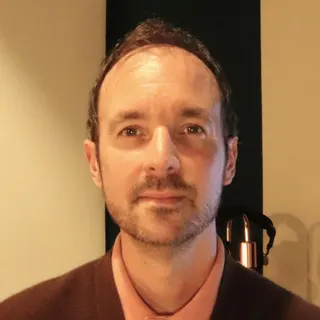
Portrait of Owen Evans

Owen Evans

Music, and Musical Instrument Specialist

Lumsden, United Kingdom

£30.00 per hourDBS checkediAccepting enquiries
GuitarMusicMusic PerformanceMusic Technology+1 more
  • Holds over 8 years' of online teaching experience.
  • Owen holds over 18 Years' experience teaching & in the Music industry.
  • Received over 1 million views & listens on Spotify, Youtube & social media.
  • A professional songwriter in all genres.
  • Over 10 years' experience using Logic Pro-x.
  • Owen has worked with Grammy-winning producers.

Owen Evans is a UK guitar tutor with 18+ years in teaching and the music industry, including 8+ years of online tutoring. He supports ABRSM/Rockschool, GCSE and A-Level Music, plus songwriting and Logic Pro X production with tailored lesson plans.

Send a quick enquiry from here and the Latimer Tuition team will pass it on to Owen.

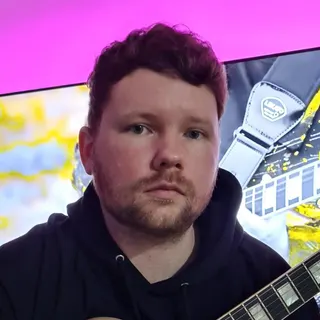
Portrait of Darren Stone

Darren Stone

Music Specialist

Waterlooville, United Kingdom

£40.00 per hourDBS checkediAccepting enquiries
GuitarMusicMusic PerformanceMusic Technology+1 more
  • Over 10 years’ of experience teaching in UK secondary schools, tailoring lessons to each student’s learning style.
  • Professional composer with internationally published work in film, television, games, and advertising.
  • Expert in Music Technology, GCSE Music, A-Level Music, and Level 2 Music Technology.
  • Extensive studio and live performance experience as a guitarist, bridging real-world music with academic learning.
  • Guides students in composition, performance, music theory, and creative production.

Darren Stone is a private tutor and guitar tutor specialising in Music Technology, teaching GCSE and A-Level Music with 10+ years’ UK secondary school experience. Professional composer offering tailored help with composition, theory and performance, plus session reports.

Send a quick enquiry from here and the Latimer Tuition team will pass it on to Darren.

Portrait of Lewis Spencer

Lewis Spencer

Music and Guitar Specialist

Kidderminster, United Kingdom

£40.00 per hourDBS checkediAccepting enquiries
GuitarMusic PerformanceMusic Theory
  • Holds a BMus (Hons) degree in Popular Music Performance and a BTEC Level 3 Extended Diploma in Music Performance.
  • Works as a peripatetic tutor in schools, delivering engaging and structured lessons.
  • Strong background in music theory, harmony, and musicianship training.
  • Covers a wide range of genres, including pop, rock, jazz, funk, soul, R&B, and more.
  • Experienced session musician and producer, operating from a professional home studio.

Lewis Spencer is a Kidderminster, Worcestershire guitar tutor offering private lessons in popular music performance and music theory, backed by a BMus (Hons) and over a decade of peripatetic school teaching plus session musician/producer experience.

Send a quick enquiry from here and the Latimer Tuition team will pass it on to Lewis.

Portrait of Simon OKeeffe

Simon OKeeffe

Music and Music Performance Specialist

london, United Kingdom

£40.00 per hourDBS checkediAccepting enquiries
ABRSMGCSE (general)GuitarMusic Performance+4 more
  • Simon has over 12 years' of experience as a music educator across primary and secondary schools in addition to further education.
  • Holds a Bachelor of Arts (Hons) in Music (Guitar Institute).
  • Holds a Master of Arts in Record Production and Distribution (University of West London).
  • Professional background as a musician, producer, arranger, and musical director.

Music educator with 12+ years’ experience offering private lessons as a guitar tutor and piano tutor, plus drums and music theory. Supports GCSE, A Level and university music performance and music technology, with lesson reports and optional homework.

Send a quick enquiry from here and the Latimer Tuition team will pass it on to Simon.

Portrait of Abigail Ajala

Abigail Ajala

Music, and Musical Instrument Specialist

Rushmere St Andrew, United Kingdom

£45.00 per hourDBS checkediAccepting enquiries
GuitarMusicMusic PerformanceMusic Technology+2 more
  • Over 11 years' of Music teaching experience.
  • Holds a Bachelor of Arts in Commercial Music.
  • Has been the vocal coach for the Stagecoach Performing Arts School (Ipswich).
  • Teaches guitar, ukulele, piano (up to intermediate), vocals, and music theory.

Abigail Ajala is a guitar tutor with 11+ years’ teaching experience, BA in Commercial Music, and Stagecoach Performing Arts (Ipswich) vocal coach. She is also a piano tutor (to intermediate) teaching ukulele and music theory for ages 4+, KS1–3, GCSE and A Level; online and Suffolk-based.

Send a quick enquiry from here and the Latimer Tuition team will pass it on to Abigail.

Portrait of Alfie Morris

Alfie Morris

Humanities, Media, and Music Specialist

Bristol

£25.00 per hourDBS checkediAccepting enquiries
GuitarMedia StudiesMusicMusic Technology+2 more
  • Holds over 5 year's of tutoring experience.
  • Holds a 2:1 Bachelor's degree in Philosophy & Religion.
  • Holds Distinction in a Media & Film Diploma.
  • Alfie has worked professionally throughout the media industry; on set, in post production and as a film critic.
  • Holds A, A for Mathematics and English at GCSE level.

Alfie Morris is a private tutor offering online tutoring and in-person lessons in Philosophy, Religious Studies, Media Studies, Music and guitar, with 5+ years’ experience, a 2:1 BA in Philosophy & Religion, and a Distinction in Media & Film.

Send a quick enquiry from here and the Latimer Tuition team will pass it on to Alfie.

What makes a tutor relevant for bass guitar?

This page’s starting shortlist is configured with Latimer’s broader Guitar subject. That is useful for discovery, but it does not prove that every profile shown teaches electric bass. A tutor is relevant to this page when their current profile explicitly supports bass-guitar teaching or performance experience, or when Latimer has confirmed the match.

Treat the list as a starting point rather than a specialist badge. Results are configured in high-to-low tutor-score order, but that order is not a ranking of bass expertise, ratings, experience or personal fit. Check the instrument, learner stage, styles, techniques, lesson format and availability attached to the individual profile.

Where a profile is unclear, use matching and state that the requirement is bass guitar rather than general or six-string guitar tuition. Include the learner’s stage, musical goals, preferred styles, optional graded pathway, lesson format, schedule and budget.

  • Look for an explicit bass instrument listing or clear bass teaching or performance evidence.
  • Check whether the tutor’s experience fits the learner’s stage, goals, styles and techniques.
  • Use current profile evidence for price, availability, lesson format, credentials and trust signals.
  • Ask Latimer to confirm bass-specific fit when the profile wording leaves a gap.

How to compare bass guitar tutor profiles

Start with evidence that the tutor actually teaches bass, then compare teaching fit and practical arrangements. Price, availability, qualifications, ratings and safeguarding information are useful only when they are current and attached to the individual profile.

A short introductory conversation can resolve what a profile cannot: ask how much of the tutor’s current work involves bass rather than six-string guitar, which styles and techniques they teach, how they give feedback, and what they would expect the learner to practise between lessons.

  • Ask what proportion of the tutor’s current teaching involves bass rather than six-string guitar.
  • Ask which styles, techniques and learner goals the tutor supports.
  • Ask how feedback, practice priorities and progress reviews are handled.
  • Confirm current lesson format, rate and sustainable availability before deciding.
Bass-specific evidence
Look for an explicit bass instrument listing, bass teaching or performing experience, and examples relevant to the learner’s goal.
Goals and musical styles
Check whether the tutor supports the learner’s repertoire, band, technique, theory, improvisation, recording or optional grade aims.
Teaching approach
Look for clear explanation, diagnosis, modelling, specific feedback and an understandable practice focus.
Learner fit
Confirm age or stage experience, communication style, confidence needs and the level of parent involvement where relevant.
Lesson format
Check whether online or in-person arrangements are actually offered and whether the setup suits practical bass feedback.
Price and value
Compare the current profile rate with bass relevance, teaching experience, availability and the support offered between lessons.
Availability
Treat enquiry status and scheduling as live tutor-specific facts; do not assume an immediate start.
Credentials and trust
Use current profile qualifications, experience and safeguarding information only for the tutor to whom they belong.

Bass guitar goals and flexible skill pathways

Bass guitar tuition does not need to follow one fixed programme. A useful learning pathway begins with the learner’s purpose: playing favourite songs, joining a band, improving timing, learning theory, recording parts, returning after a break, preparing for a performance or working towards an optional grade.

A newer learner may work on pulse, note length, string crossing, simple riffs, comfortable hand use and basic fretboard awareness. Developing players may add muting, articulation, scales, arpeggios, harmony, notation or tab, improvisation and ensemble skills. Advanced goals can include slap and pop, complex syncopation, modes, session work, performance and recording. These are examples, not a compulsory sequence.

Formal grades can provide milestones, but they are optional. Current RSL and Trinity materials offer structured bass pathways, and Trinity permits candidates to enter at an appropriate grade without completing every earlier grade. Confirm that the individual tutor supports the current pathway before choosing.

  • Timing, pulse, groove and note length
  • Right- and left-hand technique, articulation and muting
  • Fretboard knowledge, scales, arpeggios and harmony
  • Notation, tab, listening and ear training where useful
  • Basslines, improvisation, ensemble playing, performance and recording
  • Optional graded pathways for learners who want formal milestones

Different learners need different bass guitar support

No single bass guitar tutor will suit every learner. A child or teenager may need age-appropriate explanations, parent reassurance and manageable practice steps. An adult may care more about musical taste, flexible scheduling or returning comfortably after a long break. A player preparing for a band, recording, audition or grade will need different evidence again.

Use profiles and matching to confirm age or stage experience, communication style, goals and any practical adaptations. Confidence and motivation can be supported through clear goals and feedback, but tuition is not a therapeutic service. Parent involvement, lesson reports and homework also vary by learner and tutor.

  • A complete beginner learning comfortable technique and a first bassline
  • A child or teenager needing age-appropriate communication and parent reassurance
  • An adult learning for enjoyment or returning after a break
  • A player preparing for a band, performance, audition or recording goal
  • A learner seeking more advanced technique, theory or improvisation
  • A learner choosing an optional graded pathway rather than a compulsory sequence

Price, credentials and value: what each can tell you

Use the current rate on the individual profile rather than a universal bass-guitar price. Latimer says tutors set their own rates, so the useful comparison is price alongside bass relevance, teaching experience, lesson format, availability and the support offered between lessons.

Latimer’s current How It Works page states: “The price we present is the price you pay.” That is a pricing reassurance, not a bass-specific price band, an affordability threshold or proof that one tutor offers better value than another.

Credentials should also be read precisely. School-teaching status may evidence formal pedagogy; music or performance qualifications may evidence musical study; private instrumental experience may evidence one-to-one teaching. None of these, by itself, proves bass-specific suitability.

Current profile rate
A live commercial fact for that tutor; compare it with fit, availability and the support offered.
Bass teaching experience
Directly relevant to instrument fit when explicitly evidenced; the broader Guitar tag alone is insufficient.
Qualified school teacher
May evidence formal pedagogy or school experience, but is not a universal requirement for private instrumental tuition.
Performance or music qualifications
Can support musical expertise, but do not by themselves prove effective one-to-one teaching.
Personal value
Depends on the learner’s goals, rapport, progress needs, lesson format, schedule and budget rather than price alone.

From enquiry to regular bass guitar lessons

Latimer currently describes an online one-to-one, pay-as-you-go process. The practical process is:

  1. Browse profiles and note the gaps. Check whether the profile establishes bass experience, learner-stage fit, format, price and current availability.
  2. Message a tutor or request matching. State bass guitar explicitly, then add goals, preferred styles, stage, format, schedule and budget.
  3. Use the introductory conversation to test fit. A free introductory meeting can currently be requested. Latimer describes it as a short fit conversation rather than a full teaching lesson.
  4. Agree lesson arrangements. Current Latimer information says lessons are invoiced after they happen and can be paid by card or bank transfer, with notice before a saved card is charged. Current FAQs say tutors generally use a 24-hour cancellation policy, with late refunds or rearrangements at the tutor’s discretion.

Commercial arrangements can change, so the live How It Works and FAQ pages remain the authoritative place for payment, cancellation and scheduling detail.

  • Keep matching central when profile evidence is incomplete.
  • Do not assume an urgent start, fixed response time, formal trial, replacement or refund promise.
  • Confirm current availability and lesson arrangements with the individual tutor.

What a first lesson and practice plan may look like

An introductory conversation is separate from the first full teaching session. A first bass lesson may begin by clarifying goals and previous experience, checking the instrument and setup, hearing a short groove or piece where appropriate, identifying one or two priorities and agreeing a manageable practice focus.

Over the first few lessons, the tutor may revisit timing and technique, develop suitable repertoire, review what happened in practice and adjust the next steps. Lesson reports, homework and resources are tutor-specific arrangements, so ask what the individual tutor provides.

There is no universal lesson frequency or fixed number of lessons. A sustainable cadence depends on the starting point, goal, material, practice time, budget and tutor advice. Good tuition can support technique, understanding, practice habits and musical independence, but it cannot guarantee a grade, performance or fixed rate of progress.

  • Clarify the learner’s goal and previous experience.
  • Check the instrument, equipment and a comfortable playing setup.
  • Observe a short piece, groove or technique where appropriate.
  • Choose one or two immediate priorities.
  • Agree clear practice steps and review them next time.

Online, in-person and “near me” bass lessons

Latimer currently describes its service as online-first. Online bass guitar tuition can work when the tutor can see enough of both hands and posture, and the learner’s sound is clear enough for useful feedback. An ordinary laptop or tablet may be sufficient; camera positioning, headphones, lighting or an external microphone can improve the experience.

A tutor’s profile location does not prove that they travel, teach from a nearby venue or offer face-to-face lessons. For a “bass guitar tutor near me” requirement, confirm the actual arrangement with the tutor or through matching rather than relying on the location label alone.

For younger learners, guardians should understand the online lesson arrangements, and recording should only happen with appropriate consent. Keep amp and headphone levels comfortable and speak up if the sound is uncomfortable.

Online one-to-one
Potentially flexible and suitable for live observation when the tutor’s format and the learner’s setup are confirmed.
In-person lessons
May suit learners who value direct physical demonstration or shared equipment, but availability must be confirmed individually.
“Near me” searches
Treat profile location as information to check, not proof of travel, a local venue or face-to-face teaching.
Basic online setup
A common device may be sufficient; useful improvements can include camera positioning, headphones, lighting or an external microphone.
Comfort and safety
Agree recording consent where relevant and keep amplified or headphone levels comfortable.

Credentials, safeguarding and realistic boundaries

Treat every qualification, rating, review, performance label and safeguarding indicator as evidence about the individual tutor who displays it. Tutor score does not establish bass expertise or guarantee that a tutor will suit a particular learner.

Private instrumental tutors may reach the work through different routes: school teaching, music or performance qualifications, specialist teaching awards, professional playing and practical one-to-one experience. Qualified Teacher Status is usually relevant to state-school teaching in England, but it is not a universal requirement for private bass tuition. The strongest decision combines relevant bass evidence with clear teaching and communication.

Latimer’s current safeguarding policy describes a role-by-role vetting approach for tutors working with children. Disclosure terminology also differs across the UK: DBS in England and Wales, PVG in Scotland and AccessNI in Northern Ireland. A disclosure check is one part of safeguarding, not a guarantee of safety, suitability or teaching quality. Read the current policy and ask practical questions about the lesson arrangement.

Tutoring can support technique, confidence, understanding and independent practice, but it cannot guarantee availability, start dates, grades, performances or a fixed rate of progress.

  • Check current profile evidence rather than assuming a platform-wide status.
  • Use policy links for date-sensitive safeguarding and commercial rules.
  • Do not infer protected or sensitive characteristics from names, photographs or biographies.
  • Recheck score labels, profile fields and policies before relying on them.

Tutor, course, app or self-study?

Books, videos, apps and courses can be useful for demonstrations, repertoire and self-paced study. A suitable one-to-one tutor adds live observation, tailored explanation, feedback, structure and accountability. Music schools or groups may add ensemble experience and social learning.

No model guarantees progress, and many learners combine them: a tutor can diagnose and set direction while recordings, books, apps or videos support practice between lessons. The right choice depends on the learner’s goals, independence, budget, schedule and need for personalised feedback.

One-to-one tutor
Live observation, tailored explanation, feedback and a practice plan; quality depends on finding the right bass-specific fit.
Course, app or video
Flexible, self-paced demonstrations and repertoire support, but usually less able to diagnose the learner’s playing in real time.
Music school or group
May add ensemble experience and social learning, with less control over schedule, pace or individual focus.
Independent self-study
Maximum flexibility and potentially low cost, but requires the learner to choose material, notice errors and maintain structure.
Combined approach
A learner may use a tutor for feedback and direction while using books, recordings, apps or videos between lessons.

Need help confirming bass-specific fit?

Tell Latimer that the instrument is bass guitar, then add the learner’s stage, preferred styles, goals, optional graded pathway, lesson format, available days and budget. Matching is particularly useful when a profile is associated with Guitar but does not state enough about bass teaching.

Latimer’s matching service can help narrow the practical requirements that the directory cannot encode. It does not guarantee a particular tutor, immediate availability or a fixed start date.

  • Instrument and learner stage
  • Musical styles and goals
  • Online or in-person preference
  • Available days and times
  • Budget and any relevant credential needs

Support and clarity

Frequently asked questions

Straight answers to the questions people ask most often.

Are tutors shown under Guitar definitely bass guitar tutors?

No. The page’s tutor shortlist starts with Latimer profiles associated with the broader Guitar subject, and that tag does not by itself prove bass teaching. Look for explicit bass-guitar experience on the current profile or ask Latimer to confirm the match. Then compare goals, styles, lesson format, price and availability before enquiring.

What should I look for in a bass guitar tutor?

Prioritise explicit bass teaching or performing experience, then check fit with the learner’s stage, musical goals and preferred styles. Useful questions cover timing and groove, technique and muting, fretboard and theory work, notation or tab, improvisation, performance or recording, teaching approach, practice support, current rate, format and availability. No tutor needs to teach every skill to every learner.

Do I need a qualified teacher for private bass guitar lessons?

Not necessarily. Formal school-teaching status, private instrumental experience, music qualifications and performance experience support different claims. Qualified Teacher Status is usually relevant to state-school teaching in England, but it is not a universal requirement for private instrumental tuition. Check bass-specific experience and teaching approach alongside any qualification.

Can I learn bass guitar without taking grades?

Yes. Grades are an optional structure, not a prerequisite. A learner can focus on songs, groove, technique, theory, band playing, recording or enjoyment. Where a formal pathway is useful, current RSL and Trinity bass pathways can provide milestones; confirm that the individual tutor supports the relevant current syllabus.

Can bass guitar lessons work online?

Yes, where the tutor offers online tuition and the setup lets the learner’s playing and technique be seen and heard clearly. A laptop or tablet may be enough; camera position, headphones, lighting or an external microphone can improve the experience. Confirm the individual tutor’s format and keep amp or headphone levels comfortable.

How do I find bass guitar tuition near me?

Treat a tutor’s profile location as information to check, not proof that they travel, teach from a nearby venue or offer face-to-face lessons. Confirm any in-person arrangement with the tutor or through matching. Latimer currently describes its service as online-first, so online bass guitar tuition may be the more widely available option.

How much do bass guitar lessons cost?

The current evidence supports tutor-specific profile rates rather than one universal bass-guitar price range. Tutors set their own rates, so compare the live price with bass relevance, teaching experience, availability, format and the support offered between lessons. Avoid assuming that a higher price guarantees a better fit or that a lower price means lower quality.

Can I meet a tutor before starting regular lessons?

Latimer currently says a free introductory meeting can be requested. Use it to discuss bass experience, goals, teaching approach, format and availability. It is a short introductory fit conversation, not automatically a full free bass lesson or a promised trial lesson.

What happens in a first bass guitar lesson?

A first full lesson may cover goals, prior experience, instrument and equipment, a short piece or groove where appropriate, one or two immediate priorities and a manageable practice focus. A complete beginner and an experienced returning player may need very different sessions, so treat this as an example rather than a fixed programme.

How often should bass lessons happen, and how many will I need?

There is no universal lesson frequency or fixed number. The right cadence depends on the learner’s starting point, goal, material, available practice time, budget and the tutor’s advice. Agree a sustainable schedule and clear work between lessons rather than relying on a promised timeline.

What happens if the first tutor does not feel right?

Latimer’s current guidance says families can return to the directory and continue browsing. You can also use matching to refine the bass-specific requirement and practical fit. Do not assume a formal switching, replacement or refund guarantee unless the live policy explicitly provides one.

How do payment, cancellations and rescheduling work?

Latimer currently describes pay-as-lessons-are-completed, invoicing after lessons, card or bank-transfer payment and notice before a saved card is charged. Its current FAQ says tutors generally use a 24-hour cancellation policy, with late refunds or rearrangements at the tutor’s discretion. Check the live How It Works and FAQ pages because commercial arrangements can change.

Related tutor pages

Compare other tutor searches selected from the page's subject, subject family and level context.