Latimer Tuition

GCSE Biology tutor

Compare GCSE Biology tutors for topic gaps, exam-board preparation, practical skills, mocks, past papers and confidence-building revision.

  • 37 GCSE Biology tutors
  • Excellent on Trustpilot
  • 5000+ families
  • DBS-checked

Available tutors

Compare GCSE Biology tutors

Showing 4 of 37 matching tutors.

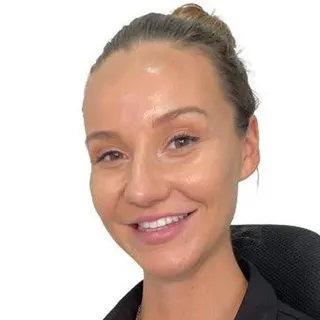
Anika Fahmida

Mathematics, Science, and Geography Specialist

Birmingham

£30.00 per hourDBS checkedAccepting enquiriesHigh performing tutor
  • Currently studying for her Masters of Pharmacy at the University of Brighton.
  • Holds A-Levels in Mathematics, Biology, and Chemistry.
  • Holds grade 7s (As) for Mathematics, Triple Science, and Geography (amongst others) at GCSE level.
  • Anika has professional experience tutoring KS2/3 to GCSE level cohorts.
  • Anika has received Bronze and Silver awards in the Senior Maths Challenge.
11+ (general)BiologyChemistryGeography+3 more

Anika Fahmida is a gcse maths tutor and maths and science tutor for KS2–GCSE, covering Maths plus Biology, Chemistry, Physics and GCSE Geography. A University of Brighton pharmacy Masters student providing patient, clear lessons with session reports and optional homework.

Send a quick enquiry from here and the Latimer Tuition team will pass it on to Anika.

View profile

Kevin Maher

Mathematics and Science Specialist

Orpington, United Kingdom

£30.00 per hourDBS checkedAccepting enquiriesHigh performing tutor
  • Currently studying for his Bachelors of Engineering in Computer Engineering at the University of Birmingham.
  • Over 4 years' of teaching experience.
  • Holds A, A, B for Mathematics, Biology, and Chemistry at A-Level.
  • Holds A**s for Mathematics, Biology, and Chemistry at GCSE level.
  • St' Olave's Grammar School Alumni (4th best secondary state school in London).
BiologyChemistryMathematicsPhysics

Kevin is a GCSE maths tutor and physics tutor with 4+ years’ experience, studying Computer Engineering at the University of Birmingham. Tailored lessons include session reports and optional homework.

Send a quick enquiry from here and the Latimer Tuition team will pass it on to Kevin.

View profile

Nida Ali

Science Specialist

Southend on Sea, United Kingdom

£23.00 per hourDBS checkedAccepting enquiriesHigh performing tutor
  • Holds an M.Phil degree in Science and Management.
  • Worked as a Science teacher in secondary school for 4 years abroad.
  • Worked as a cover supervisor in secondary schools in UK for 3 months.
BiologyChemistryEnglish skillsMathematics+2 more

Nida Ali is a Science Specialist offering gcse science tutoring for KS2–KS3 and GCSE Biology, Chemistry and Physics. M.Phil-qualified with 4 years’ secondary teaching experience; provides engaging, exam-technique-focused sessions with lesson reports and optional homework.

Send a quick enquiry from here and the Latimer Tuition team will pass it on to Nida.

View profile

Raqeebat Lekuti

Science and Psychology Specialist

West Bromwich, United Kingdom

£30.00 per hourDBS checkedAccepting enquiriesHigh performing tutor
  • Over 3 years’ of tutoring experience both in-person and online, in KS3 and GCSE Science.
  • Currently Studying for her Bachelors of Medicine & Surgery at the University of Birmingham.
  • Holds A*, A, A for Psychology, Biology, and Chemistry at A-Level.
  • Holds A**- A* (9s-8s) at GCSE level, including A** in all Sciences.
BiologyChemistryMedicinePhysics+1 more

Raqeebat Lekuti, a University of Birmingham medical student, provides online tutoring for KS3/GCSE Science and A-Level Biology & Chemistry, and is an A-Level psychology tutor with 3+ years’ 1:1 experience and session reports.

Send a quick enquiry from here and the Latimer Tuition team will pass it on to Raqeebat.

View profile
Compare GCSE Biology tutors, then choose the right support for your child’s exam board, topic gaps, confidence, mocks and revision plan. Latimer shows tutor profiles so you can weigh up experience, price, availability and teaching style before enquiring.

Why choose Latimer for GCSE Biology tutoring

GCSE Biology is detailed enough that a generic science tutor is not always the best fit. A good tutor should understand the student’s exam board, topic gaps, practical skills, command words and revision habits, then adapt lessons to the student rather than simply working through a worksheet.

Latimer helps parents compare one-to-one tutor profiles before enquiring. You can look at subject fit, price, qualifications, teaching style and availability, then use an introductory conversation to check rapport and goals. Latimer’s FAQ explains the pay-as-you-go model in plain terms: you “only pay for the lessons you arrange”.

  • Compare tutor profiles before enquiring, rather than committing to a package first.
  • Use one-to-one support for topic gaps, practical skills, exam technique, past papers and confidence.
  • Start with a conversation about exam board, tier, target grade, mock results and learning style.
  • Keep expectations realistic: tutoring can support understanding and revision, but no tutor can guarantee a grade.

How GCSE Biology tutoring works

The process should feel practical, not mysterious. Share the student’s exam board, tier, recent marks, confidence level and weak topics, then use the first conversations to agree a plan that the tutor, parent and student all understand.

Latimer’s FAQ sets out the current payment and cancellation details. Families can use the intro to check fit before paid lessons, and ongoing lessons can be adjusted as mocks, school feedback and topic confidence change.

  • Tell the tutor whether the student is taking separate GCSE Biology or the biology part of Combined Science.
  • Share the exam board, tier, target grade, recent mock result and any teacher feedback.
  • Agree how lessons will use past papers, mark schemes, homework and progress feedback.
  • Review the plan after early lessons so tutoring stays focused on the student’s real gaps.
1. Compare profiles
Use Biology and GCSE filters, then compare price, qualifications, teaching experience, availability and style.
2. Send an enquiry
Ask about the student’s exam board, Foundation or Higher tier, weak topics, target grade and preferred lesson time.
3. Arrange an intro
Use the introductory meeting to check rapport, explain goals and decide whether the tutor is a good fit.
4. Start with diagnosis
Review recent work, school tests, confidence and topic knowledge before choosing the first lesson priorities.
5. Keep adjusting
Use homework, practice questions, mock feedback and parent updates to refine the plan.

Pricing, tutor types and choosing the right fit

GCSE Biology tutor cost depends on the individual tutor. Latimer tutors set their own hourly rates, and the live profile is the safest place to check the current price before you enquire. Price is only one part of fit: the right tutor also needs the right subject knowledge, teaching style, availability and exam-board confidence.

For some students, a relatable student or graduate tutor is ideal. Others may need a qualified teacher, an experienced science tutor, an examiner-style focus on mark schemes, or a tutor who is confident adapting pace and routines. The best choice depends on the student’s starting point and what needs to change.

  • Use price alongside experience, subject depth, teaching style and availability.
  • Ask whether the tutor has covered the student’s exam board and tier before.
  • Do not assume every tutor is a qualified teacher or examiner; check the specific profile.
  • If access-arrangement-aware support matters, ask how the tutor adapts practice without making official exam arrangements.
Student or undergraduate tutor
Often useful for relatable explanations, regular practice, confidence and accountability. Check GCSE Biology subject knowledge and lesson structure.
Graduate or science specialist
Good for topic depth, high-achiever stretch and separate Biology or Combined Science biology overlap. Ask how they teach at GCSE level.
Qualified teacher
May suit families who want curriculum sequencing, school-style assessment and classroom experience, where the profile supports it.
Examiner or assessment specialist
Useful for mark schemes, command words and exam technique, but only where the specific tutor profile says so.
SEND-aware or access-arrangements-aware tutor
Can adapt pacing, routines and practice conditions, but does not assess SEND or organise official access arrangements.

Online GCSE Biology tutoring and honest near-me handling

Many families search for a GCSE Biology tutor near them. That can make sense if you have a strong local option, but online tutoring lets you compare suitable tutors nationally rather than being limited by postcode. For Biology, online lessons can work well with shared whiteboards, diagrams, screen-shared past papers, mark schemes, homework review and revision documents.

Latimer’s FAQ explains the current online lesson arrangements, including the platform options in use. Before booking, ask the tutor how they handle diagrams, practical-method questions, data interpretation and feedback between lessons.

  • Online one-to-one tutoring can widen the pool of Biology specialists and make scheduling easier.
  • In-person tutoring may suit students who strongly prefer face-to-face learning and have good local availability.
  • Group courses can be helpful for broad revision, but they may not diagnose the student’s exact gaps.
  • Self-study works best when the student already knows what to revise and can stay accountable.
Online one-to-one tutor
Flexible access to Biology specialists, screen-shared exam questions, shared notes and personalised feedback.
Local in-person tutor
Face-to-face rapport and fewer screen-related distractions, if there is a suitable tutor nearby.
Group revision course
Structured recap at a set pace, usually less personalised than one-to-one diagnosis.
School intervention
Useful where school support is available and aligned with the student’s internal targets.
Free resources and self-study
Low cost and helpful for retrieval practice, but weaker for diagnosis, feedback and accountability.

Credentials, safeguarding and realistic outcomes

Tutor credentials should be read carefully. Look for Biology or science subject knowledge, teaching experience, qualified-teacher status where shown, examiner experience where claimed, safeguarding information where available, and a teaching style that fits the student. A high-achieving science graduate is not the same as a qualified teacher, and an examiner is not the same as a confidence-building weekly tutor.

One-to-one tuition has evidence behind it, but it is not a magic result guarantee. The Education Endowment Foundation’s one-to-one tuition evidence is useful context for targeted support. The safe promise is simple: a tutor can help with understanding, confidence, revision habits and exam technique, but no tutor can guarantee a particular grade.

  • Check the individual profile for qualifications, subject background, teaching experience and availability.
  • Ask how the tutor uses past papers, homework, feedback and progress review.
  • Use current Latimer FAQs or contact the team for policy questions about safeguarding, payment or cancellations.
  • Avoid any tutor who promises a fixed grade outcome or offers inappropriate help with assessed work.

GCSE Biology topics tutors can cover

GCSE Biology covers living systems from cells to ecosystems. A tutor should be able to map the student’s weak topics against the relevant specification, then decide whether the problem is knowledge, vocabulary, maths and graphs, practical skills, or exam technique.

For AQA, topic areas include cell biology, organisation, infection and response, bioenergetics, homeostasis and response, inheritance, variation and evolution, and ecology. Pearson Edexcel uses its own topic ordering, but the broad Biology skills are similar: precise vocabulary, explaining processes, interpreting data and applying knowledge to unfamiliar questions.

  • Use the specification to identify weak topics instead of revising randomly.
  • Separate knowledge gaps from exam-skill gaps; they need different lesson activities.
  • Practise diagrams, definitions, processes, calculations, graphs and longer written answers.
  • For Combined Science students, make clear which biology topics are relevant to their course.
Cell biology
Cell structure, microscopy, cell division and transport across membranes.
Organisation
Digestive system, enzymes, plant organisation, transport and organ systems.
Infection and response
Pathogens, immune response, vaccination, antibiotics and disease prevention.
Bioenergetics
Photosynthesis, respiration, limiting factors, energy transfer and investigations.
Homeostasis and response
Nervous system, hormones, control of blood glucose, plant hormones and feedback systems.
Inheritance, variation and evolution
DNA, genetics, variation, evolution, classification and selective breeding.
Ecology
Ecosystems, biodiversity, food chains, sampling, environmental change and sustainability.
Practical and data skills
Required practical methods, variables, graph work, evaluation and interpreting results.

Exam boards, papers and Foundation/Higher tiers

The exact specification matters. AQA, Pearson Edexcel, OCR, WJEC/Eduqas and CCEA all have GCSE Biology or GCSE science specifications, but topic names, required practicals and paper style can vary. Tell the tutor the student’s board and specification code before lessons start.

Pearson Edexcel describes GCSE Biology as having “two externally examined papers”. For the cited Pearson Edexcel specification, each paper is 1 hour 45 minutes, 100 marks and 50% of the qualification; AQA GCSE Biology is also structured around two papers. Foundation and Higher tiers target different grade ranges; for the cited Edexcel specification, Foundation targets grades 1–5 and Higher targets grades 4–9, and students take the same tier across the qualification.

  • Ask the tutor whether they have taught the exact exam board before.
  • Share whether the student is on Foundation or Higher tier and what grade range they are aiming for.
  • Use tier-appropriate questions: a Grade 4/5 plan looks different from a Grade 7–9 plan.
  • Avoid broad claims that every UK GCSE Biology specification is identical.
Grade 3 to 4/5
Focus on core definitions, common question types, careful reading and high-frequency practical/data skills.
Grade 5 to 7
Strengthen weak topics, link causes and effects, practise multi-step explanations and review mark-scheme wording.
Grade 7 to 9
Use harder application questions, evaluation, unfamiliar contexts and precise command-word responses.
Resit pass
Rebuild core knowledge, identify lost marks from previous attempts and plan around the next available exam series.

Required practicals and working scientifically skills

GCSE Biology practical skills are not a separate practical exam on the day, but they still matter. Students learn specified required or core practicals during the course, and exam papers can test methods, variables, results, graphs and evaluation. Current AQA materials list ten required practical activities and Pearson Edexcel requires eight core practicals for GCSE Biology, with exact counts depending on the board and specification.

A tutor can help by turning practicals into exam-ready understanding: what the method is doing, why variables are controlled, how to spot anomalous results, how to describe improvements, and how to use data to support a conclusion.

  • Revise the method and purpose of each required practical, not just the name.
  • Practise graph drawing, gradients, units, variables, control measures and evaluation language.
  • Connect practical questions to the topic being tested, such as enzymes, osmosis, photosynthesis or ecology sampling.
  • Use official specifications and past papers so practice matches the student’s exam board.
Before the lesson
Student brings a list of practicals, school notes, recent questions or a mock paper.
During the lesson
Tutor checks the method, key variables, likely exam wording and any data-handling weakness.
After the lesson
Student completes a short practical/data question and records mistakes in an error log.

Choose a GCSE Biology tutor or ask for a shortlist

The quickest next step is to compare GCSE Biology tutor profiles and enquire with a tutor who looks like a good fit. Share the student’s exam board, tier, target grade, recent mock result, weak topics and preferred lesson times. If you are not sure who to choose, contact Latimer and explain what kind of support your child needs.

Last reviewed on 16 May 2026 for GCSE Biology exam information, Latimer policy links and tutor-comparison guidance.

  • Know the exam board and whether the student is on Foundation or Higher tier.
  • Share recent mock results, teacher feedback and topic gaps if available.
  • Ask how the tutor uses past papers, mark schemes, homework and progress feedback.
  • Discuss online lesson format, availability and personality fit before committing.
  • Contact Latimer if you want help shortlisting suitable tutors.

Support and clarity

Frequently asked questions

Straight answers to the questions people ask most often.

How much does a GCSE Biology tutor cost?

The cost depends on the individual tutor. Latimer tutors set their own hourly rates, and each profile is the safest place to check the current price before you enquire. Price usually reflects factors such as subject experience, qualified-teacher status where shown, examiner experience where claimed, availability and the student’s needs. Latimer’s FAQ explains the pay-as-you-go model and that families pay for lessons they arrange rather than buying a prepaid package.

How do I choose the right GCSE Biology tutor?

Start with the student’s exam board, tier, target grade, recent mock result and weak topics. Then compare subject knowledge, GCSE Biology experience, teaching style, price, availability and whether the tutor can explain practicals, command words, past papers and mark schemes clearly. For an anxious student, rapport and calm feedback may matter as much as credentials.

Can online GCSE Biology tutoring work as well as in-person tutoring?

Online tutoring can work well for GCSE Biology when the tutor uses shared documents, diagrams, screen sharing, past-paper review and homework feedback. In-person lessons may suit some students, but online support can give families a wider choice of Biology specialists than a local-only search. Choose the format that best supports attention, rapport and regular practice.

Can a tutor help with AQA, Edexcel or OCR GCSE Biology?

Yes, a GCSE Biology tutor can usually help with major UK exam boards, but parents should give the tutor the exact exam board and specification before lessons start. The detailed examples here use AQA and Pearson Edexcel sources. If the student is on OCR, WJEC/Eduqas or CCEA, share the specification so the tutor can match topic names, required practicals and paper style.

Can a GCSE Biology tutor help with Combined Science?

Often, yes. A Biology tutor can help with the biology topics inside GCSE Combined Science where they overlap with separate Biology. Tell the tutor whether the student is taking separate GCSE Biology or Combined Science, and give the exact board and tier. The guidance stays Biology-led rather than treating Biology as the same as every GCSE Science course.

What is the difference between Foundation and Higher tier in GCSE Biology?

Foundation and Higher tiers target different grade ranges. For the cited Pearson Edexcel specification, Foundation targets grades 1–5 and Higher targets grades 4–9, with students taking the same tier across the qualification. A tutor can adapt question practice and revision strategy to the tier, but the school or exam centre manages the official entry decision.

Does GCSE Biology have a practical exam?

GCSE Biology practical skills are normally assessed through written exam questions rather than a separate practical exam. Students still need to understand required or core practicals, including methods, variables, graph work, data interpretation and evaluation. Exact required practicals differ by exam board and specification.

How can a tutor help after a disappointing Biology mock?

A tutor can review the mock paper or mark breakdown to find topic gaps, timing issues, practical/data weaknesses, command-word mistakes and careless errors. The next step should be targeted teaching, guided practice, homework and retesting, not just doing more full papers. No tutor should promise a fixed grade jump.

How often should my child have GCSE Biology tutoring?

Weekly lessons usually suit steady progress because they create a regular teaching, homework and feedback loop. Twice-weekly or holiday blocks can help during mock recovery or final revision if the student can manage the workload. Fortnightly lessons can work for confident students who mainly need check-ins and exam technique. The right rhythm depends on starting point, time to exams and independent practice.

Can Latimer help with GCSE Biology resits or adult learners?

A tutor can support Biology resit preparation or adult GCSE Biology study through topic review, exam practice and study routines. Biology resits usually follow the next normal exam period rather than the English and maths autumn-resit pattern. Latimer tutors do not organise exam entry; private candidates and adult learners need an approved exam centre.

Can a tutor support access arrangements or SEND-related learning needs?

A tutor can adapt lesson pace, routines and practice conditions for a student who already has access arrangements such as extra time or rest breaks. Official access arrangements are handled by schools or exam centres, not by tutors. Tutors should not assess SEND or promise access-arrangement approval.

Do you have a GCSE Biology tutor near me?

Latimer helps families compare online and national GCSE Biology tutors. Some families prefer a local in-person tutor, but online tutoring can widen the choice of Biology specialists and avoid being limited by postcode. Check individual tutor availability before enquiring; Latimer does not promise an in-person tutor in every town.

Will GCSE Biology help with future study or careers?

GCSE Biology can support next steps such as A-Level Biology, Applied Science and interests in healthcare, medicine, veterinary science, environmental work, agriculture, laboratory research and biotechnology. Keep this as motivation rather than a guarantee: exact course, apprenticeship, university and career requirements depend on the provider and the student’s wider grades.

Will a GCSE Biology tutor guarantee a better grade?

No. A credible tutor can help with understanding, confidence, revision habits, mock review and exam technique, but should not guarantee a grade or a specific result. Progress depends on the student’s starting point, attendance, independent practice, school context, exam board, tier and exam performance.