Online one-to-one tuition

Find a creative writing tutor

Work on a school writing task, develop a story, explore poetry or shape a personal writing project. Find a tutor whose experience suits your starting point and the kind of writing you want to do.

  • One-to-one tuition
  • Pay as you go
  • Direct tutor contact
A useful starting goal is specific: finish a scene, make a character’s decision believable, or revise a poem so its line breaks do more work. Bring a short sample if you have one, or begin with an idea.

The form controls become available when the enquiry form has loaded.

Creative Writing tuition enquiry

Tell us what you know, skip anything you’re unsure about, and add a short description if you skip both subject and level.

  1. Tutoring brief
  2. Contact details

2 questions remaining

Tutoring brief

What level is the tuition for?

Choose a level

Choose a suggestion or type your own answer. You can skip this if you’re unsure.

This form works best for one learner at one level and up to six subjects. If your circumstances are more complicated, email us at Contact@LatimerTuition.com so you can explain everything properly.

How one-to-one tuition can help

  • Turn a promising idea into a scene with a clear purpose
  • Choose details, dialogue and structure for the effect you want
  • Use feedback to revise while keeping the writing your own

Available tutors

Compare creative writing tutors

6 tutor profiles selected

Look for experience with your writing form and stage, then discuss the kind of feedback you need.

Portrait of Olatade Fadeyi

Olatade Fadeyi

5.0

Mathematics and Science Specialist

United Kingdom

£30.00 per hourDBS checkediAccepting enquiriesHigh performing tutor
11+ (general)BiologyChemistryCreative Writing+6 more
  • Currently working towards her Masters in Biochemistry.
  • Holds over 2 years' of tutoring and teaching experience.
  • Holds an A for Psychology at A-Level.
  • Holds 2 A*s, and 5 As at iGCSE level.
  • Olatade has experience working with SEN students.

Olatade is a gcse maths tutor and maths and science tutor for 11+ to A-Level, teaching GCSE/iGCSE Maths plus Biology, Chemistry and Physics, and A-Level Psychology. She has 2+ years’ experience, including SEN support, with session reports and optional homework.

Send a quick enquiry from here and the Latimer Tuition team will pass it on to Olatade.

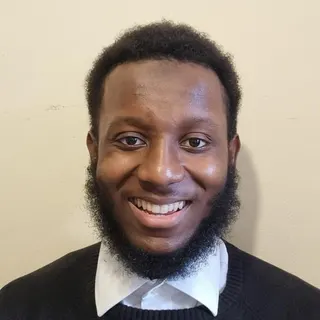
Portrait of Ismail Ayoub

Ismail Ayoub

Mathematics and English Specialist

London, United Kingdom

£25.00 per hourDBS checkediAccepting enquiries
Creative WritingEnglish LanguageEnglish LiteratureMathematics+4 more
  • Holds over three and a half years' of tutoring experience.
  • Ismail has experience working with students with special educational needs (SEN) and disabilities.
  • Holds a D*, D, D (Distinctions) in L3 BTEC Engineering.
  • Holds a Distinction in Further Mathematics.
  • Holds an A for Mathematics at GCSE level.

Ismail Ayoub is a GCSE maths tutor and English tutor with 5+ years’ experience teaching from primary to GCSE, including SEND support. He provides online tutoring and in-person lessons, with session reports and free homework.

Send a quick enquiry from here and the Latimer Tuition team will pass it on to Ismail.
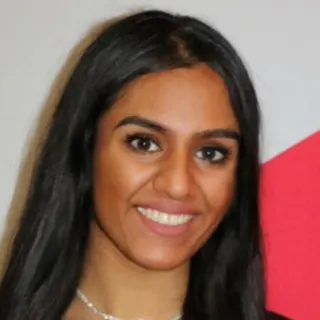
Portrait of Amrit Manku

Amrit Manku

English Specialist

Reading

£30.00 per hourDBS checkediAccepting enquiries
Creative WritingEnglish LanguageEnglish skillsMentoring
  • She holds a Bachelor of Arts in English Language and Linguistics from the University of Southampton.
  • Currently completing her NCTJ Diploma in Journalism.
  • Holds A-Levels in English Language, Biology, Photography, and P.E.
  • Holds GCSE qualifications including English Language, English Literature, and Mathematics.

Amrit Manku is an English tutor and creative writing tutor for Key Stage 2–3 and adult learners, with a BA in English Language and Linguistics (University of Southampton) and TEFL experience; she provides lesson reports and optional free homework.

Send a quick enquiry from here and the Latimer Tuition team will pass it on to Amrit.

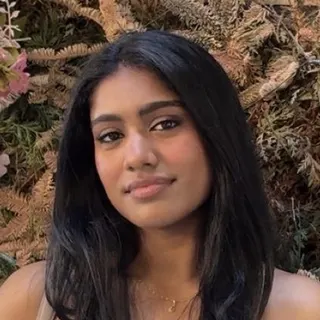
Portrait of Ashvika Kumarathas

Ashvika Kumarathas

English, Science, and Humanities Specialist

Bromley, London, United Kingdom

£45.00 per hourDBS checkediAccepting enquiries
Admissions TestBiologyChemistryCreative Writing+6 more
  • Over four years of experience tutoring primary and secondary school students.
  • Currently studying for her MBBS (Bachelor of Medicine, Bachelor of Surgery) at St George's, University of London.
  • Holds A, A, B for Biology, Psychology, and Chemistry at A-Level.
  • Holds eight Grade 9s and two Grade 8s at GCSE level.
  • Supports students preparing for university applications, including UCAT preparation and medical school interview practice.
  • Has experience supporting students with Special Educational Needs (SEN), including working with students with ADHD.
  • Volunteered for one year at a special educational needs school gaining valuable experience working with children who require additional support.

Ashvika Kumarathas is an English tutor and biology tutor with over four years’ experience, an MBBS student at St George’s, University of London, offering GCSE/A-Level support plus UCAT and medical school interview coaching, including SEN/ADHD experience.

Send a quick enquiry from here and the Latimer Tuition team will pass it on to Ashvika.

Portrait of Naeemah Alam

Naeemah Alam

Qualified English Teacher

Birmingham

£30.00 per hourDBS checkediAccepting enquiriesQualified teacher
Creative WritingEnglish LanguageEnglish Literature
  • Holds over two years' of tutoring experience.
  • Holds a Bachelors of Art in English with Secondary Education (QTS).
  • Naeemah also has a Masters in Education.
  • In addition to private tutoring, Naeemah also currently works as a supply teacher.

Naeemah is a qualified English teacher supporting GCSE, KS2 and KS3 learners in English Language, English Literature and Creative Writing, with over two years of one-to-one tutoring experience.

Send a quick enquiry from here and the Latimer Tuition team will pass it on to Naeemah.

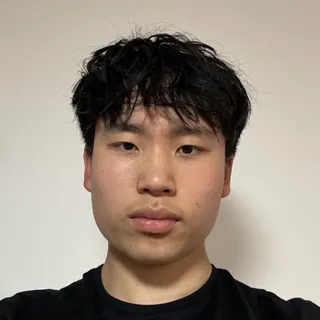
Portrait of Wenyu Boris Xie

Wenyu Boris Xie

Mathematics, Physics, and Geography Specialist

London

£30.00 per hourDBS checkediAccepting enquiries
11+ (general)BiologyChemistryCreative Writing+8 more
  • Wenyu holds over 3 years' of teaching experience.
  • Currently studying for his Bachelors of Engineering in Civil Engineering at the University of Bristol.
  • Holds A*, A for Physics and Mathematics at A-Level.
  • Holds 5 A*s for Mathematics, Physics, Biology, Chemistry, and Geography at GCSE-level.
  • Holds an ARSM Diploma in Violin Peformance and ABRSM Grade 8 in Piano Peformance.

Maths and physics tutor for KS2–A Level, plus GCSE Geography and 11+/13+. Civil Engineering MEng student at the University of Bristol with 3+ years’ teaching experience, offering tailored lessons with session reports and optional homework.

Send a quick enquiry from here and the Latimer Tuition team will pass it on to Wenyu.

Start with the writing you want to develop

Creative writing includes fiction, poetry and life writing, such as memoir. Your goal may be enjoyment, a piece for school, or a longer project. Choose the form and the difficulty you want to work on before choosing a tutor.

  • Starting to write

    Begin with an ordinary object, a remembered place or a character who wants something. A few sentences are enough to explore an idea; you do not need a finished manuscript.

  • School or entrance preparation

    Bring the task and any teacher feedback. Work might focus on shaping an idea, sustaining a viewpoint or writing accurately, with priorities drawn from the actual assignment.

  • Short stories or a novel

    Identify the point where the draft stalls: a character has no convincing reason to act, a scene changes nothing, or the viewpoint moves unexpectedly. For a longer work, agree which extract and structural question to tackle first.

  • Poetry or personal writing

    Poetry might need work on imagery, sound or line breaks. Memoir might need a clearer focus on one remembered event and the perspective from which you tell it. Confirm experience with your chosen form.

A small revision that changes what the reader notices

Consider this invented starting sentence:

Maya was nervous when she knocked on the door.

It tells us how Maya feels. If this is a moment you want the reader to linger over, try giving her a revealing action:

Maya raised her hand to the door, then checked the address again.

The second version delays the knock. Checking the address after raising her hand suggests hesitation, so the reader has something to interpret. Adding more adjectives would not make that choice clearer. The next question is what she is hesitating about, and whether the surrounding scene helps us understand it.

For a short practice task, keep the doorway but make Maya eager to enter. Change her action, then explain which detail suggests eagerness. A tutor can discuss whether the effect is clear without supplying the whole passage.

Summary is useful too: it can move quickly through background that does not need a full scene. OpenLearn’s character guidance treats summary, action and dialogue as different ways of portraying a character.

Give a sequence of events a reason to happen

A draft such as ‘Maya went to her friend’s house. The house was empty. She ran down the road’ has events, but the reader does not yet know why they matter. Here is one possible way to develop it, using OpenLearn’s approach to character and conflict.

  1. Give Maya a purpose

    She wants to apologise before her friend moves away. The visit now has an emotional reason, and leaving it until moving day creates urgency.

  2. Let the obstacle change her action

    The house is empty, but she spots the removals van at the corner. Instead of knocking again, she runs after it. Her response follows from the new information.

  3. Make the next moment count

    An invented continuation might be: “The apology she had rehearsed vanished. Maya called her friend’s name.” We see her abandon the planned speech and risk a direct approach. Next, decide how the friend responds and what that changes between them.

Try a different kind of writing

Poetry: move the line break

In this original example, the slash marks a new line:

I kept the key / after you left

Now move it:

I kept / the key after you left

The first version puts ‘key’ at the end of the line, giving the object prominence. The second briefly leaves open what the speaker kept. Read both aloud and consider which fits the feeling you want. Then write a sentence about an everyday object and try two line breaks of your own. OpenLearn explains how line endings affect emphasis. Poems need not rhyme; free verse still involves deliberate choices about rhythm, sound and structure.

Personal writing: choose one remembered moment

Instead of trying to describe a whole childhood holiday, start with one moment: arriving at a campsite in the rain, for example. Note a sound, an object and something someone did, then choose which detail belongs first. OpenLearn’s Writing what you know uses observation and memory as starting points. Choose something you are comfortable sharing, and distinguish what you remember from what you invent if you are writing memoir.

Match school preparation to the actual task

For assessed writing, send the tutor the school task, qualification, exam board and exam year. The curriculum examples below apply to England. For learners in Scotland, Wales or Northern Ireland, use the relevant curriculum or qualification instead of assuming these requirements carry over.

Primary writing in England
In Years 3–4, the English curriculum includes settings, characters and plot. In Years 5–6 it develops atmosphere and dialogue that reveals character or advances action. A practical focus could be replacing a conversation that repeats known information with a line that changes what a character does.
AQA GCSE English Language 8700, Paper 1
From the first exam in 2026, AQA’s narrative option asks for the opening of a story. The descriptive option allows imagination, with the picture optional. Practise the form actually requested: an opening needs purposeful development without rushing to finish the whole plot. Feedback should cover content and organisation as well as sentence accuracy.
11+ and 13+ entrance writing
Check the destination school and test first. ISEB Common Entrance has Composition at 11+ and Writing at 13+; these are specific routes. GL Assessment also notes variation between areas. Use the school’s current instructions and sample task to establish what writing, timing and preparation are relevant.

Make feedback lead to a decision you can explain

Bring a recent piece, the task if there is one, and a question such as ‘Where does the reader lose track of the action?’ A possible lesson-and-practice sequence is below; agree the pace with your tutor.

  1. Separate the idea from the difficulty recording it

    Explain the idea aloud before revising. A learner may know what should happen but struggle to get it into sentences. For a younger writer, saying one sentence first and rereading it for sense can keep the task manageable.

  2. Choose a limited focus

    Work on one passage and one priority, such as keeping the viewpoint consistent. If spelling or handwriting also needs attention, discuss it separately so the learner can see which change affects meaning and which improves accuracy.

  3. Try the revision yourself

    Ask for feedback tied to an actual point in the draft: “I could not tell who spoke here” gives a clearer next task than “Improve your dialogue”. Choose how to solve it, then reread the surrounding lines to check the change works.

  4. Compare versions and transfer the skill

    Keep the original and revised passage. Explain why you changed it, then try the same skill in a new short piece. For an assessed task, compare against its criteria; for a personal project, discuss whether the reader now notices what you intended.

Choose a tutor and agree a workable plan

Match the tutor’s experience to the learner’s stage and writing form. For exam preparation, discuss the current paper; for a novel or collection of poems, discuss the kind of draft feedback you need. A publication record or qualification is worth understanding in relation to those needs, alongside how the tutor teaches revision.

Latimer offers a free introductory meeting to discuss goals, teaching approach and arrangements. Use it to agree a first priority, any adjustments that help you participate, and how feedback will leave the writing decisions with you. For a child, explain any school strategies that already help and agree how a parent will hear about progress.

Agree lesson frequency around the deadline or project, budget and time available to write between meetings. Allow time to try the feedback before reviewing the next draft. For a long extract, confirm how much the tutor will read and whether reading or written comments between sessions are included in the agreed charge.

Online lessons use Microsoft Teams by default, with another platform possible by agreement. Before starting, agree how to share a legible draft and keep track of revisions. A short extract with the relevant task is more useful than sending an entire manuscript without a focus.

Tell us what you would like to write

Share the learner’s stage, writing form and the part they find difficult. Include a school or exam task if relevant, or describe the story, poem or personal project you want to develop. A tutor-matching request is free.

Support and clarity

Frequently asked questions

Straight answers to the questions people ask most often.

How much does creative writing tuition cost?

Each tutor sets their own hourly rate, shown on their profile. Latimer bills lessons on a pay-as-you-go basis. Compare the proposed lesson length and scope of feedback as well as the hourly rate, especially if you want a tutor to read a longer draft.

Should I choose a tutor or a creative writing course?

Choose according to the format you want: individual time focused on your writing, or the structure and peer discussion offered by a particular course. Courses can include personal feedback too; for example, National Centre for Writing tutored courses combine exercises with group and individual feedback. Check how much writing is reviewed, who responds and how the timetable fits you.

Can I find creative writing lessons near me?

Latimer is online-first. In-person lessons require a separate agreement with a tutor; include your location when enquiring if that matters to you.

Can a complete beginner start without a piece of writing?

Yes. Start with an idea, a place you remember or an object you can describe. An initial task might be just a few sentences. Tell the tutor whether the hardest part is finding an idea, getting words onto the page or deciding what to change; that gives the first discussion a useful focus.

What if I want to prepare a novel or poetry collection for submission?

State that goal when choosing a tutor and ask about experience with the form and the stage of your draft. Separate the next revision task from the later submission decision: an opening chapter, sequence of scenes or small group of poems gives you a defined starting point. Check the intended publisher’s or competition’s own requirements when you reach that stage; tuition cannot promise acceptance.

Related tutor pages

Explore related tuition options and guidance for choosing the right support.