

GCSE tuition

Expert 1-to-1 GCSE Art and Design Tuition

We match your child with a vetted, UK-based Art and Design specialist. Boost confidence and exam grades with zero contracts or sign-up fees.

Match Me With a GCSE Art and Design Tutor

Takes 60 seconds • No payment required • No long-term contracts

  • 2 GCSE Art and Design tutors

Tailored tutor matching

What our Art and Design tutors help with:

Building confidence with tricky Art and Design topics and knowledge gaps

Improving exam technique, past-paper strategy, and mark-scheme confidence

Creating a clear revision plan around your child's timetable and goals

Tailored to AQA, Edexcel, OCR, and more.

Available tutors

Meet a few of our high-performing Art and Design specialists.

Showing 2 matching tutors.

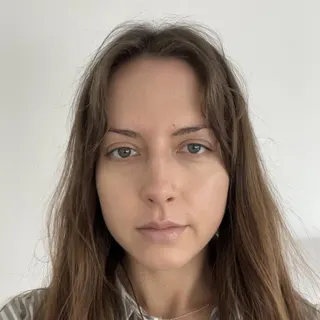
Sophie Clark

Art, and English as a Foreign Language Specialist

London

£25.00 per hourDBS checkediAccepting enquiries
  • Currently teaches Art, and English Language to students of all ages through personalised online lessons.
  • Holds a Bachelor of Arts in Fine Art, and a Diploma in Professional Art Studies from Central Saint Martins, University of the Arts London.
  • Over 8 years' of experience working in the world of Art, including roles at major museums and galleries in London.

+3 more on Sophie's profile

ArtArt and DesignFine ArtHistory of Art+1 more

Sophie Clark is a TEFL-certified english tutor and Art specialist offering online tutoring for KS3, GCSE and A Level, plus BA-level Art and Design. Central Saint Martins BA/Diploma; personalised lessons with optional homework and session reports.

Send a quick enquiry from here and the Latimer Tuition team will pass it on to Sophie.
View profile

Jessica Page

Qualified Art, Mathematics, and Photography Teacher

Hove

£60.00 per hourDBS checkediAccepting enquiriesQualified teacher
  • Jess has over 6 years' of tutoring experience and has run her own tutoring business for over 5 years'.
  • Holds a First Class Bachelor of Arts with Honours in Fine Art, from Kingston University London.
  • Holds a Level-7 in Further Education and Training PGCE Visual Arts from the University of Brighton.

+3 more on Jessica's profile

ArtArt and DesignBusiness StudiesFine Art+2 more

Qualified Art, Photography and GCSE Maths tutor with 6+ years’ experience, a First-Class Fine Art BA, and a Level-7 PGCE. Offers online tutoring or in-person sessions, with SEND support, lesson reports, and optional homework.

Send a quick enquiry from here and the Latimer Tuition team will pass it on to Jessica.

View profile
GCSE Art and Design is a portfolio-led, practical subject, so the right tutor should help your child plan, reflect, experiment, organise their sketchbook and understand assessment expectations without taking over the work. Latimer lets parents compare one-to-one tutor profiles, check price and availability, message a tutor directly and arrange online support that fits the student’s board, title, deadline stage and confidence level.

Why choose Latimer for GCSE Art and Design support?

GCSE Art and Design tutoring should feel different from generic revision help. A useful tutor works with the student’s actual sketchbook, board, title, deadline stage and confidence level, then gives clear feedback that helps the student make better decisions for themselves. With Latimer, parents can compare tutor profiles, message a tutor directly and arrange online one-to-one tuition without relying on a fixed local pool of tutors.

  • One-to-one support around the student’s current portfolio, sketchbook and externally set assignment stage.
  • Tutor profiles above this guide so parents can compare experience, price, availability and teaching style directly.
  • Online lessons can use image sharing, screen sharing and live discussion while practical making remains student-led.
  • A free intro consultation can help families check fit before moving into regular lessons.
  • Clear boundaries: tutors support understanding, planning and critique, not the production of assessed work.

How to compare tutors and start lessons

The best first enquiry is specific. Before contacting a tutor, gather the student’s exam board, title or endorsement, current component, school deadline, recent feedback and a few clear photos or scans of work. The tutor can then judge whether they are the right fit and suggest a sensible first lesson focus.

  • Use the first message to explain whether the student needs portfolio organisation, sketchbook feedback, ESA planning, confidence or accountability.
  • Ask how the tutor reviews visual work online, including sketchbook pages, digital images and annotations.
  • Use the intro consultation to check teaching style, availability, homework expectations and ethical boundaries.
  • After the first full lesson, agree a realistic short plan rather than chasing a promised grade.
1. Compare profiles
Look for GCSE, Art and Design, relevant art specialisms, availability and price shown on the tutor profile.
2. Message the tutor
Share board, title, deadline, current sketchbook stage and the student’s confidence level.
3. Intro consultation
Use the free consultation to test fit, online setup and expectations before booking regular lessons.
4. First lesson
Review portfolio evidence against AO1–AO4 and agree the most useful next step.
5. Keep adjusting
Use feedback, lesson reports and parent or student goals to refine the plan as deadlines move closer.

Pricing, tutor types and choosing the right level of experience

Latimer’s parent-facing pricing promise is simple: “The price we present is the price you pay.” Use the price shown on each tutor profile rather than assuming a fixed GCSE Art and Design rate. A higher price is not automatically the best fit; for this subject, the right match often depends on portfolio experience, feedback style, board familiarity, availability and how well the tutor can help the student keep ownership of the work.

  • Use profile prices rather than assuming a fixed GCSE Art and Design tutoring rate.
  • A practitioner or graduate may suit idea development, sketchbook organisation and practical experimentation.
  • A qualified teacher or examiner-style profile may suit specification detail where that credential is shown on the profile.
  • Latimer’s model is pay-as-you-go with no contract or tie-in, so families can continue while lessons feel worthwhile.
  • Invoices are raised after lessons, with notice before a saved card is charged.
Student or graduate tutor
May suit confidence, relatable guidance, sketchbook organisation and affordable support where the profile fits.
Art practitioner or portfolio specialist
May suit media experimentation, visual research, idea development and personal-response planning.
Qualified teacher
Useful for curriculum and classroom-assessment familiarity where the profile verifies this background.
Examiner-style experience
Useful for assessment-objective language and moderation-aware feedback where the profile verifies it.
Access or SEND-aware support
Discuss needs directly with the tutor; schools and exam centres manage formal arrangements.

Online GCSE Art lessons, local searches and practical work

Latimer describes its tutoring as “online first”, which can work well for a visual subject when the lesson is set up properly. A tutor can review photos or scans of sketchbook pages, talk through experiments, use screen sharing for artist research and help the student decide what to do next. The practical making, materials, scale and assessed outcomes still happen in the student’s own workspace and under the student’s control.

  • Useful setup: a well-lit desk, phone camera or scanner, digital images of sketchbook pages, the school brief and a secure way to share work.
  • Strong online fit: portfolio organisation, annotation discussion, contextual research, composition decisions, material planning and reflection.
  • Not appropriate: the tutor handling materials, creating final work, rewriting annotation or making unauthorised edits to assessed pieces.
  • Families searching for a GCSE Art tutor near them can compare online tutors nationally instead of being limited to local availability.
  • In-person lessons may be possible only where tutor and family locations make it realistic and both sides agree.
Online one-to-one tutoring
Best for flexible access to the right tutor, image-led critique, planning, feedback and parent convenience.
In-person tutoring
May help with physical materials where a suitable local tutor exists, but should not be promised nationally.
School support
Best for official assessment decisions, authentication, centre deadlines and formal access arrangements.
Self-study and free resources
Useful for inspiration and practice, but often weaker for diagnosis, prioritisation and accountability.

Credentials, safety and trust signals to check on each profile

Tutor credentials should be read profile by profile. Some tutors may be qualified teachers, examiners, graduates, artists or experienced subject tutors, but it is not safe to assume every GCSE Art and Design tutor has the same background. For a practical assessed subject, the most useful trust signal is often specific: does this tutor understand GCSE portfolio work, online critique and the boundary between guidance and doing the work?

  • Check whether the tutor has worked with GCSE portfolio assessment rather than only general drawing or art practice.
  • Ask whether they have experience with your child’s board, title and deadline stage.
  • Check profile-specific credentials rather than assuming every tutor is a teacher, examiner or DBS checked.
  • Look for a tutor who can give clear feedback without replacing the student’s own decisions and making.
  • Use Latimer’s company, process and pricing pages for operational reassurance, then use the visible tutor profile for tutor-specific details.
Useful evidence on a profile
Subject background, tutoring experience, board or title familiarity, online setup, availability and price.
Check before relying on
Teacher, examiner and DBS details should come from the tutor profile, not from a general page promise.
Do not assume
Subject-specific reviews, Art tutor counts, response-time statistics or grade outcomes unless they are clearly shown and current.

What GCSE Art and Design tutors can help with

A clear way to explain GCSE Art and Design support is through the four assessment objectives. Across AQA, Pearson Edexcel, OCR and Eduqas, the portfolio and externally set assignment ask students to develop ideas, refine their work, record observations and present a personal response. A tutor can help the student understand what evidence their sketchbook or digital portfolio needs to show, then practise making that evidence clearer and more intentional.

  • AO1: develop ideas through artist, designer, photographer or contextual investigations.
  • AO2: refine work through materials, processes, techniques, experimentation and review.
  • AO3: record observations, ideas and insights through drawing, photography, notes and visual evidence.
  • AO4: present a personal, meaningful response that connects to the student’s journey.
AO1 — investigation and context
A tutor can help students choose relevant sources, connect research to their own ideas and avoid disconnected artist pages.
AO2 — experiment and refine
A tutor can help students compare media, processes and compositions, then explain why choices changed.
AO3 — record and annotate
A tutor can help students record observations clearly and use annotation to show thinking, not fill space.
AO4 — personal response
A tutor can help students plan, test and reflect on outcomes while keeping the final work their own.

Exam boards, titles, portfolio and externally set assignment

For AQA, Pearson Edexcel, OCR and Eduqas, GCSE Art and Design is commonly structured around a portfolio worth 60% and an externally set assignment worth 40%, with AO1–AO4 weighted equally overall. That is why tutor support should start early enough to improve the journey of the work, not just the final outcome. The exact title also matters: GCSE Art and Design can include Fine Art, Photography, Graphic Communication, Textile Design, Three-dimensional Design and related board titles.

  • Ask the school for the exact awarding body, specification title and current component before choosing a tutor.
  • For broad Art, Craft and Design courses, check whether the student must show work across more than one endorsed area.
  • Externally set assignment materials commonly arrive from early January and culminate in a 10-hour sustained-focus or supervised period, but school and board instructions control the live deadlines.
  • Use GCSE as the main level wording, with Key Stage 4 or KS4 only as a helpful parent-friendly alias.
  • For UK families outside those boards, keep the board and qualification details explicit before choosing a tutor; this guide does not cover every Scottish, CCEA or international specification.
Portfolio / Component 1
Usually 60%; long-term evidence of investigation, experimentation, recording, development and personal response.
Externally set assignment / Component 2
Usually 40%; preparation starts from the board’s release or start window and culminates in a 10-hour sustained-focus or supervised period.
Titles and endorsements
Fine Art, Photography, Graphic Communication, Textile Design and related titles may affect the tutor match.
No Foundation/Higher tier
GCSE Art and Design is not a Foundation/Higher tiered subject; grade goals should be framed through AO evidence and portfolio quality.

Coursework, portfolios and ethical tutoring boundaries

Authenticity is central in GCSE Art and Design. JCQ’s candidate guidance is direct: assessed work “must be your own.” A tutor can guide, question, critique and help a student plan, but they should not create assessed sketchbook pages, rewrite annotation, make final pieces, hide outside help or make the work stop sounding or looking like the student’s own thinking.

  • Appropriate support: explaining requirements, asking questions, suggesting experiments, discussing artists, planning time and reviewing evidence.
  • Not appropriate: making sketchbook pages, writing annotation, creating final outcomes, editing assessed work into the tutor’s voice, or hiding outside help.
  • AI and online sources need the same care: the final submission must remain the student’s independent work and follow school or centre rules.
  • A good tutor should make the student more independent, not dependent on hidden input.
Tutor can help with
Understanding the brief, planning, critique, reflective questions, organisation, technique practice and authentic decision-making.
Tutor should not do
Create assessed pages, rewrite annotation, complete final outcomes, provide hidden help or bypass centre rules.
AI caution
Any AI or source use in assessed work must stay within the school or board rules and remain the student’s own thinking.

Ready to compare GCSE Art and Design tutors?

Start with the tutor profiles above or open the filtered tutor search. If you would like help choosing, contact Latimer with the student’s board, title, deadline stage, budget, schedule and learning needs. A good enquiry makes it easier to find a tutor who can support the work without taking it over.

  • Have the student’s board, title and deadline stage ready before enquiring.
  • Ask how the tutor reviews sketchbooks, portfolios or digital work online.
  • Use the intro consultation to check fit before regular lessons.

Support and clarity

Frequently asked questions

Straight answers to the questions people ask most often.

How much does GCSE Art and Design tutoring cost with Latimer?

Use the price shown on each tutor profile rather than assuming a fixed GCSE Art and Design rate. Latimer says the presented price is the price the family pays, invoices are raised after lessons, and there is no contract or tie-in. The tutor’s experience, credentials, availability and teaching style may affect the profile price.

Can an online tutor help with a GCSE Art sketchbook or portfolio?

Yes. Online tutoring can work well for sketchbook walkthroughs, image sharing, screen sharing, annotation discussion, artist research, critique and planning. The student still completes practical making and assessed outcomes in their own workspace, using their own materials and decisions.

Can a GCSE Art and Design tutor help with coursework without doing the work?

Yes, if the support is guidance rather than substitution. A tutor can explain requirements, ask questions, critique experiments, help the student plan and discuss how to reflect on choices. They should not create assessed sketchbook pages, write annotation, make final pieces or hide outside help.

Which exam boards and titles can GCSE Art and Design tutoring support?

AQA, Pearson Edexcel, OCR and Eduqas are the main examples here. GCSE Art and Design can include titles such as Art, Craft and Design, Fine Art, Photography, Graphic Communication, Textile Design and Three-dimensional Design. Latimer families should check the student’s exact board and title before choosing a tutor, and live tutor profiles should confirm the specialism actually available.

What is the difference between GCSE Art, Art and Design, Fine Art and Photography?

Art and Design is the official umbrella wording used by major awarding bodies. GCSE Art is a common shorthand. Fine Art, Photography, Graphic Communication, Textile Design and similar names may be specific titles or endorsements within GCSE Art and Design, so the exact school entry matters when choosing a tutor.

What happens in the first GCSE Art and Design tutoring lesson?

A useful first lesson normally checks the board, title, current component, deadlines and recent school feedback. The tutor can review sketchbook or digital portfolio evidence against AO1–AO4, ask about confidence and agree one practical next step before the next session.

How often should my child have GCSE Art and Design lessons?

There is no guaranteed number of lessons. Weekly support can help with steady portfolio development and accountability; fortnightly support may suit a student who is mostly on track but needs critique; short blocks can help around mocks, deadlines or the externally set assignment stage. Student-led making between lessons is essential.

Can a tutor help with the externally set assignment or mocks?

Yes, a tutor can help the student understand starting points, plan research, organise experiments, review AO evidence and prepare confidently before supervised or sustained-focus time. The tutor should not create the work or provide unauthorised help during assessed conditions.

Do GCSE Art and Design tutors guarantee higher grades?

No. A tutor can help with understanding, confidence, portfolio development, routines, critique and decision-making, but no tutor can guarantee a particular grade. This is especially important because assessed portfolio work must remain the student’s own.

Are Latimer GCSE Art tutors qualified teachers, examiners or DBS checked?

Check each visible tutor profile. Latimer explains that tutor qualifications vary, and some tutors may be qualified teachers or examiners. DBS wording should also be profile-specific unless it is clearly shown for the tutor you are considering.

Can homeschoolers, private candidates or adult learners get GCSE Art support?

They can enquire, but GCSE Art and Design needs early planning because portfolio or non-examination assessment work has to be authenticated by a centre. Private candidates should speak to centres early about entry, supervision, portfolio review and authentication before relying on tutoring alone.

Can tutoring help if my child has access arrangements or SEND needs?

A tutor can support routines, confidence, planning and the student’s normal way of working. Schools and exam centres manage formal access arrangements, and any arrangement must preserve assessment integrity and cannot replace the practical skill being assessed.

I searched for a GCSE Art tutor near me. Can Latimer help?

Latimer is online first, so parents can compare one-to-one tutors nationally rather than depending only on local supply. In-person lessons may be possible only if the tutor and family are close enough and agree it. That is not a promise of local GCSE Art tutors in every town or region.

Related tutor pages

Continue comparing nearby subjects and levels so you can find the right tutor fit for your next step.

GCSE tuition

GCSE Art tutor

Compare online one-to-one tutors for GCSE Art and Design, with support for sketchbooks, portfolio development, annotation, artist research and externally set assignment preparation.

A-Level tuition

A-Level Art and Design tutor

Compare one-to-one tutors for A-Level Art and Design, including online support for sketchbooks, portfolios, Personal Investigation planning, exam-board expectations and confident creative development.

A-Level tuition

A-Level Art Tutor

Compare online A-Level Art tutors for portfolio, sketchbook, coursework and exam support, with profile prices and reassuring guidance for parents.

GCSE tuition

Find a GCSE Music tutor

Compare online Music tutors who can support GCSE performance, composition and listening/appraising, with direct contact and pay-as-you-go lessons.