One-to-one beginner guitar tuition

Find a beginner guitar tutor

Learn your first chords, keep a steady beat and start the music you want to play. Choose online tuition around acoustic, electric or classical guitar goals.

  • One-to-one tuition
  • Pay as you go
  • Direct tutor contact
Whether you are an adult starting from scratch, a parent choosing lessons for a child or a self-taught player stuck on the first chords, describe what you can do and what you want to play. A useful beginner plan connects clear sound and rhythm with music you enjoy, with optional grades discussed when they suit the goal.

The form controls become available when the enquiry form has loaded.

Guitar Beginner tuition enquiry

Tell us what you know, skip anything you’re unsure about, and add a short description if you skip both subject and level.

  1. Tutoring brief
  2. Contact details

2 questions remaining

Tutoring brief

What level is the tuition for?

Choose a level

Choose a suggestion or type your own answer. You can skip this if you’re unsure.

This form works best for one learner at one level and up to six subjects. If your circumstances are more complicated, email us at Contact@LatimerTuition.com so you can explain everything properly.

How one-to-one tuition can help

  • Getting the first notes and chords to sound clearly
  • Keeping a steady beat while learning strumming and chord changes
  • Finding a starting point for songs, riffs or classical playing

Available tutors

Compare guitar tutor profiles

6 tutor profiles selected

Look for experience teaching beginners in your chosen guitar style. Compare the approach and hourly rate on each profile, then discuss your starting point and lesson arrangements with the tutor.

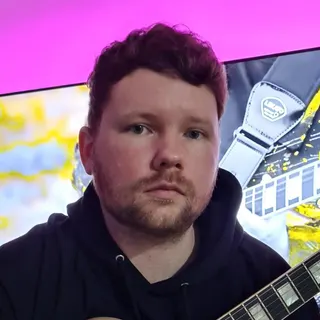
Portrait of Owen Evans

Owen Evans

Music, and Musical Instrument Specialist

Lumsden, United Kingdom

£30.00 per hourDBS checkediAccepting enquiries
GuitarMusicMusic PerformanceMusic Technology+1 more
  • Holds over 8 years' of online teaching experience.
  • Owen holds over 18 Years' experience teaching & in the Music industry.
  • Received over 1 million views & listens on Spotify, Youtube & social media.
  • A professional songwriter in all genres.
  • Over 10 years' experience using Logic Pro-x.
  • Owen has worked with Grammy-winning producers.

Owen Evans is a UK guitar tutor with 18+ years in teaching and the music industry, including 8+ years of online tutoring. He supports ABRSM/Rockschool, GCSE and A-Level Music, plus songwriting and Logic Pro X production with tailored lesson plans.

Send a quick enquiry from here and the Latimer Tuition team will pass it on to Owen.

Portrait of Darren Stone

Darren Stone

Music Specialist

Waterlooville, United Kingdom

£40.00 per hourDBS checkediAccepting enquiries
GuitarMusicMusic PerformanceMusic Technology+1 more
  • Over 10 years’ of experience teaching in UK secondary schools, tailoring lessons to each student’s learning style.
  • Professional composer with internationally published work in film, television, games, and advertising.
  • Expert in Music Technology, GCSE Music, A-Level Music, and Level 2 Music Technology.
  • Extensive studio and live performance experience as a guitarist, bridging real-world music with academic learning.
  • Guides students in composition, performance, music theory, and creative production.

Darren Stone is a private tutor and guitar tutor specialising in Music Technology, teaching GCSE and A-Level Music with 10+ years’ UK secondary school experience. Professional composer offering tailored help with composition, theory and performance, plus session reports.

Send a quick enquiry from here and the Latimer Tuition team will pass it on to Darren.

Portrait of Lewis Spencer

Lewis Spencer

Music and Guitar Specialist

Kidderminster, United Kingdom

£40.00 per hourDBS checkediAccepting enquiries
GuitarMusic PerformanceMusic Theory
  • Holds a BMus (Hons) degree in Popular Music Performance and a BTEC Level 3 Extended Diploma in Music Performance.
  • Works as a peripatetic tutor in schools, delivering engaging and structured lessons.
  • Strong background in music theory, harmony, and musicianship training.
  • Covers a wide range of genres, including pop, rock, jazz, funk, soul, R&B, and more.
  • Experienced session musician and producer, operating from a professional home studio.

Lewis Spencer is a Kidderminster, Worcestershire guitar tutor offering private lessons in popular music performance and music theory, backed by a BMus (Hons) and over a decade of peripatetic school teaching plus session musician/producer experience.

Send a quick enquiry from here and the Latimer Tuition team will pass it on to Lewis.

Portrait of Simon OKeeffe

Simon OKeeffe

Music and Music Performance Specialist

london, United Kingdom

£40.00 per hourDBS checkediAccepting enquiries
ABRSMGCSE (general)GuitarMusic Performance+4 more
  • Simon has over 12 years' of experience as a music educator across primary and secondary schools in addition to further education.
  • Holds a Bachelor of Arts (Hons) in Music (Guitar Institute).
  • Holds a Master of Arts in Record Production and Distribution (University of West London).
  • Professional background as a musician, producer, arranger, and musical director.

Music educator with 12+ years’ experience offering private lessons as a guitar tutor and piano tutor, plus drums and music theory. Supports GCSE, A Level and university music performance and music technology, with lesson reports and optional homework.

Send a quick enquiry from here and the Latimer Tuition team will pass it on to Simon.

Portrait of Abigail Ajala

Abigail Ajala

Music, and Musical Instrument Specialist

Rushmere St Andrew, United Kingdom

£45.00 per hourDBS checkediAccepting enquiries
GuitarMusicMusic PerformanceMusic Technology+2 more
  • Over 11 years' of Music teaching experience.
  • Holds a Bachelor of Arts in Commercial Music.
  • Has been the vocal coach for the Stagecoach Performing Arts School (Ipswich).
  • Teaches guitar, ukulele, piano (up to intermediate), vocals, and music theory.

Abigail Ajala is a guitar tutor with 11+ years’ teaching experience, BA in Commercial Music, and Stagecoach Performing Arts (Ipswich) vocal coach. She is also a piano tutor (to intermediate) teaching ukulele and music theory for ages 4+, KS1–3, GCSE and A Level; online and Suffolk-based.

Send a quick enquiry from here and the Latimer Tuition team will pass it on to Abigail.

Portrait of Alfie Morris

Alfie Morris

Humanities, Media, and Music Specialist

Bristol

£25.00 per hourDBS checkediAccepting enquiries
GuitarMedia StudiesMusicMusic Technology+2 more
  • Holds over 5 year's of tutoring experience.
  • Holds a 2:1 Bachelor's degree in Philosophy & Religion.
  • Holds Distinction in a Media & Film Diploma.
  • Alfie has worked professionally throughout the media industry; on set, in post production and as a film critic.
  • Holds A, A for Mathematics and English at GCSE level.

Alfie Morris is a private tutor offering online tutoring and in-person lessons in Philosophy, Religious Studies, Media Studies, Music and guitar, with 5+ years’ experience, a 2:1 BA in Philosophy & Religion, and a Distinction in Media & Film.

Send a quick enquiry from here and the Latimer Tuition team will pass it on to Alfie.

Start with the music you want to play

Bring a song, a short riff or a style you would like to learn. A riff is a short musical pattern. Your choice helps a tutor connect the first technical tasks with something you want to hear. These starting points overlap; acoustic guitar, for example, can accompany singing or carry a melody on its own.

Acoustic songs and accompaniment
An early goal might be to strum a chord evenly, then change shape without losing the beat. Later, fingerstyle playing, where the fingers pluck individual strings, can add a melody or a repeating accompaniment. Choose a tutor who can simplify the music while keeping its rhythm recognisable.
Electric riffs and sound control
Start with a few notes that begin and end deliberately. Muting means stopping strings from ringing when you do not want them to sound. Practise a short pattern and listen for unwanted notes between the intended ones. Use an amplifier or a suitable headphone setup so you can hear the electric sound you are learning to control.
Classical melody and fingerstyle
A useful early task is to pluck a short melody with the fingers and aim for an even sound from note to note. Then shape the end of the musical line instead of giving every note the same emphasis. Look for help with finger movement, tone and reading music alongside learning pieces.

A first-chord example: make E minor ring clearly

For this example, use a six-string guitar in standard tuning. From the thickest, lowest-pitched string to the thinnest, highest-pitched string, the open notes are E, A, D, G, B, E. An open string sounds without a finger pressing it down. E minor, usually written Em, uses two fretted strings and four open strings.

The following exercise shows how a small correction can change what you hear. It is an illustrative practice task, not a required lesson sequence.

  1. Make the shape

    Press the A string and D string at fret 2 with two fingertips. Place each fingertip just behind the second metal fret, on the side nearer the headstock. Leave the other four strings open. Strum gently across all six strings.

  2. Find the unclear string

    Keep the shape in place and pluck each string separately. Suppose the open G string makes a dull click instead of ringing. Check whether a fretting finger is resting against it. Strumming harder will not free a string that your finger is touching.

  3. Change one contact point

    Curve that finger more onto its tip so it clears the G string while still holding its own note. Pluck the G again, then check all six strings. The improvement to listen for is six distinct ringing notes, rather than a louder version of the same muffled chord.

  4. Add a steady beat

    Count slowly: 1, 2, 3, 4. Make one downward strum on each count, then repeat. If the counts bunch together, slow down or clap the pulse before returning to the guitar. Aim to hear the clear chord at evenly spaced moments.

Read a first guitar TAB instruction

Guitar tablature, usually called TAB, uses lines for strings and numbers for fret positions. A 0 means an open string. A 2 means fret 2; it does not mean “use finger number two”.

For a simple example, put the sequence 0, 2, 0, 2 on the line for the thin, high E string. Pluck that string open, press it at fret 2 and pluck again, release it for the next open note, then return to fret 2. Give each note one count: 1, 2, 3, 4. The rhythm is part of this exercise; the four fret numbers alone are not a complete rhythmic instruction.

You have now turned four written instructions into an audible pattern. A tutor can build reading alongside playing, introducing the notation needed for your chosen music rather than giving you a large glossary before you start.

Make practice small enough to repeat accurately

After the first lesson, agree a short set of tasks that you can explain and repeat at home. Name what to listen for: a previously muted string ringing, an even beat, or a change between two learned chords without an extra pause. That gives the next lesson something specific to review.

When two chords sound clear separately but a song stops at the change, isolate the movement. Prepare the next shape, keep the fingers close to the strings and practise moving between the two positions slowly. Then put the change back into a steady pulse, using a metronome if helpful. A metronome supplies regular clicks to play against. Speed comes after the movement and timing are manageable.

Agree lesson length and frequency around your starting point, available practice time and budget. The plan can change as you learn. There is no single number of lessons that every beginner must complete before playing a song or moving to harder music.

Choose a tutor who can explain the small details

Instrumental knowledge matters, but so does the ability to notice why a beginner is stuck and give an understandable next step. Use the introductory conversation to discuss the music you want to play and what you can already do. If you have tried lessons or online videos before, describe what helped and where you lost confidence.

  • Experience that fits the goal

    Ask about teaching absolute beginners in your preferred guitar style. If you already know chord shapes, say whether the difficulty is sound, rhythm, changing chords or reading. For a graded goal, name the board and route as well.

  • An explanation you can use

    Discuss how the tutor would break down a difficulty such as a muted string. Look for language you understand, a demonstration you can follow and a manageable task to try yourself. A long list of advanced techniques does not tell you how the first lesson will work.

  • A workable way to learn

    Explain any difficulty seeing small diagrams, following several instructions at once or remembering a demonstration. Ask for the support that helps, such as a larger chord diagram, one instruction at a time or a written practice note. Agree how feedback and progress will be discussed.

Set up an online lesson so the tutor can see and hear

Latimer’s service centres on online one-to-one tuition. Microsoft Teams is the default platform, and tutor and learner can agree another. Before the first lesson, test the guitar sound as well as speech: software designed for talking can suppress sustained musical sound.

Position the camera so both the fretting hand and the picking or strumming hand can be seen. Keep the device stable, with room to show the guitar neck. Have the guitar, agreed music or TAB and any tuning aid within reach. For an electric guitar, check that the tutor can hear the amplified sound; a headphone setup that only you can hear needs a different arrangement for the call.

Take turns for demonstrations and responses if the connection delay makes playing together difficult. Where accompaniment is useful, agree a recording that you can play locally. Test the equipment you already have with the tutor before buying extra microphones or other accessories.

Compare lesson costs and agree the first steps

Each tutor sets their own hourly rate, shown on their profile. Latimer invoices after lessons on a pay-as-you-go basis. Check the proposed lesson length and whether there are separate costs for music, equipment or an optional exam.

A matching request is free. Include your preferred music, whether you have a guitar, your starting point and the times that could work. Tutors offer a free introductory meeting to discuss goals, teaching approach and arrangements. It is an introduction, rather than a full free guitar lesson. Use it to settle the practical details before arranging paid lessons.

Grades are an option when they fit your musical goal

You can learn for enjoyment without making an exam the target. If a graded route would help you structure practice, choose it with the tutor once your instrument and interests are clear. “Beginner” describes a starting point; it is not automatically Grade 1. Trinity offers a separate Initial stage before Grade 1 in its acoustic and classical guitar routes.

Trinity Acoustic Guitar includes fingerstyle and plectrum playing, with music in both standard notation and TAB. Its Classical Guitar syllabus requires nylon strings and does not permit a plectrum. Those are requirements of that named exam route, so check the instrument and current syllabus before choosing exam materials.

If you are considering ABRSM instead, our ABRSM Grade 1 tuition guide explains the wider route decision. Tell a prospective tutor that the instrument is guitar and confirm the relevant guitar syllabus; an exam-board name alone is not a lesson plan.

Support and clarity

Frequently asked questions

Straight answers to the questions people ask most often.

Do I need to buy a guitar before making an enquiry?

You can explain that you have not chosen an instrument yet. Discuss the music you want to play, instrument size and any electric sound setup with a prospective tutor before buying. If you already own or can borrow a guitar, describe it. Plan how you will have access to an instrument for lessons and practice.

What should I discuss when choosing lessons for a child?

Give the child’s age, musical interests and any previous playing experience. Discuss whether they can comfortably reach the strings and frets, how instructions will be kept manageable and what help an adult should give between lessons. Ask about experience teaching children at that starting point; age alone does not settle the lesson plan.

What if the strings still buzz after I change my finger position?

Buzz differs from a string being muted by a neighbouring finger. Fretting too far behind the fret can contribute, but the guitar’s setup can also cause buzzing. Show the tutor which string and fret are affected so they can help separate playing technique from an instrument issue. Persistent buzz may need the guitar checked rather than more pressure from your hand.

Can I arrange in-person beginner guitar lessons?

Latimer is online first. An in-person arrangement may be possible if you and the tutor are nearby, but it needs to be agreed individually. Include your location and preferred lesson format in the enquiry so those arrangements can be discussed.

Related tutor pages

Explore related tuition options and guidance for choosing the right support.