One-to-one application support

Personal statement tutors

Turn your experiences into clear, relevant writing. Find a tutor for planning your UCAS answers, developing a draft or checking the final version, with feedback that keeps the statement your own.

  • One-to-one tuition
  • Pay as you go
  • Direct tutor contact
Personal statement tuition can help you decide what to include, explain what you learned and make each answer earn its space. The starting point is your intended course and your own experiences. For postgraduate or direct applications, bring the provider’s instructions so the support fits the actual task.

The form controls become available when the enquiry form has loaded.

Personal Statement tuition enquiry

Tell us what you know, skip anything you’re unsure about, and add a short description if you skip both subject and level.

  1. Tutoring brief
  2. Contact details

2 questions remaining

Tutoring brief

What level is the tuition for?

Choose a level

Choose a suggestion or type your own answer. You can skip this if you’re unsure.

This form works best for one learner at one level and up to six subjects. If your circumstances are more complicated, email us at Contact@LatimerTuition.com so you can explain everything properly.

How one-to-one tuition can help

  • Choose examples that show preparation for your intended course
  • Develop reflection instead of listing achievements
  • Revise structure and clarity while keeping your own voice

Available tutors

Compare personal statement tutors

6 tutor profiles selected

Look for experience with your intended subject and application route, then discuss the feedback you need. If you want help choosing, include your course, draft stage and deadline in a free matching request.

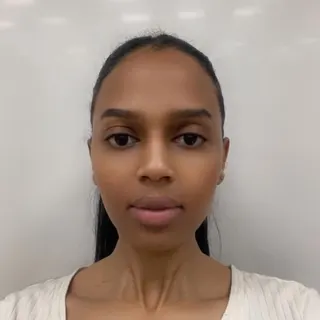
Portrait of Zunaira Naeem

Zunaira Naeem

Mathematics, Biology, and Chemistry Specialist

Burton-On-Trent, United Kingdom

£25.00 per hourDBS checkediAccepting enquiriesHigh performing tutor
BiologyChemistryMathematicsPersonal Statement+1 more
  • Currently studying for her Bachelors of Dental Surgery at the University of Birmingham.
  • Holds over 2 years' of One-2-One tutoring experience.
  • Holds A-Levels in Biology, Chemistry, and Psychology.
  • Holds 7 A*s and 3 As for her GCSEs.
  • Zunaira offers guidance on medical and dental school applications, including support with personal statements and interview preparation.
  • Fluent in English and Urdu.

Zunaira is a GCSE and KS3 Maths and Science tutor with over two years of one-to-one experience, offering interactive, tailored lessons and constructive feedback.

Send a quick enquiry from here and the Latimer Tuition team will pass it on to Zunaira.

Portrait of Abhay Mohandas

Abhay Mohandas

Mathematics and Science Specialist

Sittingbourne, United Kingdom

£30.00 per hourDBS checkediAccepting enquiries
BiologyChemistryMathematicsMedicine+1 more
  • Holds over 3 years' of tutoring experience in-person and online.
  • Currently working towards his MBChB in Medicine at the University of Birmingham.
  • Holds an A for Chemistry at A-Level.
  • Holds 3 A**s, 5 A*s, and 3 As including A**s in Mathematics, English Language, and Chemistry at GCSE level.

Abhay Mohandas is a maths and science tutor for KS3, 13+, GCSE and AS/A Level Chemistry, with 3+ years' online tutoring and in-person experience. University of Birmingham Medicine student who provides lesson reports and optional homework.

Send a quick enquiry from here and the Latimer Tuition team will pass it on to Abhay.

Portrait of Alexander Olsen

Alexander Olsen

Humanities Specialist

Southamptom, United Kingdom

£35.00 per hourDBS checkediAccepting enquiries
Business StudiesConsultancyEnglish LanguageEnglish Literature+10 more
  • Over 10 years' of experience in tutoring students from GCSE to A Level.
  • Holds a Master of Science in Education Studies from the Open University.
  • Holds a Postgraduate Certificate in Professional Studies in Education from the Open University.
  • Holds a Bachelor of Science in Humanities from the Open University.
  • Holds a Master of Arts in Political Science and International Relations from Kings College, University of Aberdeen.
  • Currently employed as a Training Needs Analyst for a FTSE 100 global engineering corporation.
  • Average grade boundary shift of +2 with over 90% of students achieving 7-9 at GCSE and 85% A and A* at A Level.

Politics tutor and history tutor with 10+ years’ experience from GCSE to A Level and university; holds an MSc in Education Studies (Open University). Students typically improve by 2 grades, with 85% achieving A and A* at A Level.

Send a quick enquiry from here and the Latimer Tuition team will pass it on to Alexander.

Portrait of Zayan Zahid

Zayan Zahid

Mathematics Specialist

Cardiff, United Kingdom

£35.00 per hourDBS checkediAccepting enquiries
BiologyChemistryMathematicsNumeracy+2 more
  • Currently a Teaching Assistant for primary school students, providing both 1-1, and in-class (group) support.
  • Over 3 years of experience working as a tutor.
  • Holds A*, A, A, A for Welsh Baccalaureate, Mathematics, Physics and Chemistry at A-Level.
  • Holds 12 A*s including Mathematics and Mathematics Numeracy alongside a Distinction for Additional Mathematics at GCSE level.
  • Zayan is bilingual, with fluency in English and Urdu.
  • To pursue his Bachelor of Science in Computer Science from September 2024.

GCSE maths tutor and physics tutor with 3+ years’ experience and current primary teaching assistant, supporting KS2–KS3, GCSE and iGCSE. Bilingual in English and Urdu, with lesson reports each session and optional free homework.

Send a quick enquiry from here and the Latimer Tuition team will pass it on to Zayan.

Portrait of Silvia Vescu

Silvia Vescu

Qualified Humanities & Business Teacher

Montrose, United Kingdom

£45.00 per hourDBS checkediAccepting enquiriesQualified teacher
Business StudiesCitizenshipEconomicsEnglish Language+13 more
  • Holds a PGCE from University College London.
  • Holds an LLB (Hons) in Law, 2:1, from King's College London, and is a qualified lawyer.
  • Currently teaches A-Level and GCSE Economics and Business, alongside Sociology, Politics, Law, English Language and English Literature.
  • Has delivered hundreds of one-to-one online lessons and uses a Socratic approach, tailored to each exam board and specification.

Silvia Vescu is an economics tutor and law tutor for GCSE/A-Level, PGCE-trained at UCL with an LLB from King’s. She offers online tutoring with Socratic, exam-board tailored 1:1 lessons plus session reports.

Send a quick enquiry from here and the Latimer Tuition team will pass it on to Silvia.

Portrait of Priscilla Asare

Priscilla Asare

Mathematics and Science Specialist

London, United Kingdom

£30.00 per hourDBS checkediAccepting enquiries
BiologyBusiness StudiesChemistryEnglish Language+4 more
  • Currently studying for her Bachelor of Dental Surgery (BDS) degree at Peninsula Dental School.
  • Holds previous experience working as a Teaching Assistant within a UK Grammar school.
  • Priscilla has 4 years of tutoring experience.
  • Certified in Adverse Childhood Experiences (ACEs) and Early Trauma Training.
  • Holds A*, A, A for Economics, Chemistry, and Biology at A-Level.
  • Holds 11 A*s to As for Triple Science, Geography, Computer Science and Business Studies at GCSE level.

Priscilla supports learners in Mathematics, Biology, Chemistry and Physics from KS2 to GCSE, drawing on four years of tutoring experience and a student-centred approach.

Send a quick enquiry from here and the Latimer Tuition team will pass it on to Priscilla.

Plan for the current UCAS format

For UCAS undergraduate applications from 2026 entry onwards, the personal statement has three answers, with at least 350 characters in each and a maximum of 4,000 characters overall, including spaces. The UCAS student guide gives the exact questions. These summaries help you plan what belongs in each answer.

The answers can be different lengths. Admissions staff consider them together, so choose one useful home for each example rather than repeating it. Use the live application’s counters when checking your final text. The UCAS adviser toolkit confirms that the supplied question text does not use your allowance.

Course motivation
Explain the subject question or idea you want to explore further. Connect your interest to something you have read, studied or investigated.
Preparation through study
Choose a relevant project, topic or piece of work. Explain the thinking or skill it developed and how that prepares you for the course.
Preparation beyond education
Use relevant work, volunteering, responsibilities or independent activity. Explain what you learned and why it matters, rather than listing everything you have done.

A small example: show the thinking behind the skill

A statement such as “My history project developed my analytical skills” names a strength but leaves the reader guessing what you actually did. The UCAS toolkit suggests supporting a point with evidence, explaining it and linking it to the course. Here is a fictional teaching example, not an applicant’s statement or a passage to copy.

Starting notes: a student compares two accounts of a local strike. A newspaper report blames outside organisers; a union leaflet stresses low pay. The student’s first draft simply says they analysed different views.

The useful question: does disagreement tell us which account is reliable? It does not settle that on its own. Consider who each writer addressed, what each wanted readers to believe, and what further evidence would help test the claims.

A more informative short passage: “Comparing a newspaper report with a union leaflet made me question how a writer’s purpose affects their account of a strike. I began asking what evidence could test each explanation, rather than choosing the more persuasive version. I want to develop that approach to competing accounts through studying history.”

The improvement is the visible reasoning and subject connection. This is only an extract, not a complete UCAS answer. To try it yourself, choose one real project or reading experience: note what you examined, what you learned or reconsidered, and the question you want to pursue next.

Choose support for the stage you have reached

You do not need a polished draft before speaking to a tutor. Agree the next useful piece of work from your starting point, and leave time to revise independently between discussions. These stages can be combined or revisited as your writing develops.

  1. You have ideas but no draft

    Gather notes on genuine study, reading and experience. Pick a small set of examples relevant to the course, then write a few sentences explaining what each taught you. This gives the first draft substance before you worry about an opening line.

  2. You have a draft but it feels general

    Identify a claim such as “I am a good communicator” that lacks evidence. Develop one real instance and explain its relevance. Check whether another answer already makes the same point; remove or replace the repetition.

  3. You are ready for a final review

    Check factual accuracy, course relevance, spelling and the live form’s limits. Read the answers aloud to spot awkward wording. A useful final check is whether you can explain every example and why it belongs without relying on someone else’s phrasing.

Match the help to your course and application

For subject-focused undergraduate applications, look for someone who can discuss your academic interests as well as your writing. Bring a topic you want to study and an example of how you have explored it. Useful feedback should help you explain the connection, rather than simply make the paragraph sound more formal. The emphasis given to different answers depends on the provider and course.

For medicine, the Medical Schools Council emphasises learning from experience of care or service and understanding healthcare. A useful preparation task is to note an occasion when you observed listening, teamwork or responsibility: what happened, what did you learn, and what did it reveal about the work? Use that reflection when discussing which experience belongs in your answers. Check the individual medical school’s requirements as well.

For postgraduate or direct applications, first check whether the course asks for a statement and what it should cover. For example, Sheffield’s postgraduate guidance says most taught applications do not need a supporting statement, while research applicants are asked for one. Where required, it asks you to connect previous education and experience with the course and future plans; research applicants should identify their intended research area. Bring the actual instructions to the tutor so the discussion can address preparation and academic fit. The undergraduate UCAS structure and limits should not be carried over automatically.

Look for relevant feedback and a workable teaching approach

Compare the tutor’s stated experience with the subject you want to study and the support you need. Someone helping with early course motivation will face a different task from someone reviewing a nearly finished application. In the free introductory meeting, use one short part of your draft or a set of notes to explain where you are stuck.

Ask how the tutor would help you identify missing evidence, explain a revision and decide what to practise afterwards. Good feedback should leave you knowing what to do next. You can assess progress by revising another example yourself and explaining the choices you made.

If organising ideas is the difficulty, ask to talk through one experience before making notes and writing a paragraph. You might prefer written priorities, one question at a time or shorter tasks between meetings. Explain any reading, writing or communication needs when discussing the arrangement, including how you would like a parent or carer involved.

Arrange the lessons around your draft and budget

Latimer offers online-first, one-to-one tuition. Microsoft Teams is the default platform; another platform can be agreed with the tutor. For an in-person arrangement, discuss the location and practicalities individually.

Before an introductory meeting, gather your course links, application instructions, deadline, existing draft if you have one, and notes on the experiences you want to discuss. Include any school or college review date in your planning. Bring a working copy of your draft for discussion.

The introductory meeting is free and gives you space to discuss goals, approach and arrangements. Each tutor sets their own rate, shown on their profile, and lessons use pay-as-you-go billing. Agree what a paid session will cover and whether reading or written feedback outside the session is included in the quoted arrangement.

Set the schedule around work you can complete between meetings. A focused draft review and an early planning discussion have different aims, so use your first agreed task to decide what further support is worthwhile. A matching request is free: describe the course, stage, timing and budget you need help with.

Keep the statement your own

The UCAS applicant declaration requires your personal statement to be your own work. A tutor can question a vague explanation, help you organise evidence and point out unclear writing. You should make the revisions yourself and be able to discuss the experiences honestly.

Use examples to understand how an answer works; build your own answer from things you actually did or thought. If feedback makes a sentence sound unlike you, explain the point aloud and write it again in language you would use. Never add a book, placement or achievement merely because it sounds impressive. Parents and other trusted readers can help by asking questions and spotting errors while leaving the applicant in charge of the wording.

Support and clarity

Frequently asked questions

Straight answers to the questions people ask most often.

Can I use an old personal statement draft?

Yes, if it is your own work and still accurately reflects your experience. Sort its useful material into the three current UCAS question areas, then identify gaps and repetition. Starting again with the opening sentence is less useful than checking which examples still support the course you now want to study.

Do I need a different statement for every UCAS choice?

Your UCAS choices receive the same statement. If your courses are related, look for the interests and preparation they share. If they differ substantially, discuss that course mix before polishing the draft. UCAS advice for multiple courses explains the options; contact a provider first if you want it to consider additional material.

What if I have little work experience?

Start with what you have actually learned through study, independent interests, responsibilities or work. For medicine, the Medical Schools Council recognises relevant paid or unpaid, clinical or non-clinical experience and stresses reflection. Check each medical school’s requirements rather than assuming a particular placement is compulsory or that every activity is treated equally.

Can I get help if I am returning to education?

Yes: explain that you are a returning applicant when discussing tutor fit. UCAS guidance for mature applicants encourages you to connect relevant employment, training and life experience to further study. Your planning can focus on why you want to return now and what has prepared you for the course.

Can I use AI to help with my statement?

UCAS guidance on AI distinguishes possible help with ideas, structure or readability from using generated output as your final text. Use any suggestions critically, follow your providers’ instructions and write the answers yourself. A tutor’s questions should help you explain your own experience, not create a more impressive fictional version of it.

How many personal statement lessons should I book?

Agree an initial task after discussing your draft and deadline. You may need help choosing evidence, developing reflection or checking the final version; each calls for different work. Leave time for your own revisions and review the next priority before arranging more sessions. Choose the amount of support from the work still needed.

Do I need paid tuition to write a good statement?

You can start with the free UCAS student guide and feedback from your school, college or another trusted reader. Consider one-to-one tuition if you need focused discussion of a particular difficulty, such as turning an activity list into an explanation of what you learned. Decide what that help should achieve before booking.

Can personal statement tuition guarantee a university offer?

No. Use tuition to work on specific preparation and writing goals, such as explaining your evidence clearly or removing repetition. An offer should not be treated as a promised result of a lesson or a draft review. Choose support by the work it will help you do and the feedback you understand.

Further information

Useful links and resources

Related tutor pages

Explore related tuition options and guidance for choosing the right support.