One-to-one PE tuition

Find a Physical Education tutor

Connect PE theory with the sport you recognise. Find help with school learning, GCSE questions or A-level analysis, and choose a tutor for your course and goals.

  • One-to-one tuition
  • Pay as you go
  • Direct tutor contact
Knowing how to play a sport and explaining a performance are different skills. PE tuition can focus on the connection: understand the idea, apply it to a sporting example and practise explaining it independently. Tell us the learner’s course, or their school PE goal if they are not taking an exam.

The form controls become available when the enquiry form has loaded.

Physical Education tuition enquiry

Tell us what you know, skip anything you’re unsure about, and add a short description if you skip both subject and level.

  1. Tutoring brief
  2. Contact details

2 questions remaining

Tutoring brief

What level is the tuition for?

Choose a level

Choose a suggestion or type your own answer. You can skip this if you’re unsure.

This form works best for one learner at one level and up to six subjects. If your circumstances are more complicated, email us at Contact@LatimerTuition.com so you can explain everything properly.

How one-to-one tuition can help

  • Make sense of PE terms, diagrams and calculations
  • Turn sporting examples into clear written explanations
  • Build a revision plan around the learner’s course and difficult topics

Available tutors

Compare Physical Education tutors

Look for the learner’s level and course in each profile, then discuss the specific topics and type of support needed.

Portrait of Cameron Christie

Cameron Christie

English, Mathematics, and Science Specialist

Aberystwyth

£30.00 per hourDBS checkediAccepting enquiries
BiologyChemistryEnglish LanguageEnglish Literature+5 more
  • Cameron holds over 5 years' of tutoring experience.
  • Holds a 2:1 for his Bachelor’s degree in Sport and Exercise Science from the University of Nottingham.
  • Currently pursuing his Post-Graduate research career at the Institute of Biological, Environmental and Rural Sciences, Aberystwyth University.
  • Holds a Diploma in Sporting Excellence (DiSE) qualification - Level 3 BTEC.
  • Holds As at A-Level.
  • Holds As and A**s at GCSE level.

GCSE maths tutor and English tutor teaching KS2–KS3 and GCSE Maths, English and Science (Biology, Chemistry, Physics). Cameron has 5+ years’ experience, is a University of Nottingham graduate, and provides lesson reports plus optional homework.

Send a quick enquiry from here and the Latimer Tuition team will pass it on to Cameron.

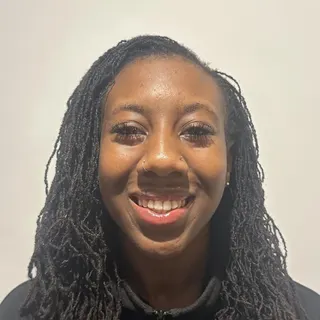
Portrait of Samantha Baah

Samantha Baah

Mathematics, Biology, Chemistry, and PE Specialist

Luton

£30.00 per hourDBS checkediAccepting enquiries
BiologyChemistryInterview TrainingMathematics+1 more
  • Samantha has over six years' of tutoring experience, supporting students from KS2 level through to adult learners.
  • Samantha is studying for her Bachelor of Medicine and Bachelor of Surgery in Medicine.
  • Holds experience supporting students with special educational needs, including autism, ADHD, and dyslexia.
  • Holds A-Levels in Biology and Physical Education.
  • Holds A*s across the board for Mathematics, Biology, and Chemistry at GCSE level.

Samantha is a medical student with over six years of tutoring experience, supporting GCSE and A-Level Biology learners through structured, exam-focused online lessons tailored to individual needs.

Send a quick enquiry from here and the Latimer Tuition team will pass it on to Samantha.

Start with the learner’s PE route

A useful starting point is the course name and one piece of work the learner found difficult. A school PE goal, a written examination and a sport qualification can call for different kinds of help. The AQA examples below illustrate particular courses in England; use the learner’s own specification for their requirements. School or college entry requirements still decide progression; a PE tutor enquiry does not confirm eligibility for the next course.

Primary and Key Stage 3 PE
In England, PE includes developing skills and reflecting on performance. A useful lesson task is to replace “our team played badly” with an observation about where passes were lost and one change to try in the next school activity.
GCSE PE
Bring the exam board, course code and intended exam year. AQA GCSE PE 8582 includes written theory alongside practical performance and analysis, so a learner may need help with calculations, sporting applications or explaining an observation.
A-level PE
Expect more detailed reasoning about performance. AQA A-level PE 7582 includes physiology, biomechanics, skill acquisition and sport psychology: tuition should connect a concept to the performer and justify an explanation.
Wales: check the GCSE course title
WJEC directs Year 10 starters from September 2026 to GCSE Physical Education and Health, first awarded in 2028. Learners completing its older GCSE PE have their final full assessment in summer 2027. Match the resources to the learner’s course and cohort.
Scotland and Northern Ireland
In Scotland, National 5 PE uses performance and a portfolio; Higher PE uses performance and a question paper. In Northern Ireland, CCEA names GCE Sports Science and the Active Leisure Industry as a progression option from its GCSE PE. Give the full qualification title when enquiring.
Vocational sport or university study
Send the exact qualification, level and unit or module brief. For example, Pearson’s BTEC Tech Award in Sport (2022) uses applied work on participant needs, performance and fitness. Agree the tutor’s coverage of your particular course before booking.


GCSE example: what does cardiac output measure?

AQA GCSE PE 8582 includes the relationship between heart rate, stroke volume and cardiac output. Heart rate counts beats per minute; stroke volume is the volume of blood pumped with each beat. Cardiac output is the volume pumped in a minute.

Try these invented practice figures: heart rate is 70 beats per minute and stroke volume is 70 millilitres per beat. A learner adds the two numbers and writes “140”. That combines different measurements and does not calculate blood flow.

Multiply instead: cardiac output = heart rate × stroke volume = 70 × 70 = 4,900 millilitres per minute, or 4.9 litres per minute. The “per beat” part of stroke volume pairs with the number of beats in a minute, leaving a volume per minute.

A clearer response is: “The heart pumps 4.9 litres of blood each minute.” It states what the result means and includes the correct units. To check understanding, change the figures to 100 beats per minute and 80 millilitres per beat. The answer is 8,000 millilitres per minute, or 8 litres per minute. The learner should be able to explain the multiplication as well as repeat it.

A-level example: match practice to the skill

AQA A-level PE 7582 asks learners to connect skill classification, stages of learning and practice. Naming a skill “open” or “closed” is only the beginning; the explanation needs to affect the practice choice.

Consider this teaching example: a beginner learning a tennis serve practises towards one target in a stable setting. The serve is relatively closed and self-paced: conditions are predictable and the player chooses when to start. Repeating a manageable task can let the beginner concentrate on a small number of technique cues.

Now consider returning an opponent’s serve. The incoming ball changes in speed and direction, and the receiver must respond to its arrival. This is more open and externally paced. A learner who writes “repeat the same return until it is perfect” has missed those changing demands.

A better explanation is: “Once the basic return is established, vary the feeds so the player practises judging the ball and selecting a response.” The practice now reflects the information the player needs during a match. For an A-level answer, explain why the performer’s learning stage makes the task manageable, rather than assuming that every beginner should start with unpredictable feeds.

Choose the theory that needs attention

Use the school’s topic list and marked work to narrow the lesson. A topic name alone is less useful than identifying the point where the reasoning breaks down. These are possible lesson tasks to adapt to the learner’s specification.

  • Anatomy and movement

    Use a named sporting movement to identify the joint action and the muscles involved. Explain the movement in a diagram before trying to write about it without the diagram.

  • Training and performance

    Connect a training method to the specific demand it is meant to address. “It improves fitness” needs a named component of fitness and a reason it matters in the activity.

  • Skill and psychology

    Explain how a practice task or feedback could help a particular performer. At A level, justify the choice using the relevant learning theory instead of listing definitions.

  • Sport and society

    Take a participation or commercialisation question and develop a reasoned point with a relevant sporting example. Check that the example supports the argument rather than merely naming a famous athlete.

Practical performance and assessed work

Online discussion can help a learner understand performance criteria, distinguish an observation from an explanation and practise analysing a separate example. The school or college remains the starting point for the learner’s assessed practical work and the help they are permitted to receive.

For instance, “three passes were intercepted” is an observation; “I was not confident” is a possible explanation that needs evidence. A practice discussion could examine when the passes were attempted and what other passing options were visible before proposing a change. It should not turn a guess about the performer into an established cause.

For AQA GCSE PE non-exam assessment, often called NEA, the school or college authenticates the learner’s work and records assistance. For your course, ask the teacher what outside support is allowed before sharing live work. Use unrelated practice material for teaching; the learner must produce their own assessed analysis. Do not ask a tutor to rewrite it or supply a submission.

Build a lesson plan around one difficulty

Bring a course or school topic list, a recent answer with feedback and a clear goal. For younger learners, a description of the activity and what they find confusing is enough to start the discussion. Latimer’s one-to-one lessons are online, usually through Microsoft Teams, with other platforms possible by agreement. Have the relevant worksheet or diagram ready to share.

  1. Identify the gap

    Let the learner explain or attempt a short task unaided. Is the difficulty remembering a term, interpreting a question, calculating accurately or applying the idea to sport?

  2. Work through the reasoning

    Use a diagram, numerical example or sporting situation to make the missing step visible. If terminology is a barrier, connect the term to the image or action before moving to a written answer.

  3. Check independent use

    Try a fresh question with changed numbers or a different activity. Keep the first attempt so progress can be judged by the explanation and accuracy, not just by familiarity with the original answer.

  4. Agree the next practice task

    Choose one short task that targets the remaining difficulty and review it next time. Reduce the amount of text, break instructions into smaller steps or allow an oral explanation first where that helps the learner participate.

Check course knowledge and teaching fit

Read the tutor’s listed levels and experience, then use the free introductory meeting to discuss teaching fit and arrangements. A sporting background and familiarity with an exam specification answer different questions. For exam tuition, look for experience of the exact board and course. For younger learners, discuss how the tutor explains PE ideas through activities the child recognises.

Ask how the tutor would respond to a particular learning difficulty. If the learner can explain a movement aloud but struggles to write about it, discuss how lessons could bridge that gap. If diagrams or extra reading time help, explain this early. The meeting is for discussing goals and arrangements; it is not a promised free teaching lesson.

Tell us what the learner wants to improve

Requesting a tutor match is free. Include the course title or school stage, exam board and exam year where relevant, a difficult topic and the times that work for you. Add your budget and any learning needs so these can be considered together.

Support and clarity

Frequently asked questions

Straight answers to the questions people ask most often.

How much does Physical Education tuition cost?

Tutors set their own hourly rates, which are shown on their profiles. Latimer invoices after lessons on a pay-as-you-go basis. Compare the agreed lesson cost with your budget and the help needed, and check what preparation or practice feedback is included with the individual tutor.

Can I arrange in-person PE lessons or sports coaching?

Latimer is online-first. In-person lessons need an individual arrangement with a tutor who is suitably placed. If you want coaching on a pitch, court or other venue, explain that specifically and agree the activity, setting and tutor’s relevant experience before booking. Online theory tuition does not itself provide a practical coaching session.

How often should PE tuition take place?

Agree a starting schedule around the learner’s current difficulty, school workload, practice time and budget. A focused topic may need a different arrangement from ongoing course support. Set a review point and use a fresh question or explanation to decide what still needs work; there is no need to set a fixed lesson count before understanding the problem.

Can tuition help a confident sports player who struggles with PE exams?

Yes, tuition can focus on the written skills separately: interpreting the question, selecting the relevant idea and applying it to the activity named. Bring a marked answer so the discussion can distinguish an error in subject knowledge from an answer that knows the idea but has not explained it clearly.

What should I bring if I do not know the exam board?

Bring a photograph or copy of the course title from school, a worksheet or a recent assessment. Ask the teacher for the qualification name, board, course code and intended exam year. Those details help identify the appropriate content and resources before a revision plan is agreed.

Further information

Useful links and resources

Related tutor pages

Explore related tuition options and guidance for choosing the right support.

A-Level tuition

A-Level PE tutor

Open this related A-Level Physical Education tuition page.