

University admissions preparation

University interview tutors

Prepare to explain your ideas, handle follow-up questions and take part in the interview your course requires. Compare tutors and discuss the subject, university and format you are preparing for.

  • One-to-one tuition
  • Pay as you go
  • Direct tutor contact
One-to-one preparation can focus on course motivation, academic reasoning or medicine interview tasks. Choose the practice around your own application and the university’s guidance. Start by checking a tutor’s relevant experience and approach, then agree what useful feedback and independent practice would look like for you.

The form controls become available when the enquiry form has loaded.

University Interview tuition enquiry

Tell us what you know, skip anything you’re unsure about, and add a short description if you skip both subject and level.

  1. Tutoring brief
  2. Contact details

2 questions remaining

Tutoring brief

What level is the tuition for?

Choose a level

Choose a suggestion or type your own answer. You can skip this if you’re unsure.

This form works best for one learner at one level and up to six subjects. If your circumstances are more complicated, email us at Contact@LatimerTuition.com so you can explain everything properly.

How one-to-one tuition can help

  • Explain your course interest with specific examples from your own studies or experience.
  • Work through unfamiliar academic material and explain how your reasoning changes.
  • Practise listening and responding in medicine communication and teamwork tasks.

Available tutors

Compare tutors for interview preparation

5 tutor profiles selected

Read each profile and ask about experience with your course and interview format. Use the introductory conversation to discuss the practice you need, or request a free match with your university, subject and interview details.

Portrait of Samantha Baah

Samantha Baah

Mathematics, Biology, Chemistry, and PE Specialist

Luton

£30.00 per hourDBS checkediAccepting enquiries
BiologyChemistryInterview TrainingMathematics+1 more
  • Samantha has over six years' of tutoring experience, supporting students from KS2 level through to adult learners.
  • Samantha is studying for her Bachelor of Medicine and Bachelor of Surgery in Medicine.
  • Holds experience supporting students with special educational needs, including autism, ADHD, and dyslexia.
  • Holds A-Levels in Biology and Physical Education.
  • Holds A*s across the board for Mathematics, Biology, and Chemistry at GCSE level.

Samantha is a medical student with over six years of tutoring experience, supporting GCSE and A-Level Biology learners through structured, exam-focused online lessons tailored to individual needs.

Send a quick enquiry from here and the Latimer Tuition team will pass it on to Samantha.

Portrait of Silvia Vescu

Silvia Vescu

Qualified Humanities & Business Teacher

Montrose, United Kingdom

£45.00 per hourDBS checkediAccepting enquiriesQualified teacher
Business StudiesCitizenshipEconomicsEnglish Language+13 more
  • Holds a PGCE from University College London.
  • Holds an LLB (Hons) in Law, 2:1, from King's College London, and is a qualified lawyer.
  • Currently teaches A-Level and GCSE Economics and Business, alongside Sociology, Politics, Law, English Language and English Literature.
  • Has delivered hundreds of one-to-one online lessons and uses a Socratic approach, tailored to each exam board and specification.

Silvia Vescu is an economics tutor and law tutor for GCSE/A-Level, PGCE-trained at UCL with an LLB from King’s. She offers online tutoring with Socratic, exam-board tailored 1:1 lessons plus session reports.

Send a quick enquiry from here and the Latimer Tuition team will pass it on to Silvia.

Portrait of Priscilla Asare

Priscilla Asare

Mathematics and Science Specialist

London, United Kingdom

£30.00 per hourDBS checkediAccepting enquiries
BiologyBusiness StudiesChemistryEnglish Language+4 more
  • Currently studying for her Bachelor of Dental Surgery (BDS) degree at Peninsula Dental School.
  • Holds previous experience working as a Teaching Assistant within a UK Grammar school.
  • Priscilla has 4 years of tutoring experience.
  • Certified in Adverse Childhood Experiences (ACEs) and Early Trauma Training.
  • Holds A*, A, A for Economics, Chemistry, and Biology at A-Level.
  • Holds 11 A*s to As for Triple Science, Geography, Computer Science and Business Studies at GCSE level.

Priscilla supports learners in Mathematics, Biology, Chemistry and Physics from KS2 to GCSE, drawing on four years of tutoring experience and a student-centred approach.

Send a quick enquiry from here and the Latimer Tuition team will pass it on to Priscilla.
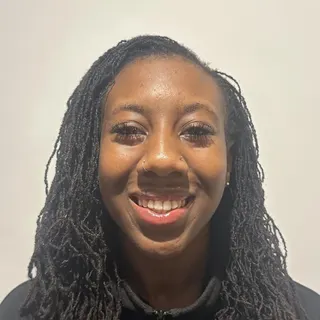
Portrait of Christian Walter

Christian Walter

5.0

English, Humanities, and MFL Specialist

Greater London, United Kingdom

£38.00 per hourDBS checkediAccepting enquiries
Ancient HistoryEnglish as a foreign LanguageEnglish LanguageEnglish Literature+9 more
  • Over 8 years' of experience working as an online tutor.
  • Holds a Bachelors of Arts in English Language and Linguistics from the University of the West of England.
  • Certifications in TEFL (Distinction), ESOL, TOEFL, Teaching IELTS (Grade A), and Teaching Business English.
  • Holds A-Levels in English Language and Literature, and Psychology.
  • Christian has studied German syntax up to QLS Level 5, and he can support students’ understanding of complex German grammar.
  • Christian is a native English speaker from London.

Christian is an English tutor with over eight years of one-to-one teaching experience, supporting learners from KS2 to GCSE as well as adults developing practical communication skills.

Send a quick enquiry from here and the Latimer Tuition team will pass it on to Christian.

Portrait of Branavan Balakumar

Branavan Balakumar

Mathematics and Biology Specialist

Leamington Spa, United Kingdom

£30.00 per hourDBS checkediAccepting enquiries
BiologyInterview TrainingMathematicsPersonal Statement
  • Branavan holds over 3 years' of tutoring experience.
  • Currently studying for his MBChB (Bachelor of Medicine and Bachelor of Surgery) in Medicine at the University of Birmingham.
  • Holds an A for Biology at A-Level.
  • Achieved strong GCSE grades, including 9s (A**s) in Biology, Chemistry, and Physics, and 8s (A*s) in Mathematics, English Literature, and English Language.

Branavan Balakumar is a GCSE maths tutor and A level biology tutor, a University of Birmingham medical student with 3+ years’ experience; patient, step-by-step lessons with session reports and optional homework.

Send a quick enquiry from here and the Latimer Tuition team will pass it on to Branavan.

Start with the course and interview format

University interview preparation depends on what the course asks you to do. This page focuses on UK undergraduate applicants, including those applying to Oxford, Cambridge or medicine. Check the course requirements and your invitation: selection can also involve written work, a portfolio, an audition or a separate admissions test.

Use the distinctions below to choose practice. A strong personal introduction will not, by itself, prepare you to interpret unfamiliar evidence or take part in a short role-play.

Course and motivation interviews
Prepare to discuss why the course interests you, your current studies and the experiences you described in your application. Link an interest to something you actually read, made, investigated or learned.
Oxford academic interviews
Oxford describes a subject conversation that explores how you think about new ideas. Depending on the subject, practice might involve a text, graph, object or problem, with follow-up questions that change your approach.
Cambridge academic interviews
Cambridge assesses how applicants apply knowledge to unfamiliar material. Its preparation guidance distinguishes critical discussion of reading in arts and humanities from explaining workings in maths and sciences. Match the practice to the chosen course.
Medicine interviews and MMIs
Multiple mini interviews, or MMIs, use short stations that can explore communication, teamwork or other attributes. Medical schools also use panels and other formats. Follow the particular school’s guidance; medicine should not automatically be treated as MMI preparation.

Choose a tutor for the practice you need

Start with the learner’s difficulty: explaining an academic idea, developing an answer beyond a first sentence, handling a follow-up or listening during a role-play. Use a free introductory meeting to discuss the course, university and relevant experience. The meeting is for goals, approach and arrangements before paid lessons.

Each tutor sets their own hourly rate, shown on their profile. Latimer invoices after lessons on a pay-as-you-go basis. Agree the session length, the feedback you want and a review point before booking further practice. Judge value by whether you understand what to change and can try it again with different material.

Relevant subject and format
Ask what experience the tutor has with your intended course and interview format. For academic discussion, check the subject knowledge needed to explore your reasoning; for an MMI, ask how a short conversation will be practised and reviewed.
Specific feedback
Agree a focus such as stating an assumption, supporting an interpretation with evidence or responding to what another person has said. Feedback such as “be more confident” gives you little to act on.
A practical arrangement
Discuss the interview date if known, time for independent practice, budget and any communication needs. Ask what you should prepare between sessions and how you will decide whether more practice is useful.

Turn an interest into a specific course answer

UCAS recommends practising questions about your application, course choice and studies. Start with one experience you can discuss honestly, then explain the question it raised for you.

Constructed history example. An answer such as “I have always loved history” tells the listener very little. A more specific response might be: “In a local-history project, two accounts of the same event disagreed. I became interested in who wrote each account and what they could have seen. I want to learn how historians test different interpretations.”

The useful change is the link between an activity, a thought and a reason to study further. Use your own experience and check how it connects to the actual course. You do not need to copy the example’s wording.

A practice partner could follow up with “Could both accounts be accurate?” A considered response would explore whether the writers observed different moments or places, then identify what else you would need to know. Try a second example from your own reading or studies. A sign of improvement is that you can develop the idea when questioned, without returning to a memorised opening.

Work through an unfamiliar academic problem aloud

Oxford’s published examples illustrate how subject interviews can explore an interpretation or model through follow-up questions. Practise making your reasoning clear enough for someone else to question it.

Constructed economics exercise. Imagine every bus journey uses a single fare. In week A the fare is £2 and there are 1,000 journeys. In week B it is £2.50 and there are 800 journeys. What changed?

A quick answer might be: “The fare rise made people stop travelling, so the operator earned less.” There are two problems with that conclusion. First, calculate ticket revenue: £2 × 1,000 = £2,000, and £2.50 × 800 = £2,000. Revenue is unchanged, although journeys fell by 200, or 20%. These figures are revenue, not profit; no costs are given.

Second, the two observations do not show that the fare rise alone caused the fall in journeys. A stronger response is: “Journeys fell and revenue stayed the same. The price may be relevant, but I would ask what else changed, such as the timetable.” If you then learn that services were reduced in week B, explain why that makes a price-only explanation less secure.

For a follow-up, keep the £2.50 fare but change week B to 900 journeys. Revenue becomes £2,250. Explain what that changes in your answer and what remains uncertain. Useful feedback checks your calculation, your assumptions and whether you revise your reasoning when the information changes. These invented figures illustrate practice; they are not an official interview question or a prediction of one.

Practise a medicine communication task as a conversation

Medicine MMIs may include teamwork or communication tasks. Manchester’s Medicine guidance, for example, values reasoned, spontaneous communication and warns against over-rehearsed monologues. Treat that as a reason to practise listening and responding, while checking the criteria of your own medical school.

Constructed nonclinical scenario. A teammate has not completed an agreed task before a group presentation. You need to discuss what happens next. Beginning “You have let everyone down” assumes you already know why the work is missing.

A more useful opening might be: “We still need your part for the presentation. Can you talk me through what happened?” Listen before offering a solution. If the teammate says the instructions were unclear, check what they understood, clarify the missing task and agree a realistic next step. If the explanation is different, your response should change too.

In a practice session, the partner can introduce new information after your opening. Review whether you interrupted, made an unsupported assumption or agreed a plan without checking it was understood. Retry with a different explanation. The improvement to look for is a response that follows the conversation, rather than a polished speech. This is an invented practice exercise, not a real station or an official scoring guide.

Build preparation around your stage and available time

Use this as a flexible sequence to agree with a tutor or practise with a teacher, friend or family member. Choose the frequency around the work you need to do, the time left and the practice you can manage between meetings. There is no fixed lesson count that suits every applicant.

  1. Identify the starting point

    Bring the course requirements and your own application material. If you have an invitation, use its instructions. Try a short explanation or relevant practice task before planning sessions, so you can separate a subject-knowledge gap from difficulty expressing an idea.

  2. Practise one weakness, then change the material

    Work on an identified issue, such as giving evidence for an interpretation or explaining a calculation. Write down one useful correction and try it on a new reading passage, problem or scenario before the next meeting.

  3. Rehearse the relevant format

    Once the arrangement is known, practise the kind of exchange you will face: an extended academic discussion, a panel conversation or short stations. Use a public sample or an invented prompt and include follow-ups, rather than repeating a prepared answer.

  4. Check readiness and logistics

    Review whether you can explain your thinking and respond to unfamiliar questions. Confirm the date, time, location or joining instructions. For an online interview, test the camera, microphone and connection, plus any equipment the university specifies.

Agree useful support and check the interview arrangements

If questions feel overwhelming, ask to begin practice with one short prompt, a pause to think and one follow-up. You might agree to note key words or ask for the question to be repeated. Oxford’s disability guidance includes these approaches. In lessons, explain what makes it easier to understand a question and communicate your thinking.

Formal interview adjustments must be arranged through the university. Oxford asks applicants to contact their College beforehand about support; Cambridge uses a College-provided Adjustment at Interview form. Contact the relevant admissions team promptly and confirm what has been agreed. A practice arrangement with a tutor does not itself change the real interview conditions.

Latimer offers online-first one-to-one tuition. Microsoft Teams is the default lesson platform, with alternatives by agreement. For the interview itself, follow the university’s platform and equipment instructions. Any in-person tuition needs a separate arrangement with the tutor; include your location when enquiring.

Support and clarity

Frequently asked questions

Straight answers to the questions people ask most often.

Do I need a paid university interview preparation course?

No. Start with the university’s free guidance and public examples, and practise discussing ideas with a teacher, friend or family member. Cambridge says commercial services are not endorsed and have no exclusive information. Manchester Medicine also does not endorse commercial preparation courses and says evidence of their usefulness is lacking. If you choose one-to-one tutoring, decide what specific practice and feedback you want from it; tutoring cannot guarantee an offer.

When are Oxford and Cambridge interviews?

Check the current university guidance and your own invitation for the date, time and format. Oxford publishes a subject timetable, but an applicant may be interviewed outside the listed windows. Cambridge’s arrangements depend on the College and course. Keep application deadlines separate from interview dates, and check any deadline your school has set for submitting application material.

What should I bring to an initial preparation session?

Bring the course link, your own submitted application answers or written work, the invitation instructions if received, and a short description of what you find difficult. Identify which parts of your reading or experience you want to discuss. Use public practice material: Oxford prohibits sharing its interview content and materials, so do not pass restricted questions to a tutor or practice partner.

Should I memorise model answers?

Prepare ideas you can explain in your own words. Try an opening, then ask your practice partner to challenge an assumption or request an example. If you can only continue by repeating the opening, return to the underlying idea. Academic interviews can develop through unfamiliar material, and a medicine conversation may require you to respond to something you have just heard.

Can I prepare if the interview is soon?

Use the invitation to identify the format, try one relevant task and choose the most useful correction to practise. Prioritise reviewing your own application, a focused rehearsal and the practical arrangements. When enquiring, give the actual interview date and the time you can use between sessions so the tutor can discuss what is realistic.

Does this also cover postgraduate interviews?

The examples here focus on undergraduate applications. For postgraduate preparation, give the course, institution, entry stage and any proposal or interview instructions when requesting a match. Ask whether the individual tutor can support that exact task before arranging lessons.

Related tutor pages

Explore related tuition options and guidance for choosing the right support.