
One-to-one Further Maths tuition

GCSE Further Maths tutors

Find online support for AQA’s Level 2 Certificate in Further Mathematics or CCEA GCSE Further Mathematics. Focus lessons on the parts of your course that need clearer explanations and independent practice.

  • One-to-one tuition
  • Pay as you go
  • Direct tutor contact
Bring the course title, a recent attempt and the topics causing difficulty. Use these to choose support for a specific gap, school assessments or a longer-term learning goal.

The form controls become available when the enquiry form has loaded.

GCSE Further Mathematics tuition enquiry

Tell us what you know, skip anything you’re unsure about, and add a short description if you skip both subject and level.

  1. Tutoring brief
  2. Contact details

Final question

Contact details

Where should we send tutor options?

We’ll reply by email. Mobile is an optional fallback only.

Your tutoring brief

Subject
Further Maths
Level
GCSE

Free matching request skip anything you’re unsure about pay as you go when lessons begin.

We use your contact details to reply to this enquiry. See our Privacy Policy for other uses.

How one-to-one tuition can help

  • Keep track of algebra through longer solutions
  • Connect calculus and graphs to what a question asks
  • Practise the papers and option units for your qualification

Available tutors

Compare Further Maths tutors

6 tutor profiles selected

Discuss experience with your exact qualification and the way you prefer to learn. Use the introduction to decide whether the approach fits your goals.

Portrait of Daniel Denton

Daniel Denton

5.0

Qualified Mathematics Teacher

York, United Kingdom

£38.00 per hourDBS checkediAccepting enquiriesQualified teacherHigh performing tutor
Further MathsMathematicsPure Maths
  • Holds a PGCE for his Bachelors of Education in Mathematics at the University of York.
  • Holds a Bachelors of Science in Mathematics at the University of York.
  • Qualified UK state secondary school teacher for Mathematics.
  • Transitioned to Latimer Tuition for a work-at-home role from UK secondary schools in 2022.
  • Holds A*, A* for Mathematics and Further Mathematics at A-Level.
  • Holds A*, A*, A*, A* for Mathematics, Pure Mathematics (Extra), Statistics (Extra) and Further Mathematics at GCSE level.

Daniel Denton is a qualified UK secondary Maths teacher (PGCE, University of York) and experienced private tutor; a gcse maths tutor and a level maths tutor from KS3 to Further Maths, with lesson reports and optional free homework.

Send a quick enquiry from here and the Latimer Tuition team will pass it on to Daniel.
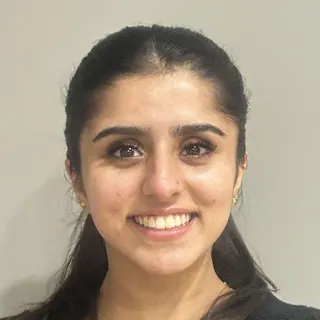
Portrait of Eugenia Amoah

Eugenia Amoah

Maths, Further Maths, and Science Specialist

London

£30.00 per hourDBS checkediAccepting enquiries
BiologyChemistryFurther MathsMathematics+4 more
  • Currently pursuing a degree in Medicine and Surgery at the University of Birmingham.
  • Holds A, A, A for Mathematics, Biology, and Chemistry at A-Level.
  • Holds Grade 9s in GCSE Science and Mathematics.
  • Eugenia is an i-medics ambassador.

Eugenia is a gcse maths tutor and maths and science tutor, a University of Birmingham Medicine and Surgery student with 3+ years’ experience teaching KS2–AS Maths, GCSE Further Maths and GCSE–A Level Biology/Chemistry plus GCSE Physics; session reports and optional homework.

Send a quick enquiry from here and the Latimer Tuition team will pass it on to Eugenia.

Portrait of Idris Adelakun

Idris Adelakun

Mathematics and Physics Specialist

Thurrock, United Kingdom

£30.00 per hourDBS checkediAccepting enquiries
Further MathsMathematicsPhysicsPure Maths
  • Idris has over 7 year of tutoring experience.
  • Holds a 2:1 (69%) for his BEng in Mechanical Engineering from the University of Nottingham.
  • Has delivered more than 500 hours of online Mathematics and Physics tuition to approximately 40 students.
  • Has received multiple UKMT Maths Challenge awards, ranging from Gold to Bronze.
  • Ranked among the top 10% of tutors on previous tutoring platforms based on performance and student feedback.
  • Achieved 42/45 points for his International Baccalaureate.

Idris is a Mathematics and Physics tutor for KS3, GCSE, A-Level and IB learners, using engineering-based real-world examples and clear step-by-step explanations.

Send a quick enquiry from here and the Latimer Tuition team will pass it on to Idris.

Portrait of Syed Al-Shafi

Syed Al-Shafi

Mathematics, Chemistry, and Physics Specialist

Dagenham, United Kingdom

£30.00 per hourDBS checkediAccepting enquiries
ChemistryFurther MathsMathematicsPhysics
  • Currently studying for his Bachelors of Engineering (Hons) in Electronic Engineering at King’s College London.
  • Experienced in tutoring A-Level and GCSE Maths, Physics, Chemistry, and Triple Science.
  • Holds A*, A for Mathematics and Chemistry at A-Level.
  • Holds a 9 in English, an 8 in Maths, and 2 8s in Combined Science at GCSE.
  • Previosuly worked as a Medical Laboratory Assistant at King George's Hospital.
  • Proficient in Python, MATLAB, C, Java, and tools like Simulink, LTspice, and AutoCAD.

Syed is a gcse maths tutor and a level physics tutor, studying BEng Electronic Engineering at King’s College London. He teaches KS3–A-Level Maths, Physics and Chemistry, plus GCSE Further Maths, and holds A/* Maths and A Chemistry at A-Level.

Send a quick enquiry from here and the Latimer Tuition team will pass it on to Syed.

Portrait of Ashvin Ratnarajah

Ashvin Ratnarajah

Qualified Mathematics Teacher

Harrow, United Kingdom

£35.00 per hourDBS checkediAccepting enquiriesQualified teacher
Further MathsMathematics
  • Holds Qualified Teacher Status (QTS) as a Secondary Mathematics teacher.
  • Holds a PGCE in Secondary Mathematics from London Metropolitan University.
  • Holds a BSc in Mathematics from Newcastle University.
  • Currently studying for an MSc in Mathematics at the University of Liverpool.
  • Has experience teaching Mathematics across Key Stage 3, GCSE, and A-Level.
  • Holds A, A for Mathematics and Further Mathematics at A-Level.
  • Holds Grade 7 in GCSE Mathematics and Grade A in GCSE Further Mathematics.

Ashvin Ratnarajah is a qualified Secondary Mathematics teacher supporting KS3, GCSE and A-Level learners with structured lessons that identify knowledge gaps and build confidence.

Send a quick enquiry from here and the Latimer Tuition team will pass it on to Ashvin.

Portrait of Tatva Shah

Tatva Shah

Mathematics, Biology, and Chemistry Specialist

Manchester

£40.00 per hourDBS checkediAccepting enquiries
BiologyChemistryFurther MathsMathematics+3 more
  • Currently studying for his Masters Science in Bioinformatics, and Systems Biology at the University of Manchester.
  • Holds over 5 years' of tutoring experience, and regularly volunteers at local projects teaching children.
  • Holds A*, A*, A for Mathematics, Biology, and Chemistry at A-Level.
  • Holds A**, A*, A*, and 3 As including Mathematics, Chemistry, Physics, and Biology at GCSE level.

Tatva Shah is a GCSE maths tutor, biology tutor and chemistry tutor teaching 11+ to A-Level; he holds an MSc in Bioinformatics (University of Manchester), has 5+ years' experience, and provides lesson reports plus optional homework.

Send a quick enquiry from here and the Latimer Tuition team will pass it on to Tatva.

Start with the qualification on your school timetable

“GCSE Further Maths” can refer to different courses. AQA’s award is a Level 2 Certificate taken alongside GCSE Mathematics. CCEA offers GCSE Further Mathematics in Northern Ireland. The distinction changes both what to learn and which papers to practise.

Check the title or course code on a school worksheet before arranging tuition. The AQA specification and CCEA specification (PDF) set out the separate courses.

AQA Level 2 Certificate — 8365
The course is untiered. It covers number, algebra, coordinate geometry, calculus, matrix transformations and geometry. There are two papers, each lasting 1 hour 45 minutes and worth 80 marks: Paper 1 is non-calculator and Paper 2 allows a calculator. Each contributes half the qualification. Build in practice for both conditions.
CCEA GCSE Further Mathematics
Pure Mathematics is compulsory: a two-hour paper worth 50%. Add two one-hour papers from Mechanics, Statistics, and Discrete and Decision Mathematics, each worth 25%. Confirm the pair your school teaches. Pure work includes integration and logarithms as well as differentiation; an AQA-only revision list will leave gaps.

Choose an AQA topic goal that goes beyond “more revision”

The AQA content specification (PDF) connects algebra, graphs and new methods such as differentiation. A useful tuition goal names the step the learner cannot yet explain. These are examples of focused goals to discuss with a tutor.

  • Algebra that supports later steps

    Explain each rearrangement before moving on to a longer problem. For example, 3x² − 6x = 0 becomes 3x(x − 2) = 0, so x = 0 or x = 2. Dividing by x at the start loses the zero solution. Retaining every solution matters when algebra is used to find turning points.

  • Matrix transformations

    Follow a point through a transformation and check the result on a sketch. A useful next step is to apply two transformations in order, then compare that result with matrix multiplication. This links the calculation to what happens geometrically.

  • Calculus and the shape of a curve

    Connect the derivative to the gradient, then use it for a tangent or a turning-point problem. The learner should be able to explain which equation gives the point’s coordinates and which gives its gradient, as in the example below.

A worked example: finding a tangent, not just a number

Here is an illustrative problem within AQA 8365 calculus: find the tangent to y = x³ − 2x at x = 2. A tangent is a straight line with the same gradient as the curve at that point.

Substituting x = 2 into the curve gives y = 8 − 4 = 4. This locates the point (2, 4); it does not give the gradient.

Differentiating gives dy/dx = 3x² − 2, where dy/dx describes the gradient. At x = 2, the gradient is 12 − 2 = 10. A line with gradient 10 through (2, 4) satisfies y − 4 = 10(x − 2), so the answer is y = 10x − 16. Substituting x = 2 back into this line gives y = 4, confirming that it passes through the required point.

For a follow-up, change the curve to y = x³ − 2x + 5 and keep x = 2. The derivative stays the same because the added constant differentiates to zero. The point moves to (2, 9), so the tangent becomes y = 10x − 11. Explaining why the gradient stays 10 while the line moves is a useful sign of understanding beyond copying the first solution.

CCEA: practise the applied units you actually study

CCEA’s optional units need different kinds of reasoning. The specification and teacher guidance (PDF) distinguish mechanics, statistical reasoning and decision mathematics. Use the examples relevant to your school’s chosen pair.

Mechanics example: an object’s velocity increases steadily from 2 m/s to 10 m/s over 4 seconds. Its acceleration is the velocity–time graph’s gradient: (10 − 2) ÷ 4 = 2 m/s². Using 10 ÷ 4 would wrongly treat the starting velocity as zero.

The area under this graph gives displacement. Split the trapezium into a rectangle and triangle: (2 × 4) + (½ × 4 × 8) = 24 m. These positive velocities mean the object also travels 24 m. As a follow-up, keep the same velocities but allow 8 seconds: the acceleration halves to 1 m/s² and the distance doubles to 48 m. Sketching the two graphs makes that difference visible.

  • Statistics: choose the right group

    For a constructed example, 30 pupils take Physics and 12 of those also take Computer Science. Given that a pupil takes Physics, the probability that they also take Computer Science is 12/30 = 0.4. The denominator is the Physics group, not the whole year group. Start a conditional-probability question by identifying the group the condition leaves you with.

  • Discrete and Decision: account for parallel tasks

    In an illustrative project, task A takes 4 hours. Then B takes 3 hours and C takes 5 hours; they can run together. Task D takes 2 hours and waits for both. Earliest completion is 4 + 5 + 2 = 11 hours, not the 14 hours obtained by adding every task. The critical path is A–C–D. Drawing the dependencies first explains which delay would affect completion.

Build lessons around attempts, feedback and independent work

Bring a recent piece of work, the school’s topic list and the date of the next assessment. A focused gap, such as setting up tangent equations, calls for a different plan from uncertainty across several algebra topics. Use the following sequence as a starting point to agree with your tutor.

  • Agree lesson frequency around the assessment date, school workload and time for practice between sessions. A short block can have one defined goal; ongoing support should have regular review points.
  • For an approaching mock, prioritise errors in recent work and the topics being assessed. Completing every available past paper is less useful than understanding and correcting the attempts already made.
  1. Find the first uncertain step

    Work through one question and explain each choice. Identify whether the difficulty is the new concept, prerequisite algebra or interpreting the question. If anxiety or a heavy page of notation makes it hard to start, discuss shorter questions, more thinking time or a clear written model.

  2. Practise with a deliberate change

    After an explanation, attempt a related question with one feature changed. Then return to it without the model. Keep the original attempt and the correction so that the next lesson addresses the remaining difficulty rather than repeating what is secure.

  3. Move towards the assessment

    Once the method is secure, try a mixed question and then timed work under the appropriate calculator conditions. CCEA also expects written development of answers. Review whether the learner chooses a method independently, keeps the algebra accurate and explains the answer.

Choose a tutor and agree the practical details

Latimer offers online one-to-one tuition. Use the free introductory meeting to discuss the learner’s goals, teaching approach and arrangements before paid lessons. It is an introductory conversation, rather than a full free teaching lesson.

Bring the exact qualification and any CCEA option choices to that conversation. Ask about experience teaching those topics, then explain whether the learner needs a slower explanation, stretch beyond routine questions or a focused revision plan. A clear discussion of one piece of schoolwork can help you judge fit.

Each tutor sets their own hourly rate, shown on their profile, and Latimer invoices after lessons on a pay-as-you-go basis. Agree a manageable budget alongside lesson length, frequency and expectations for work between sessions.

Microsoft Teams is the default lesson platform; another option can be agreed with the tutor. Before the first lesson, check that the learner can show handwritten workings clearly, whether through a camera, a shared whiteboard or a clear photograph. Have the relevant question, paper and calculator ready.

Support and clarity

Frequently asked questions

Straight answers to the questions people ask most often.

What if the school calls the course Additional Maths?

OCR Additional Mathematics 6993 is a Level 3 Free Standing Mathematics Qualification, often shortened to FSMQ. It is a different award from AQA’s Level 2 Certificate and CCEA GCSE Further Mathematics. Tell the tutor the full title so that lesson content and practice materials match the course. See the OCR qualification page.

What if the learner is struggling with ordinary GCSE Maths too?

Start by identifying the prerequisite that is causing the difficulty. For example, weak factorisation can obstruct a turning-point question even when the idea of differentiation is understood. Agree with the learner and school how to balance that work with the additional course. If the main priority is the core qualification, our GCSE Maths tuition page is the more direct starting point.

Can Further Maths tuition help with preparation for A-level?

Preparation for later study can be a lesson goal. AQA describes its Level 2 Certificate as intended for learners who have, or are expected to achieve, GCSE Maths grades 7–9 and may progress to A-level Mathematics or Further Mathematics. This is the board’s intended learner profile, not a universal school entry rule. Check your chosen sixth form’s requirements and use our GCSE-to-A-level transition guide to plan the next step.

Can we arrange an in-person Further Maths tutor?

Latimer’s service is online-first. In-person lessons depend on a separate arrangement with the individual tutor. If meeting locally is essential, include your location and travel limits in the enquiry so that this can be discussed before you agree lessons.

Which formula sheet should the learner use in practice?

Check the exact qualification and exam series with the school. Formula-sheet arrangements can change, and a GCSE Mathematics sheet should not be assumed to apply to AQA Further Mathematics 8365. Use the board’s applicable materials alongside practice questions. AQA publishes formula-sheet updates and 8365 assessment resources.

Further information

Useful links and resources

Related tutor pages

Explore related tuition options and guidance for choosing the right support.