One-to-one guitar tuition

Find a Grade 2 Guitar tutor

Prepare for a Grade 2 exam or develop your playing at this stage. Find support for classical, acoustic or electric guitar, with lessons focused on your music, technique and chosen exam format.

  • One-to-one tuition
  • Pay as you go
  • Direct tutor contact
Start with the guitar you play, the book or pieces you are using and what you want to improve. A learner preparing a classical programme needs a different plan from someone working on rock riffs and chord changes. If you have not chosen an exam board, your musical interests are a useful starting point.

The form controls become available when the enquiry form has loaded.

Grade 2 Guitar tuition enquiry

Tell us what you know, skip anything you’re unsure about, and add a short description if you skip both subject and level.

  1. Tutoring brief
  2. Contact details

Final question

Contact details

Where should we send tutor options?

We’ll reply by email. Mobile is an optional fallback only.

Your tutoring brief

Subject
Guitar
Level
Grade 2

Free matching request skip anything you’re unsure about pay as you go when lessons begin.

We use your contact details to reply to this enquiry. See our Privacy Policy for other uses.

How one-to-one tuition can help

  • Keeping the pulse through scales, chord changes and short pieces
  • Preparing the supporting tests or complete programme your exam requires
  • Leaving lessons with a specific practice task and a way to hear progress

Available tutors

Compare Grade 2 Guitar tutors

3 tutor profiles selected

Look for a tutor whose guitar styles and exam teaching match your goal. Include the board and format in your message if you already know them.

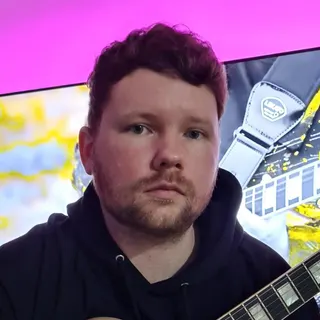
Portrait of Owen Evans

Owen Evans

Music, and Musical Instrument Specialist

Lumsden, United Kingdom

£30.00 per hourDBS checkediAccepting enquiries
GuitarMusicMusic PerformanceMusic Technology+1 more
  • Holds over 8 years' of online teaching experience.
  • Owen holds over 18 Years' experience teaching & in the Music industry.
  • Received over 1 million views & listens on Spotify, Youtube & social media.
  • A professional songwriter in all genres.
  • Over 10 years' experience using Logic Pro-x.
  • Owen has worked with Grammy-winning producers.

Owen Evans is a UK guitar tutor with 18+ years in teaching and the music industry, including 8+ years of online tutoring. He supports ABRSM/Rockschool, GCSE and A-Level Music, plus songwriting and Logic Pro X production with tailored lesson plans.

Send a quick enquiry from here and the Latimer Tuition team will pass it on to Owen.

Portrait of Simon OKeeffe

Simon OKeeffe

Music and Music Performance Specialist

london, United Kingdom

£40.00 per hourDBS checkediAccepting enquiries
ABRSMGCSE (general)GuitarMusic Performance+4 more
  • Simon has over 12 years' of experience as a music educator across primary and secondary schools in addition to further education.
  • Holds a Bachelor of Arts (Hons) in Music (Guitar Institute).
  • Holds a Master of Arts in Record Production and Distribution (University of West London).
  • Professional background as a musician, producer, arranger, and musical director.

Music educator with 12+ years’ experience offering private lessons as a guitar tutor and piano tutor, plus drums and music theory. Supports GCSE, A Level and university music performance and music technology, with lesson reports and optional homework.

Send a quick enquiry from here and the Latimer Tuition team will pass it on to Simon.

Portrait of Abigail Ajala

Abigail Ajala

Music, and Musical Instrument Specialist

Rushmere St Andrew, United Kingdom

£45.00 per hourDBS checkediAccepting enquiries
GuitarMusicMusic PerformanceMusic Technology+2 more
  • Over 11 years' of Music teaching experience.
  • Holds a Bachelor of Arts in Commercial Music.
  • Has been the vocal coach for the Stagecoach Performing Arts School (Ipswich).
  • Teaches guitar, ukulele, piano (up to intermediate), vocals, and music theory.

Abigail Ajala is a guitar tutor with 11+ years’ teaching experience, BA in Commercial Music, and Stagecoach Performing Arts (Ipswich) vocal coach. She is also a piano tutor (to intermediate) teaching ukulele and music theory for ages 4+, KS1–3, GCSE and A Level; online and Suffolk-based.

Send a quick enquiry from here and the Latimer Tuition team will pass it on to Abigail.

Which Grade 2 route fits your playing?

The instrument, board and assessment format determine what you prepare. These examples show why two learners working towards Grade 2 may need different lessons. For ABRSM Guitar Practical, the required instrument is a standard nylon-string classical guitar. Rockschool, from RSL Awards, has separate acoustic and electric syllabuses.

Classical example: D major without a stumble

ABRSM Guitar Practical Grade 2 includes a one-octave D-major scale, played from memory with the plucking-hand fingers, and a long tonic. The tonic is the home note, D; follow the syllabus pattern for its longer duration. This is one part of the technical work.

For a practice example, start with D–E–F♯–G–A–B–C♯–D, then return D–C♯–B–A–G–F♯–E–D. The ♯ sign means sharp: F sharp and C sharp belong in D major. Playing F or C natural changes the scale.

Suppose the notes are right but the player hesitates when moving to another string. Practise just the notes on either side of that change, slowly enough to prepare the next plucking finger. Rejoin the short pattern, then the whole scale. Keep the intermediate notes evenly spaced and retain the longer tonic. The improvement to listen for is a smooth crossing at the same pulse, without the tutor prompting each note.

Acoustic and electric example: make the chord change on time

Rockschool Acoustic Grade 2 includes the three-note power-chord sequence E5–G5–A5–C5. A power chord is built from a starting note and its fifth; the three-note shape repeats the starting note an octave higher. For example, E5 contains E–B–E. RSL’s 2026 acoustic update changes the repertoire while retaining the technical work.

A clean chord can still arrive late. Try this simplified practice version using the shapes in your book: sound E5 on beat 1 of a slow 1–2–3–4 count, then G5 on the next beat 1. Use beats 2–4 to prepare the move while the count continues. Once that works, add A5 and C5. If a change needs an extra beat, slow the whole count and try again. Success means each new chord lands with the click and the intended notes sound clearly. Then return to the printed rhythm and work towards its specified tempo.

For Rockschool Electric Guitar’s recorded Graded Certificate, Grade 2 technical work includes scales, power chords, major and seventh chords, and a riff to a backing track. Apply the same listening test to a change in that material: does the new shape arrive on time, with the intended strings sounding?

Performance preparation: keep the music going

For an ABRSM Performance Grade, rehearse all four pieces in programme order. ABRSM’s guidance draws attention to stamina and control across the sequence.

For example, a learner may play each opening confidently but lose concentration in the final piece. Record a practice run including the transitions. If a note goes wrong, practise continuing with the next beat instead of restarting the piece. Afterwards, isolate the passage that caused the slip, correct it slowly, then try another complete run. Listen for steadier pacing and a final piece that feels as controlled as the first. This is a rehearsal task, not a separate marking rule.

For a Rockschool recorded Performance Certificate, build that routine around its five-piece programme and follow RSL’s own recording instructions.

Turn the lesson into a manageable practice plan

A useful first paid lesson should establish what the learner can do now: a familiar piece, a troublesome change and a sample of the skills their chosen exam assesses. Use that starting point to agree the lesson length, frequency and home tasks. The sequence below is a possible routine to adapt.

  1. Give one difficulty a small task

    Choose a short scale transition, chord change or two-bar passage. Write down what to play and what to listen for, such as “G5 arrives on beat 1”. Set a manageable amount of practice around the learner’s access to the guitar.

  2. Put the correction back into music

    After the isolated task, play the surrounding phrase and then the piece. For an exam with supporting tests, include short reading, listening or improvising activities from the appropriate syllabus as well.

  3. Bring back a clear observation

    Note one improvement and one remaining question: “The chord arrives in time, but a string still buzzes.” Revisit the same passage at the next lesson so feedback can address the cause. A parent can help a younger learner remember the task without having to teach it.

  4. Review the whole goal

    Before choosing an exam date, check all assessed components and rehearse the relevant exam format. For learning without an exam, use a chosen song or short performance as the next goal and keep music the learner enjoys in the plan.

Choose a tutor who can explain the next step

Latimer tutors offer a free introductory meeting to discuss goals, teaching approach and arrangements. It is normally a conversation rather than a full teaching lesson. Use it to check the fit before paid lessons begin.

  • Relevant guitar and exam teaching

    Describe the guitar, board, format and one current piece. Ask about the tutor’s experience with that combination and how they would assess the learner’s starting point.

  • An explanation the learner can follow

    Discuss how the tutor demonstrates a hand movement, explains notation or helps a learner hear a timing problem. Agree whether a short written task, a chord diagram or another suitable reminder would help between lessons.

  • A plan that fits the learner

    Share musical interests, confidence, practice opportunities and any difficulty reading the page or holding the instrument comfortably. Discuss the pace of explanations and how progress will be communicated to the learner or parent.

Arrange the setup and compare lesson costs

Latimer is built around online one-to-one tuition. Microsoft Teams is the default platform, and you and the tutor can agree another. For guitar, test a camera position that shows both hands and check that the tutor can hear the notes clearly. If you use backing tracks, agree how to play them so they are audible during the lesson. Have your guitar, current music, tuner and any needed leads ready.

Each tutor sets the hourly rate shown on their profile; standard lessons are billed pay as you go. Compare the cost for the lesson length you agree, and establish any costs for books, backing tracks or exam entry separately. A matching request is free.

If you want in-person lessons, discuss the location and arrangements with the individual tutor.

Support and clarity

Frequently asked questions

Straight answers to the questions people ask most often.

Do I need to pass Grade 1 before Grade 2 Guitar?

For ABRSM Guitar, no previous guitar-grade pass is required. The useful check is whether the learner has the playing foundation for Grade 2. Bring a current piece to the first lesson so the tutor can identify any gaps in technique, reading or timing. Confirm the entry rules if you choose another board.

Can I learn at Grade 2 level without taking an exam?

Yes. Make the goal specific: for example, playing a chosen piece fluently or keeping an accompaniment steady. You can work on technique, notation and listening through music you enjoy. Discuss whether a later exam would be useful once you have made progress towards that goal.

Can I use an acoustic guitar for a Rockschool electric exam?

RSL permits an acoustic instrument for its electric-guitar exams up to and including Grade 3, which includes Grade 2. The acoustic and electric syllabuses remain different. Check that your instrument and the material you are learning suit the chosen exam before buying a new guitar.

How long will it take to be ready?

That depends on current playing, the chosen route and the practice the learner can manage. Ask the tutor to set a review point after hearing the starting standard. A useful review checks progress on the agreed tasks and all the exam components, then adjusts the plan and proposed entry date.

Who books the exam and checks the music?

Agree who will act as the exam applicant and handle booking, fees, any accompaniment and recording arrangements. Confirm the board, format and accepted repertoire edition before committing to an entry. Rockschool introduced new acoustic repertoire in 2026; check the current guidance if you already own an older book. Raise any formal access-arrangement requests with the awarding body in good time.

Further information

Useful links and resources

Related tutor pages

Explore related tuition options and guidance for choosing the right support.