
Online one-to-one music theory tuition

Find a Grade 2 music theory tutor

Make sense of rhythms, key signatures and minor scales with lessons shaped around your starting point. Prepare for ABRSM or Trinity Grade 2, or use theory to understand the music you play.

  • One-to-one tuition
  • Pay as you go
  • Direct tutor contact
Tell us whether you are working towards an exam or learning for your own interest. If you have an exam in mind, include the board and a recent exercise that shows where you get stuck.

The form controls become available when the enquiry form has loaded.

Grade 2 Music Theory tuition enquiry

Tell us what you know, skip anything you’re unsure about, and add a short description if you skip both subject and level.

  1. Tutoring brief
  2. Contact details

Final question

Contact details

Where should we send tutor options?

We’ll reply by email. Mobile is an optional fallback only.

Your tutoring brief

Subject
Music
Level
Grade 2

Free matching request skip anything you’re unsure about pay as you go when lessons begin.

We use your contact details to reply to this enquiry. See our Privacy Policy for other uses.

How one-to-one tuition can help

  • Count minim beats correctly when moving into 2/2 time.
  • Understand how a harmonic minor scale changes a note without changing its key signature.
  • Use the right Grade 2 syllabus and practise explaining an answer before tackling new questions.

Available tutors

Compare music tutors for Grade 2 theory

Look for teaching experience with music theory and your chosen board. Use the introductory conversation to discuss how the tutor would explain a recent mistake and choose the next practice task.

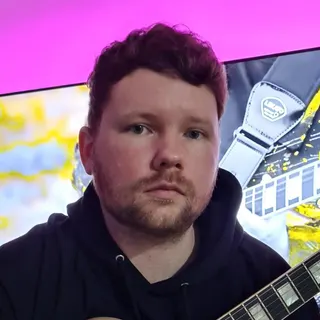
Portrait of Owen Evans

Owen Evans

Music, and Musical Instrument Specialist

Lumsden, United Kingdom

£30.00 per hourDBS checkediAccepting enquiries
GuitarMusicMusic PerformanceMusic Technology+1 more
  • Holds over 8 years' of online teaching experience.
  • Owen holds over 18 Years' experience teaching & in the Music industry.
  • Received over 1 million views & listens on Spotify, Youtube & social media.
  • A professional songwriter in all genres.
  • Over 10 years' experience using Logic Pro-x.
  • Owen has worked with Grammy-winning producers.

Owen Evans is a UK guitar tutor with 18+ years in teaching and the music industry, including 8+ years of online tutoring. He supports ABRSM/Rockschool, GCSE and A-Level Music, plus songwriting and Logic Pro X production with tailored lesson plans.

Send a quick enquiry from here and the Latimer Tuition team will pass it on to Owen.

What changes at Grade 2?

Grade 2 music theory develops the reading and understanding of written music. It builds on earlier notation skills, adding work such as new time signatures and minor scales. It is a separate assessment from an instrumental Practical or Performance Grade.

Choose the board before choosing an exam workbook: ABRSM and Trinity do not have identical Grade 2 requirements. If you are learning without an exam, use the topics that help you understand a score, while keeping track of the foundations you need next. The comparisons below follow the ABRSM syllabus outline for Grades 1–5 and Trinity’s Theory of Music syllabus.

ABRSM Grade 2 Music Theory
The syllabus adds 2/2, 3/2, 4/2 and 3/8 time, triplets, and A, B-flat and E-flat major to earlier keys. Minor scales are harmonic minor in A, E and D. Intervals above the first note of the scale, called the tonic, are identified by number: for example, counting the note letters from D to F gives a third.
Trinity Grade 2 Theory of Music
Trinity includes natural and harmonic minor in A, D and E. It goes beyond numbering intervals to naming types, including major and minor thirds. It also covers tonic triads in first inversion: three-note chords built on the first scale note, with the chord’s third at the bottom. Tasks include octave transposition within a clef and writing a tune to a given rhythm, so practise producing written music as well as recognising it.

A rhythm example: two beats of what?

Try this constructed example: a bar in 2/2 contains a minim followed by two crotchets. Does it fit?

A common wrong turn is to read the top 2 and allow only two crotchet beats. The bottom 2 tells you that the beat unit is a minim, a note worth two crotchets. This bar needs two minim beats, equivalent to four crotchets.

Count in minim beats: 1 + ½ + ½ = 2. The minim occupies the first beat; the two crotchets share the second. Tap two steady beats, holding the first note through beat one and dividing beat two into two equal notes.

For a follow-up, replace the two crotchets with one minim. Two minims still fill the bar. Then compare a 2/4 bar: its two beats are crotchets, so it has only half as much written note value. A useful sign of progress is being able to name the beat unit before adding the notes, rather than judging a bar by how many note symbols it contains.

A minor-scale example: keep the key signature

In this constructed example, start with D natural minor: D, E, F, G, A, B♭, C, D. The flat sign in B♭ means B lowered by a semitone, the smallest step between neighbouring piano keys. The key signature has one flat, B♭.

To make D harmonic minor, raise the seventh note, C, by a semitone. The result is D, E, F, G, A, B♭, C♯, D. The sharp sign in C♯ means C raised by a semitone. B♭ stays in place: raising the seventh does not turn B♭ into B natural. Write C♯ as an accidental beside that note, rather than adding it to the key signature.

For ABRSM Grade 2, use this to practise writing and recognising the harmonic form. For Trinity Grade 2, also compare the natural and harmonic forms and identify the one note that changes.

Now try A natural minor: A, B, C, D, E, F, G, A. Its key signature has no sharps or flats. The seventh note is G, so A harmonic minor becomes A, B, C, D, E, F, G♯, A. G♯ means G raised by a semitone; it is written as an accidental. You have understood the correction when you can explain both which note changes and why the key signature stays the same.

Turn a corrected answer into independent practice

A useful lesson starts with what the learner can already read and write. Bring an attempted exercise, including the working and any crossed-out answer. This gives the tutor something more informative than a total mark. Agree a manageable routine around one difficulty at a time.

  1. Find the point of confusion

    For rhythm, identify the beat unit before counting. For scales, separate the key signature from the changed note. If the difficulty is naming notes on the stave, work on that foundation before adding several new rules.

  2. Explain, then try a changed question

    After correcting D harmonic minor together, try A harmonic minor independently. Ask the learner to explain the changed seventh note. For Trinity tune writing, begin with the supplied rhythm and check the chosen notes against the task instructions.

  3. Review work the learner has not memorised

    Keep a corrected example and revisit the same idea with different notes at the next review. Look for fewer repeated errors and an explanation without prompts. For exam preparation, add mixed board-specific practice and then practise under the board’s assessment conditions.

Prepare for the exam format, or apply theory to a score

Learning the rules and answering an exam question are related tasks. Once an idea is secure on paper, practise the way the chosen board asks for the answer. ABRSM’s published Music Theory specification sets out an online assessment for Grades 1–5. Trinity Theory of Music is digital in the UK; its digital exam retains the syllabus and question types and uses a notation editor for written music.

For Trinity, practise entering notes and rests in the editor as well as working them out. For either board, check the provider’s current setup instructions before arranging an exam. Lesson video-call equipment should not be treated as confirmation that the exam setup is suitable.

If the goal is to understand the music you play, choose a short passage from a score. Identify its time signature, count a bar and explain what the key signature does to a named note. This makes the same theory work useful without needing an exam date. Instrumental Practical and Performance preparation has its own tasks; see the guide to ABRSM Grade 2 music tuition if that is your main goal.

Choose a lesson approach the learner can use

Latimer tuition is online first, with one-to-one lessons. Microsoft Teams is the default platform, with alternatives by agreement. In-person lessons depend on an individual arrangement with the tutor.

  • Make written work easy to see

    Have manuscript paper, a pencil, an eraser and the chosen workbook or score ready. Test how you will show handwritten notes, whether by camera or an agreed way of sharing a clear image. Keep the question and the working visible so feedback can address the actual error.

  • Adjust the starting task

    Tell the tutor if reading the stave, remembering note values or writing symbols takes extra effort. Discuss larger notation, fewer questions on a page or explaining an answer aloud before writing it. Move towards the required exam format as understanding develops.

  • Connect lessons with the learner’s music

    A learner who plays an instrument can bring a score they know; a learner concentrating on theory can bring a workbook exercise. Choose examples at a readable level. Do not let a complicated piece obscure the rhythm or scale rule being studied. Theory exams do not require an instrumental performance or an accompanist.

Discuss your Grade 2 theory goals

Send a free matching request with the learner’s starting point, exam board if relevant, and the difficulty they want to work on. A free introductory meeting is a chance to discuss teaching approach and practical arrangements. Bring one recent question to make that conversation specific.

Support and clarity

Frequently asked questions

Straight answers to the questions people ask most often.

Do I need to pass Grade 1 Music Theory first?

ABRSM and Trinity allow candidates to enter Grade 2 Music Theory without passing Grade 1 first. That does not remove the earlier knowledge from the syllabus. If note names, ordinary time signatures or major key signatures are uncertain, begin with a short check of those skills and fill the gaps before working through Grade 2 material.

How long will Grade 2 Music Theory preparation take?

Agree a timescale after looking at independent work, the chosen syllabus and the time available between lessons. A learner who can explain a corrected example may still need practice transferring it to unfamiliar questions. Review that transfer and mixed practice before choosing an exam date; a fixed number of lessons is not a useful promise.

How much do lessons cost?

Each tutor sets their own hourly rate, shown on their profile. Standard Latimer lessons are billed after they take place on a pay-as-you-go basis. Agree lesson length and frequency with the tutor, and check the cost of workbooks and exam entry separately when planning your budget.

Who books the exam?

Agree who will make the entry before planning around a test date. Confirm the board, grade, applicant details, fees and any access arrangements with the person making the booking. Ask the tutor what help with exam preparation and administration is included in your arrangement.

What if the learner needs access arrangements?

Discuss how the learner usually works before lessons begin, then consult the chosen board’s current guidance on access arrangements before booking. A lesson adaptation, such as larger notation or extra explanation, does not itself establish an exam adjustment. The relevant board’s process should guide any request.

Related tutor pages

Explore related tuition options and guidance for choosing the right support.