
Online one-to-one music theory tuition

Find a Grade 4 Music Theory tutor

Get help with the notation, rhythm and harmony behind the music. Choose tuition for your ABRSM or Trinity Grade 4 exam, or build the same skills for your own musical understanding.

  • One-to-one tuition
  • Pay as you go
  • Direct tutor contact
Grade 4 Music Theory focuses on understanding and working with written music. The right starting point is the learner’s board, current knowledge and musical goal. ABRSM and Trinity set different tasks at this grade, so bring the syllabus or workbook you are using and a piece of work you found difficult.

The form controls become available when the enquiry form has loaded.

Grade 4 Music Theory tuition enquiry

Tell us what you know, skip anything you’re unsure about, and add a short description if you skip both subject and level.

  1. Tutoring brief
  2. Contact details

Final question

Contact details

Where should we send tutor options?

We’ll reply by email. Mobile is an optional fallback only.

Your tutoring brief

Subject
Music
Level
Grade 4

Free matching request skip anything you’re unsure about pay as you go when lessons begin.

We use your contact details to reply to this enquiry. See our Privacy Policy for other uses.

How one-to-one tuition can help

  • Understanding Grade 4 rhythm, clefs, keys and chords for the chosen board
  • Working through mistakes and explaining why the corrected answer works
  • Building independent practice and familiarity with the exam’s response format

Tell us whether you are studying ABRSM or Trinity Grade 4 Music Theory, or learning without an exam booking.

Available tutors

Explore tutors for Grade 4 theory support

Check each tutor’s experience teaching Music Theory at Grade 4 and familiarity with your board. Use the introductory conversation to discuss a recent exercise, the learner’s confidence with notation and the help you want.

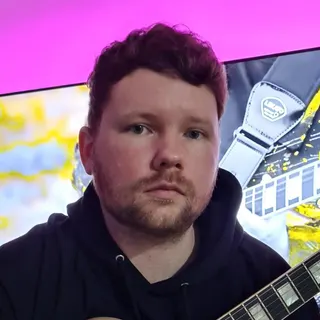
Portrait of Owen Evans

Owen Evans

Music, and Musical Instrument Specialist

Lumsden, United Kingdom

£30.00 per hourDBS checkediAccepting enquiries
GuitarMusicMusic PerformanceMusic Technology+1 more
  • Holds over 8 years' of online teaching experience.
  • Owen holds over 18 Years' experience teaching & in the Music industry.
  • Received over 1 million views & listens on Spotify, Youtube & social media.
  • A professional songwriter in all genres.
  • Over 10 years' experience using Logic Pro-x.
  • Owen has worked with Grammy-winning producers.

Owen Evans is a UK guitar tutor with 18+ years in teaching and the music industry, including 8+ years of online tutoring. He supports ABRSM/Rockschool, GCSE and A-Level Music, plus songwriting and Logic Pro X production with tailored lesson plans.

Send a quick enquiry from here and the Latimer Tuition team will pass it on to Owen.

What changes at Grade 4?

Both boards build on earlier theory knowledge, but their Grade 4 syllabuses are different. Use these selected examples to identify the teaching you need, then work from the full syllabus for your board.

ABRSM: wider notation and rhythm
Grade 4 introduces duplets and double-dotted note values, extends simple and compound time, and adds alto clef, double accidentals and enharmonic equivalents: different spellings for the same pitch.
ABRSM: keys and harmony
Major and minor keys extend to five sharps or flats. Work includes intervals between notes within a key and root-position tonic, subdominant and dominant chords. Ornaments and orchestral instruments also form part of the syllabus.
Trinity: writing and moving music
New keys include A and E-flat major, F-sharp and C minor. Alto clef, chord inversions and transposing a tune by a perfect fourth or fifth need attention. Written tasks also develop chord, bass and melody work, including chords in four voice parts.
Practise the response format
ABRSM Grades 1–5 normally use digital exams, with exceptions through access arrangements. Trinity theory exams in the UK and Ireland are digital-only following May 2025. Trinity preparation includes writing and editing notes on screen alongside choice, short-answer and analysis questions.

ABRSM example: why five quavers can fill a 6/8 bar

Duplets are a Grade 4 extension; 6/8 itself is covered earlier. Here is a constructed practice example: write three ordinary quavers, followed by two quavers under a bracket marked 2. Put the bracket over the last pair only.

Counting five written notes can make the bar look short. Instead, count the time they occupy. A 6/8 bar has two dotted-crotchet beats. The first three quavers fill beat one. The duplet divides beat two into two equal notes, taking the same time as three ordinary quavers. The bar is complete: three quavers’ worth of time plus another three.

Each note in that duplet lasts one and a half ordinary quavers. A clear explanation would be: “There are five notes, but the pair marked 2 still fills the whole second beat.” Try tapping two steady main beats and fitting three sounds into the first, then two into the second.

For a follow-up, replace the first three quavers with one dotted crotchet. The bar still lasts two beats. Being able to explain both versions shows more understanding than recognising a familiar answer.

Trinity example: move every note up a perfect fifth

Trinity Grade 4 includes transposing tunes by a perfect fourth or fifth. Try this constructed task: start with four crotchets, C–D–E–G, rising in C major. Move the whole phrase up a perfect fifth into G major.

Count letter names including both ends: C–D–E–F–G gives a fifth. A perfect fifth spans seven semitones. Apply that same move to each note: C becomes G, D becomes A, E becomes B and G becomes the D above that B. The answer is G–A–B–D, with the rhythm unchanged.

Write the G-major key signature with F-sharp, even though this short phrase contains no F. Moving only the opening note would alter the melody; putting the final D below B would send the last movement in the wrong direction. Check every note’s distance and the shape of the phrase.

Then reverse the task, moving the answer down a perfect fifth. It should return to C–D–E–G in C major. This example shows a Trinity Grade 4 task; ABRSM’s Grade 4 requirements should be checked separately.

Turn corrections into independent work

A useful lesson plan starts with a small sample of the learner’s work. Ask the tutor how they would separate an earlier gap, such as note reading, from a new Grade 4 difficulty. Agree a practice routine that fits the learner’s other commitments. The following cycle is a suggested starting point.

  1. Choose one difficulty

    Bring an attempted rhythm, scale, chord or transposition question. Keep the original answer visible so the tutor can see where the reasoning changed direction.

  2. Explain and correct it

    Work through the reason for the correction. If counting aloud helps, use it; if the notation feels crowded, ask for larger notes or shorter task steps. Leave time for the learner to explain the answer in their own words.

  3. Try a fresh version

    Change the rhythm grouping or starting notes, then solve the new task without copying the worked answer. Record whether the learner could identify the method and check the result independently.

  4. Build towards mixed practice

    Return to older topics as well as new ones. When explanations are secure, use a mix of question types and practise the board’s response tools. Review repeated mistakes before relying on a complete practice-paper score.

Arrange lessons around the learner and budget

Latimer offers online one-to-one tuition, a free matching request and a free introductory meeting to discuss goals, teaching approach and arrangements. Use that meeting to explain whether the aim is an exam, support alongside instrumental lessons or understanding music more confidently. It is an introductory conversation, not a full free teaching lesson.

Tutors set their own hourly rates, shown on their profiles, and lessons are billed after they take place on a pay-as-you-go basis. Agree the lesson length, frequency and any materials before booking. A useful comparison is how well the tutor can explain the learner’s actual difficulty and plan the next independent task.

For online theory lessons, have your workbook or score ready and agree how both of you will see and annotate the notation. Microsoft Teams is the default platform; another can be agreed with the tutor. In-person lessons require an individual arrangement.

Tell us what you want to understand

Include the learner’s board, current workbook, one difficult topic and the times that could work for lessons. If there is no exam planned, describe the music they want to read or understand. You can leave an uncertain exam date open.

Support and clarity

Frequently asked questions

Straight answers to the questions people ask most often.

Do I need to pass Grade 3 before starting Grade 4 theory?

Neither ABRSM nor Trinity requires a pass in an earlier theory grade before entry. Earlier knowledge still matters: a learner who struggles with note reading, key signatures or basic rhythm will need those gaps addressed alongside the Grade 4 work. A certificate and a secure starting foundation are different things.

Do I need an instrument for Music Theory lessons?

Theory study can use written notation and exercises without a performed instrument programme. An instrument can help you connect a written idea with its sound, but these lessons do not require you to prepare a Grade 4 playing exam. Agree suitable lesson materials with the tutor; digital exam equipment requirements are a separate check.

How long does Grade 4 Music Theory preparation take?

There is no single lesson count that suits every learner. Starting knowledge, the chosen board, practice between lessons and confidence using the exam tools all affect the plan. Ask for a review point based on fresh questions the learner can complete independently, then decide whether the lesson schedule or exam target needs adjusting.

Is Grade 4 Music Theory a Level 4 qualification?

No. ABRSM and Trinity Grade 4 Music Theory awards sit at Level 2 of the Regulated Qualifications Framework (RQF). The music grade number and the qualification framework level use different scales. This does not mean the award is a complete GCSE. If your main need is a school course, see our GCSE Music tuition page.

Can I study Grade 4 theory without taking the exam?

Yes. You can use the same notation, rhythm and harmony work to understand scores or support instrumental or vocal study. Tell the tutor which music interests you so examples can connect with that goal. If you later choose Grade 5 theory, neither board requires a Grade 4 pass first; you will still need the earlier knowledge.

What if reading notation or using the exam screen is difficult?

Discuss larger notation, shorter instructions, an audible rhythm example and extra time to explain answers during lessons. Formal exam adjustments follow the board’s own process and approval. For Trinity, read the digital theory access guidance before arranging an exam; for ABRSM, check its current access guidance for the intended entry.

Who books the theory exam and pays the exam fee?

Agree who will make the entry with the tutor and family before choosing an exam date, and confirm any exam fees or materials separately from tuition. Booking lessons does not establish that the exam has been entered. Check the board’s current booking, equipment and supervision guidance before making the entry.

Further information

Useful links and resources

Related tutor pages

Explore related tuition options and guidance for choosing the right support.