
Online one-to-one music theory tuition

Find a Grade 7 Music Theory tutor

Work on seventh-chord harmony, writing music and understanding scores. Choose support for ABRSM or Trinity Grade 7, or study the material to deepen your musicianship.

  • One-to-one tuition
  • Pay as you go
  • Direct tutor contact
At Grade 7, the useful question is often why a written note or chord works. Look for tuition that connects harmonic understanding with the tasks you need to complete, and turns feedback into a new attempt you can explain yourself.

The form controls become available when the enquiry form has loaded.

Grade 7 Music Theory tuition enquiry

Tell us what you know, skip anything you’re unsure about, and add a short description if you skip both subject and level.

  1. Tutoring brief
  2. Contact details

Final question

Contact details

Where should we send tutor options?

We’ll reply by email. Mobile is an optional fallback only.

Your tutoring brief

Subject
Music
Level
Grade 7

Free matching request skip anything you’re unsure about pay as you go when lessons begin.

We use your contact details to reply to this enquiry. See our Privacy Policy for other uses.

How one-to-one tuition can help

  • Distinguishing a chord’s root, bass and seventh when the notes change position
  • Preparing and resolving suspensions within a passage or harmonic sequence
  • Connecting harmony, melody writing and score reading to your chosen board

Tell us whether the learner is following ABRSM or Trinity College London.

Available tutors

Compare music tutor profiles

Discuss Grade 7 written theory, your chosen board and a recent exercise when contacting a tutor. Use those details to establish the right teaching fit.

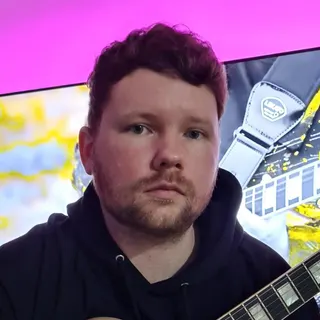
Portrait of Owen Evans

Owen Evans

Music, and Musical Instrument Specialist

Lumsden, United Kingdom

£30.00 per hourDBS checkediAccepting enquiries
GuitarMusicMusic PerformanceMusic Technology+1 more
  • Holds over 8 years' of online teaching experience.
  • Owen holds over 18 Years' experience teaching & in the Music industry.
  • Received over 1 million views & listens on Spotify, Youtube & social media.
  • A professional songwriter in all genres.
  • Over 10 years' experience using Logic Pro-x.
  • Owen has worked with Grammy-winning producers.

Owen Evans is a UK guitar tutor with 18+ years in teaching and the music industry, including 8+ years of online tutoring. He supports ABRSM/Rockschool, GCSE and A-Level Music, plus songwriting and Logic Pro X production with tailored lesson plans.

Send a quick enquiry from here and the Latimer Tuition team will pass it on to Owen.

What does your Grade 7 theory exam ask you to do?

ABRSM and Trinity assess written musical understanding, but their tasks differ. Tell a prospective tutor which board you follow and show them a recent attempt. If you have not chosen a board, compare the writing tasks and exam format before buying materials.

Figured bass uses numbers to indicate harmony above a bass line. A suspension carries a note into the next harmony before resolving it; the example below shows how that works.

ABRSM Grade 7
Work includes adding bass figures to a given melody and bass, rewriting a passage with suspensions and melodic decoration, melody composition, and score questions. The melody choice is to continue a solo line over supplied keyboard accompaniment, or compose from supplied chords or a melodic figure. Harmonic vocabulary extends to all diatonic secondary sevenths and inversions, the Neapolitan sixth and diminished seventh.
Trinity Grade 7
Tasks include transposition, an eight-bar melody, a harmonic sequence with suspensions, string-quartet score conversion, and analysis. A hymn or chorale task asks for chord labels and a three-chord completion with the bass given. Secondary sevenths and suspensions extend the Grade 6 work; diminished sevenths already occur at Grade 6. Melody options add whole-tone and Dorian material.

Worked example: the bass note is not always the root

Before tackling a longer Grade 7 passage, check that the learner can explain the harmony in a single chord. This original teaching example uses C major.

Start with F in the bass and A, C and D above it. Calling it “F major” leaves the D unexplained. Reorder the notes in thirds: D–F–A–C. D is the root, F the third, A the fifth and C the seventh. It is a D minor seventh chord, built on the second degree of C major, also called the supertonic.

F is the lowest note, so the chord is in first inversion. Its usual figured-bass abbreviation is 6/5: above F, A is a third, C a fifth and D a sixth. The root remains D when the notes change position.

Now move towards G–B–D, the dominant harmony. The chordal seventh C can resolve down to B. Count that seventh from the root D, even though F is in the bass. This isolates one harmonic decision; a complete four-part answer also needs checks on how every part moves.

Try it in G major: use A–C–E–G with C lowest. A is now the root and G the seventh; the chord is again in first inversion. Moving G down to F-sharp leads into D–F-sharp–A. Improvement means explaining both versions without copying the first answer.

Worked example: make a suspension do its job

Both boards require applying suspensions at Grade 7. This original fragment shows one suspension, which can then be used within a longer passage or sequence.

  1. Prepare: sound C as part of C-major harmony.
  2. Hold: tie that C into a strong beat as the harmony changes to a G bass. C now forms a fourth above G: count G–A–B–C.
  3. Resolve: move C down to B while G stays in the bass. G–A–B is a third, giving a 4–3 suspension.

Placing an unexplained C over G and calling it “a wrong note” misses the point. Here it has a preparation, a moment of tension and a downward resolution. The tie makes the held note clear in this example.

For a fresh attempt, start in G-major harmony, hold G over a change to D bass, then resolve to F-sharp. Identify the preparation and count the fourth and third again. The useful check is whether the learner can explain all three stages.

Turn corrections into independent work

A corrected page shows what was discussed; a fresh attempt shows what the learner can do alone. A useful preparation cycle moves from a short untimed exercise to a longer task for the chosen board. Agree lesson frequency around the work the learner can realistically complete between meetings.

  1. Find the exact difficulty

    Bring an unfinished or marked exercise, keeping the original attempt visible. Separate a wrong chord choice from a wrong inversion, an unprepared dissonance or a notation mistake. Choose one priority that can be explained and practised before the next lesson.

  2. Return to the board’s writing task

    For an ABRSM passage, identify the underlying harmony before adding decoration, then check that the decorated line still fits it. For a Trinity suspended sequence, track the repeating pattern and check the preparation and resolution at each stage. Explain each change instead of replacing the whole answer with a model.

  3. Include melody and score reading

    Alternate harmony with writing and analysis. For a melody task, plan where the phrase is heading, then check the chosen notes against its given accompaniment, chords or scale. When reading a score, mark the clefs and trace one part through the extract before tackling the whole texture.

  4. Check transfer before speed

    Return later to a similar problem in another key without the corrections beside it. Keep brief notes on recurring errors. Once the reasoning holds, attempt an unfamiliar task in the board’s format under timed conditions. Look for fewer prompts, explained choices and a completed answer, as well as the mark.

Choose a tutor who can explain the written work

Use the free introductory meeting to discuss the learner’s goals, teaching approach and arrangements. It is normally a conversation before paid lessons, rather than a full teaching lesson. A strong instrumental background can be useful, but your questions should establish experience with the written theory tasks you need.

Bring the board name, one recent exercise and the part the learner cannot yet explain. For a returning learner, describe what still feels familiar and what has become rusty. The first paid lessons can then establish a starting point rather than assume that an old certificate reflects present understanding.

  • Board and task fit

    Which Grade 7 written tasks do you teach? How would your approach differ for ABRSM bass figuring and decorative rewriting, or Trinity’s sequence and chorale-completion work?

  • Feedback that can be used

    How will you help the learner explain a harmonic choice, keep a record of a correction and try a related question independently? Agree how written work will be reviewed, including any work outside the lesson.

  • An explanation the learner can follow

    Discuss larger notation, isolating one voice, hearing a chord change or breaking an exercise into shorter stages where useful. Agree how prompts will gradually be removed so independent work remains the goal.

Arrange lessons around written music

Latimer provides online one-to-one tuition. Microsoft Teams is the default platform; you and the tutor can agree another. In-person lessons require an individual arrangement.

Before the first lesson, check that both sides can read the notes, accidentals and small bass figures clearly. Agree whether to share a scan or photograph of handwritten work, use a document camera, or work on notation onscreen. Keep the original attempt and the corrected version so feedback can refer to the same bar. A keyboard or another instrument can help you hear a harmony, if available.

Each tutor sets their hourly rate, shown on their profile, and Latimer bills lessons on a pay-as-you-go basis. Agree lesson length and frequency with the tutor. Confirm separately the cost of books, exam entry and any marking outside lessons. For value, look at whether the learner can explain and repeat the work independently; completing more worksheets is not the only useful measure.

Tell us what you want to understand next

For exam preparation, name the board and describe a difficult task: figuring a bass, shaping a melody, completing a sequence or reading a score. Include the intended exam date if you have one. A matching request is free.

If you are studying for your own musicianship, choose a concrete goal such as explaining the harmony in a piece you play or writing a phrase that follows a chord progression. You can discuss Grade 7 material without making an exam date the centre of the plan. For support with a school Music course as well, use the separate GCSE or A-level tuition pages.

Support and clarity

Frequently asked questions

Straight answers to the questions people ask most often.

Do I have to pass Grade 6 Theory before Grade 7?

Neither ABRSM nor Trinity requires an earlier theory certificate for entry. The knowledge is cumulative, however. Before starting, use a short diagnostic to check earlier harmony, notation and score-reading skills, then repair the gaps that would hold up Grade 7 work.

Is Grade 7 Music Theory an online exam?

Online lessons and exam delivery are separate choices. ABRSM’s cited specification provides a paper-based Grade 7 exam with a three-hour allowance. Trinity’s UK theory grade exams are digital; its final scheduled UK and Ireland paper session was in May 2025. Check the board’s current booking guidance for your intended sitting.

Do I need to play an instrument at Grade 7 standard?

These are theory qualifications, so you are preparing written answers rather than a performance programme. Playing or listening can help you connect notation with sound, but the first discussion should establish your theory knowledge. Tell the tutor if you have no instrument available so suitable learning activities can be agreed.

How long does Grade 7 preparation take?

There is no reliable timescale for an unknown learner. Someone who understands a chord but writes it slowly needs a different plan from someone still confusing its root and bass. Use an initial attempt, available practice time and the intended exam date to agree a plan and a review point before committing to an entry.

Which practice resources should I use?

Choose resources for the exact board and grade. ABRSM publishes Grade 7 Music Theory Practice Papers 2025 and separate model answers. Trinity’s existing theory workbooks and papers support its digital syllabus, and its free digital practice area helps learners rehearse entering notation. Discuss materials with the tutor before buying overlapping books.

Who books the theory exam?

Agree who will make the entry, pay the exam fee and monitor the board’s messages. These arrangements are separate from booking tuition. For Trinity digital exams, booking information goes to the booking account holder. Make sure that person and the learner can coordinate the required setup before choosing when to enter.

What if the learner needs adjustments?

Describe what helps the learner read notation, write answers or work at a manageable pace so lesson arrangements can be discussed. Formal exam adjustments are a separate board decision. Trinity accepts digital-theory adjustment applications before the exam and may need supporting evidence; use its current guidance early rather than assume a lesson adaptation automatically applies in the assessment.

Related tutor pages

Explore related tuition options and guidance for choosing the right support.