Online one-to-one Italian tuition

Find an Italian tutor for the way you want to learn

Start from the basics, build confidence in conversation or prepare for an Italian qualification. Choose tuition around your starting point and the Italian you need to use.

  • One-to-one tuition
  • Pay as you go
  • Direct tutor contact
Italian lessons can focus on a practical conversation, a gap in reading or writing, or a particular school assessment. Start with the goal that matters to you; the examples below show how a small correction can become a useful practice task.

The form controls become available when the enquiry form has loaded.

Italian tuition enquiry

Tell us what you know, skip anything you’re unsure about, and add a short description if you skip both subject and level.

  1. Tutoring brief
  2. Contact details

2 questions remaining

Tutoring brief

What level is the tuition for?

Choose a level

Choose a suggestion or type your own answer. You can skip this if you’re unsure.

This form works best for one learner at one level and up to six subjects. If your circumstances are more complicated, email us at Contact@LatimerTuition.com so you can explain everything properly.

How one-to-one tuition can help

  • Build Italian requests and replies with pronunciation, meaning and grammar explained together
  • Turn familiar words into spoken answers, with feedback on the parts that cause difficulty
  • Connect Italian exam practice to the student’s board, course and written or spoken work

Available tutors

Compare Italian tutors

6 tutor profiles selected

Look for a teaching approach that fits your goal, then use the profile and introduction to discuss the work you want to tackle.

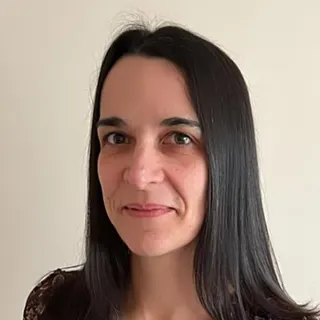
Portrait of Axenia Raulet

Axenia Raulet

MFL and Art Specialist

St Austell

£30.00 per hourDBS checkediAccepting enquiries
ArtFrenchGermanHistory of Art+1 more
  • Over 10 years' of experience in intercultural communication, art projects, and education.
  • Holds a Masters of Art in Didactics from Unibo, Bologna University, Italy.
  • Also holds a Bachelors of Art in Intercultural Mediation from La Sapienza University, Rome, Italy.
  • Currently pursuing a career as a professional artist.
  • Fluent in 8 European languages.
  • Adopts a trauma-informed approach to ensure a safe and respectful space for all students.

Axenia Raulet is a French tutor, Italian tutor and German tutor with 10+ years’ experience, a Master’s in Didactics (Unibo Bologna) and fluency in 8 European languages. She also teaches GCSE/A Level Art and History of Art with a trauma-informed approach.

Send a quick enquiry from here and the Latimer Tuition team will pass it on to Axenia.

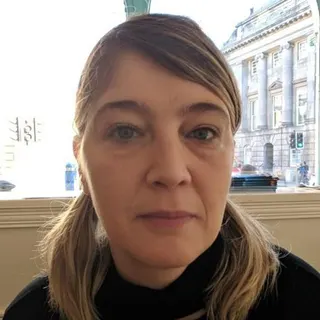
Portrait of Paola Marcon

Paola Marcon

Italian, Sociology, and English as a Foreign Language Specialist

EDINBURGH

£35.00 per hourDBS checkediAccepting enquiries
ItalianSociologyTEFL: Teaching English as a Foreign Language
  • Holds more than 10 years’ of experience teaching Italian and English.
  • Holds a Masters Degree in Sociology from the University of Trento.
  • To progress towards her CEDILS to become a qualified Italian teacher.
  • Native speaker of Italian.
  • Assessor and Examiner for English and Italian exams.
  • Paola holds the CELTA and TEAP certificates (teaching English for academic purposes).

Paola is an italian tutor and english tutor with 10+ years’ experience teaching all levels online and face-to-face; a native Italian speaker with CELTA/TEAP and examiner experience. She is also a sociology tutor for GCSE and A Level, with an MA in Sociology (University of Trento).

Send a quick enquiry from here and the Latimer Tuition team will pass it on to Paola.

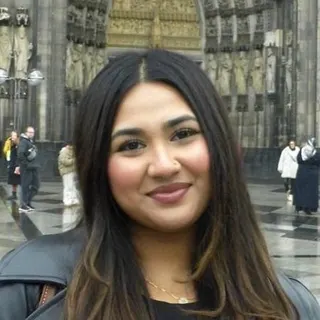
Portrait of Sandra Ortu

Sandra Ortu

Italian Specialist

Cullompton, United Kingdom

£35.00 per hourDBS checkediAccepting enquiries
Italian
  • Sandra has been teaching Italian as a foreign language since 2002.
  • Prior experience teaching adults, corporate clients, GCSE, A-Level, and University students.
  • Sandra started her university studies in Tuscany, Italy, where she studied English, French, and Spanish.
  • Sandra completed her studies and achieved her BA in English and French in 1999 at Thames Valley University, London.
  • She finally continued her studies and achieved her Master's in English/Italian Translation at the University of Westminster, London.

Sandra Ortu is an Italian tutor and private tutor teaching Italian as a foreign language since 2002, supporting adults, corporate clients, GCSE, A-Level and university learners. Master's in English/Italian Translation; patient, tailored lessons with reports and homework.

Send a quick enquiry from here and the Latimer Tuition team will pass it on to Sandra.

Portrait of Sara Dellapiana

Sara Dellapiana

Qualified French, Italian, and Spanish Teacher

Crewe

£32.00 per hourDBS checkediAccepting enquiriesQualified teacher
FrenchItalianSpanish
  • Holds a Postgraduate Certificate in Education (PGCE) with Qualified Teacher Status (QTS) in Modern Foreign Languages from Manchester Metropolitan University.
  • Holds a 1st (110/110 with distinction) for her Bachelors of Modern Foreign Languages Degree in Spanish and English Languages and Literature from the University of Bergamo.
  • Has over 16 years’ of experience teaching Modern Foreign Languages in UK schools from KS1/2/3, to GCSE level.
  • Sara has been teaching Italian to adults both in small classes and One-2-One for over 20 years.

Sara Dellapiana is a qualified French tutor, Spanish tutor and Italian tutor with PGCE (QTS) in MFL and 16+ years teaching KS2–GCSE in UK schools; a native Italian speaker offering tailored Italian lessons for adults and all levels.

Send a quick enquiry from here and the Latimer Tuition team will pass it on to Sara.

Portrait of Isha Emerat

Isha Emerat

5.0

English and Italian Specialist

London

£35.00 per hourDBS checkediAccepting enquiries
English LanguageEnglish LiteratureItalian
  • Holds 3 A-Levels in Economics, Government and Politics, and History.
  • Holds 9 GCSEs including English Language, English Literature, Mathematics, Sciences, Languages, and Humanities.
  • Fluent in English, Bengali, and Italian, offering multilingual support where needed.
  • Creates bespoke PowerPoints and original teaching materials proven to support academic progress.

Isha Emerat is a GCSE English tutor and Italian tutor with 4+ years’ experience, supporting KS2–GCSE and 11+/13+. Fluent in English, Bengali and Italian, she provides tailored lessons with original resources, reports and optional homework.

Send a quick enquiry from here and the Latimer Tuition team will pass it on to Isha.

Portrait of Leon Eric Avrutin

Leon Eric Avrutin

English, MFL and Geography Specialist

York, United Kingdom

£25.00 per hourDBS checkediAccepting enquiries
11+ (general)English as a foreign LanguageEnglish LanguageEnglish Literature+8 more
  • Holds a Postgraduate Diploma in Law.
  • Leon also holds a Bachelors degree in Modern Languages, Literatures, and Cultures from the University of Padua, Italy.
  • Holds experience teaching students One-2-One, in small groups, online, and in person.
  • Leon isn't a formally qualified teacher, but does have experience working within the classroom, with individual pupils struggling with their courses.

Leon supports learners in English, languages and humanities from KS2 to A-Level, drawing on his modern languages background and experience of one-to-one, group, online and in-person teaching.

Send a quick enquiry from here and the Latimer Tuition team will pass it on to Leon.
Choose Italian lessons around your goal

You can begin Italian with no previous study. You can also arrive with a very uneven starting point: perhaps you understand family conversations but struggle to reply, or read a passage comfortably but lose track when someone speaks. Tell the tutor what you can already do and name a situation you want to handle next.

  • Starting from the beginning

    Build useful requests, introductions and simple questions alongside their pronunciation and meaning. Look for explanations you can follow in English, with a gradual move towards using more Italian.

  • Travel and everyday conversation

    Choose situations you expect to use: ordering, asking for information or keeping a conversation going. Practise understanding the reply as well as delivering the opening phrase.

  • Returning or family-language learners

    Bring a short spoken and written sample. If conversation is familiar but spelling or grammar is less secure, make those the focus instead of repeating every beginner topic.

  • School, college or further study

    Name the course and immediate difficulty: listening detail, translation, an extended answer or analysis of a set work. For university or professional study, share the actual module or task before agreeing a match.

A beginner example: correcting a café order

Consider the practice phrase “Vorrei una cappuccino”, intended to mean “I would like a cappuccino”. The request is clear, but the small word before the drink needs correcting. Cappuccino is masculine, so the phrase takes un: “Vorrei un cappuccino.” Learn the noun and its article together. The English word “a” does not tell you the Italian noun’s gender.

Now change the order to “Vorrei una brioche”: “I would like a brioche”. Brioche is feminine, so una is right for this word. This is a useful first contrast, rather than a rule that covers every Italian noun. The Open University’s OpenLearn materials explain these forms and provide café dialogues.

For a follow-up, listen to the model, then cover the Italian and use the two English orders as prompts. Can you choose the right article and say the whole request without reading it? That gives you something specific to work on: a word you recognise becomes a phrase you can produce. A tutor can use your attempt to focus the next correction.

A school example: give the opinion and the reason

If a speaking prompt asks what you think of sport and why, “Mi piace” (“I like it”) only answers the first part. Adding “perché è divertente” (“because it is fun”) gives a reason. The complete sentence is “Mi piace perché è divertente.” Here perché joins the opinion to its explanation. AQA uses this short example in its June 2023 GCSE Italian Foundation speaking guidance.

The useful habit is to check every part of the question before stopping. For practice, separate an opinion-and-reason prompt into two boxes and check that your response fills both. Then use a reason that expresses your own view, with its meaning checked before you practise it aloud.

As the work develops, grammar needs to serve the message too. AQA GCSE Italian includes reference to past, present and future events: a response about what happened yesterday needs an appropriate past form, not just a time word attached to a present-tense sentence. This short example shows one improvement; it is not a complete exam answer or a promise of marks.

Match exam tuition to the actual Italian qualification

For the named qualifications below in England, send the board, course code, exam year and current school materials. Include the tier for GCSE and the chosen works for A-level. Another course needs its own specification.

AQA’s Italian vocabulary update applies to exams from 2028, following first teaching in September 2026. Check that the vocabulary list fits the student’s exam year.

  • Pearson A-level also includes independent research into Italian-speaking culture or society. Tuition should stay within the assistance rules: general research skills can be discussed, but the assessed presentation and responses must not be drafted, corrected or rehearsed with a tutor.

Turn the first teaching lesson into a practice plan

A useful plan connects the difficulty you bring, the work in the lesson and something you can try independently. The following is one way to agree that plan with a tutor.

If you want to learn remotely, explore online Italian tutors and agree how speaking practice and feedback will work.

  1. Check the starting point

    Try a short listening exchange, a spoken response and a little reading or writing suited to your goal. A beginner might work from a menu and a translated phrase; an exam student can bring a marked answer. Notice whether the difficulty is hearing the words, recalling them or using an accurate form.

  2. Choose a manageable focus

    For a café task, focus on hearing the item and choosing its article. For school work, focus on answering the missing part of a question or correcting a recurring tense error. Keep a corrected example and its English meaning so the practice remains usable at home.

  3. Return with a changed prompt

    Repeat the skill with a different item or question, initially using a model if needed and then covering it. Compare the new attempt with the first: can you respond with less prompting, make the meaning clear and catch the error yourself? Use that evidence to choose the next focus.

Use the introduction to check teaching fit

Latimer offers a free introductory meeting to discuss goals, teaching approach and arrangements. Use it to agree what the first paid lesson should tackle. For beginners, ask how the tutor introduces pronunciation and explains a correction; for conversation, ask how they balance speaking time with feedback; for exams, confirm experience with the named course.

Explain any practical learning needs in concrete terms: more time to answer, written instructions, a transcript beside audio, or help keeping practice short. For a child, agree how the parent will receive feedback. If specialist experience matters, ask about it before booking.

To request a match, include Italian, the learner’s starting point, the goal, suitable lesson times and a budget. Latimer’s matching request is free. You can also compare tutor profiles and contact a tutor whose approach fits.

Support and clarity

Frequently asked questions

Straight answers to the questions people ask most often.

How much do Italian lessons cost?

Each tutor sets their own rate, which is shown on their current profile. Latimer bills after lessons on a pay-as-you-go basis. Agree the lesson length and frequency before starting so you can work out the cost across a month. Ask separately about any proposed materials and cancellation arrangements.

Are there free Italian lessons or resources?

OpenLearn has free beginner Italian activities, including the food-and-drink practice linked above. You can use them for listening and phrase practice, then bring a specific difficulty to tuition. Latimer’s free introductory meeting is for discussing goals and arrangements; teaching lessons are paid.

Can I have Italian lessons online or in person?

Latimer’s service is online-first, with one-to-one lessons. Microsoft Teams is the default platform, although you and the tutor can agree another. Check the microphone and audio before a speaking or listening lesson, and have the relevant text or exercise ready. In-person lessons require an individual arrangement with a suitable tutor.

How often should I book, and how long will learning Italian take?

Set a concrete target before choosing a timetable: handle a short conversation, follow a familiar exchange or improve a particular school task. Agree a rhythm around your starting point, deadline, budget and time for practice. Review whether you are using the corrections between meetings. Those details are more useful than a fixed promise of fluency after a number of lessons.

What do A1, A2 and B1 mean for Italian learners?

These are levels in the Common European Framework of Reference for Languages. A1 describes simple exchanges with support; A2 includes routine exchanges of information; B1 includes unprepared conversation on familiar topics. Use them to discuss what you can do in each skill. They are not a substitute for checking your own starting point and do not specify a tutoring timetable.

Can I study for an Italian exam as a private candidate?

Tuition and exam entry need separate arrangements. Before committing to an exam plan, confirm that a centre can enter you for the exact qualification and organise its speaking assessment. Pearson places responsibility on the centre to arrange a suitably qualified person to conduct the oral component. Confirm those arrangements directly with the centre.

Can lessons focus on speaking if I already understand Italian at home?

Describe what happens when you try to reply: do you need time to find words, avoid particular sentence forms or switch to English? A short conversation can give the tutor a starting point for spoken practice. If you also want formal reading or writing, say so explicitly; those goals may need different tasks from everyday conversation.

Related tutor pages

Explore related tuition options and guidance for choosing the right support.