One-to-one postgraduate tuition

Master’s tutors for your next study challenge

Find support for a demanding module, a research method or the reasoning behind your dissertation. Start with your course, the task in front of you and what you need to understand.

  • One-to-one tuition
  • Pay as you go
  • Direct tutor contact
Choose a tutor whose subject knowledge and approach fit your taught, research or professional master’s work. Lessons should help you explain and apply ideas independently, with a clear next task to practise.

The form controls become available when the enquiry form has loaded.

Masters tuition enquiry

Tell us what you know, skip anything you’re unsure about, and add a short description if you skip both subject and level.

  1. Tutoring brief
  2. Contact details

2 questions remaining

Tutoring brief

What subject do you need help with?

Popular subjects

Choose a suggestion or type your own answer. You can skip this if you’re unsure.

This form works best for one learner at one level and up to six subjects. If your circumstances are more complicated, email us at Contact@LatimerTuition.com so you can explain everything properly.

How one-to-one tuition can help

  • Understand the concept or method holding up a taught module
  • Compare evidence and build a reasoned academic argument
  • Connect a research question to a suitable method and its limits

Available tutors

Explore master’s tutor profiles

4 tutor profiles selected

Look for experience relevant to your discipline and the postgraduate module, research method or practice task you want to understand.

Portrait of Alexander Olsen

Alexander Olsen

Humanities Specialist

Southamptom, United Kingdom

£35.00 per hourDBS checkediAccepting enquiries
Business StudiesConsultancyEnglish LanguageEnglish Literature+10 more
  • Over 10 years' of experience in tutoring students from GCSE to A Level.
  • Holds a Master of Science in Education Studies from the Open University.
  • Holds a Postgraduate Certificate in Professional Studies in Education from the Open University.
  • Holds a Bachelor of Science in Humanities from the Open University.
  • Holds a Master of Arts in Political Science and International Relations from Kings College, University of Aberdeen.
  • Currently employed as a Training Needs Analyst for a FTSE 100 global engineering corporation.
  • Average grade boundary shift of +2 with over 90% of students achieving 7-9 at GCSE and 85% A and A* at A Level.

Politics tutor and history tutor with 10+ years’ experience from GCSE to A Level and university; holds an MSc in Education Studies (Open University). Students typically improve by 2 grades, with 85% achieving A and A* at A Level.

Send a quick enquiry from here and the Latimer Tuition team will pass it on to Alexander.

Portrait of Simon OKeeffe

Simon OKeeffe

Music and Music Performance Specialist

london, United Kingdom

£40.00 per hourDBS checkediAccepting enquiries
ABRSMGCSE (general)GuitarMusic Performance+4 more
  • Simon has over 12 years' of experience as a music educator across primary and secondary schools in addition to further education.
  • Holds a Bachelor of Arts (Hons) in Music (Guitar Institute).
  • Holds a Master of Arts in Record Production and Distribution (University of West London).
  • Professional background as a musician, producer, arranger, and musical director.

Music educator with 12+ years’ experience offering private lessons as a guitar tutor and piano tutor, plus drums and music theory. Supports GCSE, A Level and university music performance and music technology, with lesson reports and optional homework.

Send a quick enquiry from here and the Latimer Tuition team will pass it on to Simon.

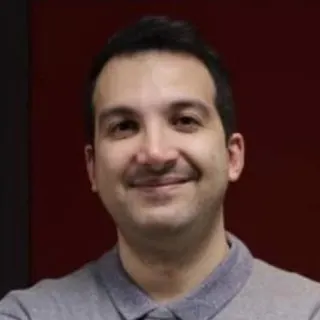
Portrait of Amir Ghadiri

Amir Ghadiri

English and Business Studies Specialist

Gwynedd, United Kingdom

£30.00 per hourDBS checkediAccepting enquiries
Art and DesignBusiness ManagementBusiness StudiesEnglish Language+3 more
  • Currently an Academic Tutor at Bangor University International College (BUIC) and a Visiting Lecturer at Bangor University – Business School (BBS).
  • Holds an Masters of Science in Computer Science – Creative Arts (Animation & VFX) from University of Dundee (Merit).
  • Holds a Bacherlors of Art (Hons) in Linguistics and English Language Studies from the University of Alborz (First Class Honors).
  • To progress his Fellowship (FHEA) qualification.

Amir is an english tutor for GCSE–A Level and a business studies tutor for KS2–university and IB; an Academic Tutor at Bangor University International College and Visiting Lecturer at Bangor University Business School, providing session reports and optional homework.

Send a quick enquiry from here and the Latimer Tuition team will pass it on to Amir.

Portrait of Zahra Salamut

Zahra Salamut

Humanities Specialist

London

£38.00 per hourDBS checkediAccepting enquiries
English LanguageEnglish LiteratureHistoryLaw+1 more
  • Holds a Masters in Law from the University of Law.
  • Holds a degree in Bachelor of Arts in International Relations from SOAS University.
  • Over 8 years of tutoring experience in teaching GCSE English Language, English Literature, Politics, History, and Law.
  • Works with private students on a One-2-One basis in English Language, English Literature, Politics, History, and Law.
  • Nearly all students have achieved their target grades or above.

Zahra Salamut is a GCSE English tutor and law tutor with 8+ years’ experience, plus a Master’s in Law (University of Law) and a SOAS International Relations BA. She offers online tutoring and in-person lessons in English, History, Politics and Law, with session reports.

Send a quick enquiry from here and the Latimer Tuition team will pass it on to Zahra.

Choose support for the work in front of you

Master’s study asks you to evaluate ideas and evidence, explain your choices and work with increasing independence. The QAA master’s degree statement describes research, advanced study and professional or practice courses, often with overlapping features. Your course handbook and assessment brief set the requirements for your own work.

  • Taught modules and exams

    Identify the concept or reasoning step you cannot yet explain. In a quantitative module, that might be why a model’s assumptions matter; in an essay-based module, it might be how to defend an interpretation against a competing view. Practise that skill on a fresh question before returning to the full task.

  • Critical reading and academic argument

    A list of what each author says does not explain how the evidence fits together. Work on comparing questions, methods and conclusions, then use those comparisons to build an argument. The example below shows what this change looks like.

  • Research and dissertation work

    Separate the question, literature, method and analysis. If you are stuck choosing an analysis, first identify what your question asks and what your data can show. Choose support that fits the particular method or software you need to understand.

  • Professional or practice-based work

    Practise linking a recommendation to evidence and the setting. In a hypothetical remote-induction case, “move all training online” goes beyond evidence about new starters needing advice. A more cautious proposal is to trial scheduled mentoring, explain why it addresses that need and decide how to evaluate it before recommending wider use.

Worked example: turn two summaries into a critical comparison

Consider two invented studies used for practice. Study A surveys established employees at one organisation about whether they prefer home or office working. Study B interviews new starters at another organisation about getting informal advice while working remotely.

A weak summary says: “Study A supports remote working, but Study B shows it is bad.” That treats different questions and groups as a direct disagreement.

A stronger comparison says: “A preference for home working and difficulty obtaining informal advice can coexist. The survey describes established employees’ stated preferences; the interviews explore new starters’ experiences of support. Neither study, as described, establishes whether remote working increases productivity.”

The improvement is the reasoning: identify the question, people and method before deciding what a finding supports. Sheffield’s literature-review guidance explains how to compare sources and organise them around themes. A useful follow-up is to make the same comparison with two readings from your module, then write a sentence explaining where their conclusions connect or diverge.

Dissertation tuition: connect the question, method and conclusion

An illustrative starting question, “Does remote working improve productivity?”, leaves the people, setting and measure of productivity undefined. Interviewing a few colleagues about their preferences would not, by itself, establish a productivity effect.

A more focused question for an interview project could be: “How do new starters in one organisation describe getting informal advice while working remotely?” It identifies a group, setting and experience to investigate. An open question such as “Tell me about the last time you needed advice while working remotely” invites an account; “How frustrating was it to get help?” assumes the experience was frustrating. The Open University’s postgraduate interview guidance explains open questions and how to avoid leading respondents.

The resulting accounts could help you understand experiences in that setting. They would not establish a general productivity effect. In a lesson, practise explaining that connection between question, method and limits before applying the reasoning to your own proposal.

Keep your assessment your own. Check your programme’s rules before sharing assessed material: outside feedback as well as writing may be restricted. For example, Edinburgh’s proofreading guidance requires students to check course permission and prohibits substantive changes by a proofreader. Use separate practice material where assessment feedback is not permitted. Tuition cannot provide university approval for a project; take questions about the brief, supervision or required ethics review to your department before collecting data.

Choose a tutor and agree a useful first task

Match the tutor to your discipline and current task. Someone who can explain your module’s theory may not be the right person for a specialist analysis method. If you need both, establish whether one tutor can cover them or whether separate support would be more useful.

  1. Describe the difficulty precisely

    Name your course, module or project stage, the concept or method causing trouble and your next deadline. Include the software if relevant. “I cannot explain why this analysis answers my question” gives a tutor more to work with than “I need dissertation help”.

  2. Use the free introductory meeting to check fit

    Discuss relevant postgraduate subject experience, how the tutor would teach the difficult skill and what you would practise independently. If you need a slower pace, written steps or more time to process explanations, describe those needs so you can agree a workable approach.

  3. Set a task you can attempt independently

    Choose one priority for the first lesson, then try a new problem, reading comparison or method explanation yourself. Review what you can now explain without prompting. Agree the next lesson around that progress, your assessment dates and the time you have for practice.

Plan the cost around a clear learning priority

Each tutor sets their own hourly rate, shown on their profile. Confirm the rate and lesson length before booking. Latimer invoices after lessons on a pay-as-you-go basis, so you can plan tuition around a particular difficulty without buying a long-term package.

Compare the cost with the relevance of the tutor’s expertise and the work you want to do. If your budget is limited, start with the problem holding up your next step and agree a practice task between lessons. Requesting a tutor match is free.

Support and clarity

Frequently asked questions

Straight answers to the questions people ask most often.

Can I find a master’s tutor near me?

Latimer is built around online one-to-one tuition. In-person lessons need an individual arrangement with a nearby tutor. If location matters, include your area and travel limits when you enquire.

Can I get support on an integrated master’s course?

An integrated master’s combines bachelor’s and master’s study. Give your course title, current year and module details so the tutor can judge the level of the work you need help with; the course title alone does not describe every stage.

Can tuition help if I am returning to study or writing in an additional language?

Describe the part of study you want to strengthen, such as reading academic arguments, explaining a technical idea or organising study around work. Ask for practice at your starting point. If you need formal assessment adjustments, contact your university’s support service.

What should I prepare for an online lesson?

Lessons normally use Microsoft Teams, though you and the tutor can agree another platform. Have a permitted practice question or reading, your own attempt and a specific question ready. For software practice, use dummy data and keep passwords and private research information out of shared files.

Can a tutor guarantee a distinction or resolve a marking dispute?

No grade can be guaranteed. A tutor can help you practise the skills behind your course criteria, but your university sets and awards marks. Take questions about marking decisions, appeals, extensions or unclear requirements to the relevant university team.

Further information

Useful links and resources