
One-to-one Music Technology tuition

Music Technology tutors

Find help with recording, music production and course preparation. Choose support around your software, starting point and the music you want to make.

  • One-to-one tuition
  • Pay as you go
  • Direct tutor contact
Bring a recording, a MIDI part or a listening question that shows where you are stuck. A clear starting task helps you compare teaching approaches and decide what useful progress would look like.

The form controls become available when the enquiry form has loaded.

Music Technology tuition enquiry

Tell us what you know, skip anything you’re unsure about, and add a short description if you skip both subject and level.

  1. Tutoring brief
  2. Contact details

2 questions remaining

Tutoring brief

What level is the tuition for?

Choose a level

Choose a suggestion or type your own answer. You can skip this if you’re unsure.

This form works best for one learner at one level and up to six subjects. If your circumstances are more complicated, email us at Contact@LatimerTuition.com so you can explain everything properly.

How one-to-one tuition can help

  • Understand input levels and work towards a clean recording
  • Make deliberate MIDI timing and mixing decisions
  • Connect production skills with the demands of your course or project

Available tutors

Compare Music Technology tutors

6 tutor profiles selected

Look for experience with your software, learning stage and main production goal. Use the introductory conversation to discuss the work you want to tackle.

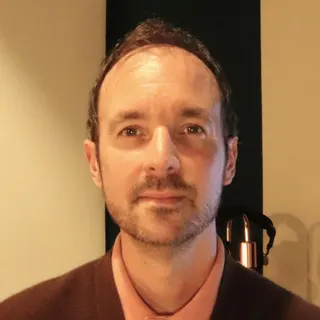
Portrait of Alexander Moretto

Alexander Moretto

Music Specialist

London, United Kingdom

£28.00 per hourDBS checkediAccepting enquiries
MusicMusic TechnologyMusic Theory
  • Over 4 years' of teaching experience.
  • Currently teaching Music Production (Level 2) part-time.
  • Currently a Teaching Assistant and an SEN support worker.
  • Fluent in English, French and Spanish.
  • Works as a DJ on a weekly basis (Signed to a DJ Agency).
  • Releases electronic music on Dance Record labels.
  • Played gigs all around the UK/ Europe - London, Bournemouth (PRIDE Festival), clubs (Ibiza/Amsterdam), and the Ministry of Sound.
  • Music played on BBC Radio Leicester, and BBC Music.

Alexander is a music tutor for learners from 11+ to A-Level, combining professional production experience with clear demonstrations, tailored feedback and practical project work.

Send a quick enquiry from here and the Latimer Tuition team will pass it on to Alexander.
Portrait of Owen Evans

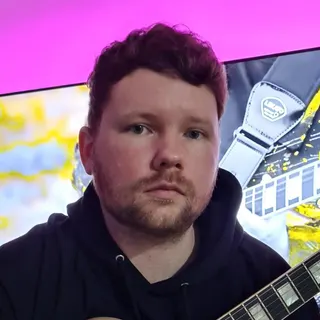
Owen Evans

Music, and Musical Instrument Specialist

Lumsden, United Kingdom

£30.00 per hourDBS checkediAccepting enquiries
GuitarMusicMusic PerformanceMusic Technology+1 more
  • Holds over 8 years' of online teaching experience.
  • Owen holds over 18 Years' experience teaching & in the Music industry.
  • Received over 1 million views & listens on Spotify, Youtube & social media.
  • A professional songwriter in all genres.
  • Over 10 years' experience using Logic Pro-x.
  • Owen has worked with Grammy-winning producers.

Owen Evans is a UK guitar tutor with 18+ years in teaching and the music industry, including 8+ years of online tutoring. He supports ABRSM/Rockschool, GCSE and A-Level Music, plus songwriting and Logic Pro X production with tailored lesson plans.

Send a quick enquiry from here and the Latimer Tuition team will pass it on to Owen.

Portrait of Darren Stone

Darren Stone

Music Specialist

Waterlooville, United Kingdom

£40.00 per hourDBS checkediAccepting enquiries
GuitarMusicMusic PerformanceMusic Technology+1 more
  • Over 10 years’ of experience teaching in UK secondary schools, tailoring lessons to each student’s learning style.
  • Professional composer with internationally published work in film, television, games, and advertising.
  • Expert in Music Technology, GCSE Music, A-Level Music, and Level 2 Music Technology.
  • Extensive studio and live performance experience as a guitarist, bridging real-world music with academic learning.
  • Guides students in composition, performance, music theory, and creative production.

Darren Stone is a private tutor and guitar tutor specialising in Music Technology, teaching GCSE and A-Level Music with 10+ years’ UK secondary school experience. Professional composer offering tailored help with composition, theory and performance, plus session reports.

Send a quick enquiry from here and the Latimer Tuition team will pass it on to Darren.

Portrait of Simon OKeeffe

Simon OKeeffe

Music and Music Performance Specialist

london, United Kingdom

£40.00 per hourDBS checkediAccepting enquiries
ABRSMGCSE (general)GuitarMusic Performance+4 more
  • Simon has over 12 years' of experience as a music educator across primary and secondary schools in addition to further education.
  • Holds a Bachelor of Arts (Hons) in Music (Guitar Institute).
  • Holds a Master of Arts in Record Production and Distribution (University of West London).
  • Professional background as a musician, producer, arranger, and musical director.

Music educator with 12+ years’ experience offering private lessons as a guitar tutor and piano tutor, plus drums and music theory. Supports GCSE, A Level and university music performance and music technology, with lesson reports and optional homework.

Send a quick enquiry from here and the Latimer Tuition team will pass it on to Simon.

Portrait of Abigail Ajala

Abigail Ajala

Music, and Musical Instrument Specialist

Rushmere St Andrew, United Kingdom

£45.00 per hourDBS checkediAccepting enquiries
GuitarMusicMusic PerformanceMusic Technology+2 more
  • Over 11 years' of Music teaching experience.
  • Holds a Bachelor of Arts in Commercial Music.
  • Has been the vocal coach for the Stagecoach Performing Arts School (Ipswich).
  • Teaches guitar, ukulele, piano (up to intermediate), vocals, and music theory.

Abigail Ajala is a guitar tutor with 11+ years’ teaching experience, BA in Commercial Music, and Stagecoach Performing Arts (Ipswich) vocal coach. She is also a piano tutor (to intermediate) teaching ukulele and music theory for ages 4+, KS1–3, GCSE and A Level; online and Suffolk-based.

Send a quick enquiry from here and the Latimer Tuition team will pass it on to Abigail.

Portrait of David Knight

David Knight

Music Specialist

Chippenham, United Kingdom

£60.00 per hourDBS checkediAccepting enquiries
MusicMusic PerformanceMusic TechnologyMusic Theory+1 more
  • Holds a Degree in Composition from Guildhall School of Music and Drama.
  • Over five years of teaching experience.
  • Currently teaches Composition to A-Level Music students with Trinity Laban Conservatoire of Music and Dance.
  • Holds A*, A for English Literature and Music at A-Level.
  • Holds 6 A*s and 2 As for Music, English (Literature and Language), Mathematics, History, Geography, and Science at GCSE level.

David Knight is a Music and A-Level Composition tutor with a Guildhall composition degree and 5+ years' teaching experience, offering online tutoring and in-person lessons in Wiltshire; also a piano tutor at professional qualification level, with session reports and optional homework.

Send a quick enquiry from here and the Latimer Tuition team will pass it on to David.

Start with the music you want to make

Music Technology tuition can focus on recording sound, creating parts in production software, or understanding the choices behind a finished mix. You might be making your first track, returning to a personal project or studying a named qualification. Start with one piece of work and the part you cannot yet do independently.

Your recording and production software is often called a digital audio workstation, or DAW. Knowing whether you are editing audio or MIDI helps you choose the right tool.

  • Recording audio

    A recorded sung note contains captured sound, shown as a waveform. Work might begin with the microphone input, a clean take or an edit between takes.

  • Creating MIDI parts

    A MIDI note is a musical command played by an instrument in the software or connected equipment. Its timing, pitch and chosen instrument can be changed as separate decisions.

  • Producing and explaining a mix

    Bring a short passage where the sound differs from your intention. Identify what you hear, make one change, then explain why that change serves the music.

Recording example: a vocal that distorts on loud words

Imagine a practice vocal take that crackles on the loudest words, with the recording interface showing that its input is clipping. The input has been overloaded. Lowering the track’s playback volume makes that damaged take quieter; it does not undo distortion already captured in the recording.

Reduce the input gain on the recording interface, rehearse the loudest phrase and make a fresh short take. Leave headroom: space below the recording limit for louder moments. Compare the original and new take at a comfortable listening level, checking the input meter as well as the sound. The useful result is a loud phrase captured cleanly, rather than simply a quieter distorted file.

This practice example concerns clipping at the recording input. A red indicator elsewhere in the software can have a different cause.

MIDI example: correct a late drum hit deliberately

Try a four-beat drum loop with the kick on beats one and three and the snare intended to land on two and four. Suppose the last snare arrives just after beat four. If the aim is a straight rhythm, select that snare note and move its start onto beat four. Keep the sound and the other notes unchanged, then play both versions against the beat.

Quantisation moves note timing towards a chosen grid. Some software also lets you apply only part of that movement; Ableton Live calls this Amount. Moving every note fully onto the grid can change an intentional feel, so first decide which timing is actually a mistake.

For an independent follow-up, try another short loop with one late hit. Identify the intended beat, correct only that note and explain whether the change makes the rhythm closer to your intention.

Mixing example: hear what reverb changes

For a simple listening exercise, record the words “one, two, three, four”, one word per beat. Imagine that adding reverb makes each word ring into the next. Reverb creates a sense of acoustic space; its decay sets how long the tail lasts, while dry/wet balance sets the proportion of original and effected sound.

Compare the same phrase with a shorter decay, keeping other settings unchanged. Listen to whether the tail leaves more space before the next word. Then return to the starting settings and try less wet signal instead. That changes how much reverb you hear, rather than how long its tail lasts.

A useful explanation might be: “The shorter decay leaves a clearer gap before the next word.” It names the audible change and its cause. Keep whichever version suits the musical intention; there is no single correct preset for every phrase.

Match course support to the exact qualification

For school or college work, give the tutor the full qualification title, current stage, assessment year and the component or unit that needs attention. The examples below have different practical demands. Use the specification and your centre’s current instructions to set the learning priorities.

Pearson Edexcel AS (8MT0) and A level (9MT0)
Both assess recording, technology-based composition, listening and analysing, and producing and analysing. A level requires longer recording and composition tasks than AS. Preparation should connect practical decisions with listening explanations, so a polished track alone does not define readiness.
National 5 and Higher in Scotland
National 5 includes two contextual production tasks, with planning, implementation and evaluation, alongside a listening paper. Higher develops more complex synchronisation, automation and grouped mixing, combining recorded and electronically produced sound. Ask for experience with the exact Scottish course.
Pearson BTEC Level 3 National Extended Certificates
Sound Engineering includes mandatory Studio Recording Techniques and DAW Production; Digital Music Production includes Music and Sound for Media and DAW Production. Both combine internal assessment with externally assessed DAW Production. Name the precise award and unit when seeking support.

Use the introduction to check teaching fit

Latimer tutors offer a free introductory meeting to discuss goals and arrangements before paid lessons. Use it to establish how the tutor would approach your particular work. A recording goal, a sequencing problem and an exam listening question need different kinds of explanation.

  • Software and subject experience

    Name your DAW and version, the course or project, and one difficulty. Confirm that the tutor can work with those tools and explain the relevant production or assessment choices.

  • Pace and access

    Describe anything that makes the software or lesson difficult to follow. Discuss written steps, repeated demonstrations or working through fewer controls at once, and agree what is practical for your setup.

  • A useful first priority

    Ask what you should be able to do yourself after working on the identified problem. A concrete target, such as recording a clean short take, gives you something to review.

Build a practice plan around one change

A small practice project makes it easier to hear what changed and to repeat the skill. Agree a task that fits the equipment and time you can use between lessons. The following is a suggested learning sequence, adaptable to a beginner or a more experienced producer.

  1. Keep a starting version

    Save a short unassessed project or audio export and write one sentence about the problem. For example: the final snare falls behind the beat.

  2. Test one decision

    Make the targeted change, compare the same passage and describe the result. Keep the original available so the comparison is fair.

  3. Repeat without being guided

    Apply the technique to a different short passage. At the next lesson, bring both the result and any step you could not repeat, then adjust the next priority.

Prepare your project and sound for an online lesson

Latimer offers online-first one-to-one tuition. Microsoft Teams is the default meeting platform, although you and the tutor can agree another. In-person lessons require a separate individual arrangement.

Before the lesson, test whether the tutor can hear the project as well as your voice. In Teams, sharing a screen and sharing computer sound are separate choices: the Include sound option shares computer audio, which may include notifications. A short audio export also gives you a passage to refer to if live playback is awkward.

  • Send the software name and version, your goal and a brief description of the problem.
  • Have a small unassessed practice project, a saved copy and a short audio export ready. Check how you will share them.
  • Discuss headphones, microphones or a recording interface in relation to the task before buying equipment. Check installation restrictions on school-managed devices.
  • Use dummy information in demonstration files. Keep passwords and private account details out of shared work; close private tabs and silence notifications.

Tell us what you want to record, produce or understand

Include your starting point, DAW and version, course or personal project, preferred lesson times and budget. If you have a deadline, add it alongside the specific skill you want to improve. Submitting a tutor-matching request is free.

Support and clarity

Frequently asked questions

Straight answers to the questions people ask most often.

Can I start Music Technology tuition as a beginner?

You can make the request around a small starting goal, such as recording a voice or building a short MIDI rhythm. Tell the tutor what you can already do and which software you have access to. Agree a first task that introduces the controls and listening decisions you need for that goal.

Do I need to change software before booking?

Start by naming the software and version you already use. Confirm compatibility with the tutor before changing it or buying anything. For a course, check which software and equipment your centre expects you to use and what you can access for independent practice.

Can a tutor help with assessed coursework?

Use separate practice material to learn techniques, and follow your centre’s rules for assessed work. For Pearson Edexcel AS and A level Music Technology, the final recording, composition and logbooks must be completed in the centre under teacher supervision; teachers cannot supply artistic solutions or make creative decisions. Scottish Higher also requires independent work and centre checks of authenticity. Ask for help understanding the technique, while keeping the assessed production and creative choices your own.

Is this the same as GCSE Music?

Check the qualification title. For example, AQA GCSE Music (8271) assesses understanding, performing and composing music, and includes a production-via-technology performance option. That remains GCSE Music. If this is your course, name the board and component so the tutor can focus on the right criteria.

How often should lessons take place?

Agree a rhythm around your goal, deadline and access to practice equipment. Leave enough opportunity to repeat the task between meetings. If you can only use a recording space at school or college, include that timetable when planning lessons, then review the arrangement using the work you can complete independently.

How much does Music Technology tuition cost?

Each tutor sets the hourly rate shown on their profile. Latimer invoices for lessons after they take place on a pay-as-you-go basis. Compare the rate with experience in your software and goal, and agree the lesson length and frequency before booking so you can judge the likely commitment.

Further information

Useful links and resources

Related tutor pages

Explore related tuition options and guidance for choosing the right support.