One-to-one Music Theory tuition

Find a Music Theory tutor for your next step

Learn to read music, prepare for a theory grade or understand the music you play and write. Find online one-to-one support for children, teenagers and adults, from first notes to advanced harmony.

  • One-to-one tuition
  • Pay as you go
  • Direct tutor contact
Start with something the learner wants to understand: a rhythm they cannot count, an exercise they cannot explain or a score they want to analyse. For an exam goal, include the board and theory grade. An instrumental grade alone does not tell a tutor which theory topics are secure.

The form controls become available when the enquiry form has loaded.

Music Theory tuition enquiry

Tell us what you know, skip anything you’re unsure about, and add a short description if you skip both subject and level.

  1. Tutoring brief
  2. Contact details

2 questions remaining

Tutoring brief

What level is the tuition for?

Choose a level

Choose a suggestion or type your own answer. You can skip this if you’re unsure.

This form works best for one learner at one level and up to six subjects. If your circumstances are more complicated, email us at Contact@LatimerTuition.com so you can explain everything properly.

How one-to-one tuition can help

  • Make sense of note values, key signatures and unfamiliar notation
  • Explain intervals and chords instead of memorising isolated answers
  • Practise the question types and musical skills for the chosen theory grade

Available tutors

Compare Music Theory tutor profiles

6 tutor profiles selected

Look for experience with the learner’s stage and goal. Advanced harmony, a first theory exam and learning to read a song call for different teaching priorities. Discuss the relevant experience at an introductory meeting.

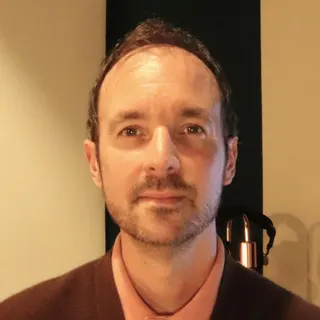
Portrait of Alexander Moretto

Alexander Moretto

Music Specialist

London, United Kingdom

£28.00 per hourDBS checkediAccepting enquiries
MusicMusic TechnologyMusic Theory
  • Over 4 years' of teaching experience.
  • Currently teaching Music Production (Level 2) part-time.
  • Currently a Teaching Assistant and an SEN support worker.
  • Fluent in English, French and Spanish.
  • Works as a DJ on a weekly basis (Signed to a DJ Agency).
  • Releases electronic music on Dance Record labels.
  • Played gigs all around the UK/ Europe - London, Bournemouth (PRIDE Festival), clubs (Ibiza/Amsterdam), and the Ministry of Sound.
  • Music played on BBC Radio Leicester, and BBC Music.

Alexander is a music tutor for learners from 11+ to A-Level, combining professional production experience with clear demonstrations, tailored feedback and practical project work.

Send a quick enquiry from here and the Latimer Tuition team will pass it on to Alexander.
Portrait of Owen Evans

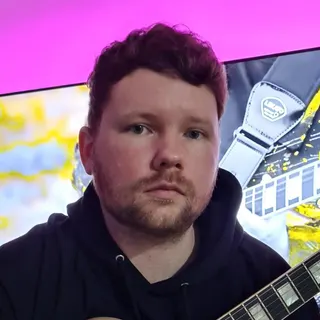
Owen Evans

Music, and Musical Instrument Specialist

Lumsden, United Kingdom

£30.00 per hourDBS checkediAccepting enquiries
GuitarMusicMusic PerformanceMusic Technology+1 more
  • Holds over 8 years' of online teaching experience.
  • Owen holds over 18 Years' experience teaching & in the Music industry.
  • Received over 1 million views & listens on Spotify, Youtube & social media.
  • A professional songwriter in all genres.
  • Over 10 years' experience using Logic Pro-x.
  • Owen has worked with Grammy-winning producers.

Owen Evans is a UK guitar tutor with 18+ years in teaching and the music industry, including 8+ years of online tutoring. He supports ABRSM/Rockschool, GCSE and A-Level Music, plus songwriting and Logic Pro X production with tailored lesson plans.

Send a quick enquiry from here and the Latimer Tuition team will pass it on to Owen.

Portrait of Stacy Jarvis

Stacy Jarvis

Music and Russian Specialist

Manchester, United Kingdom

£35.00 per hourDBS checkediAccepting enquiries
MusicMusic PerformanceMusic TheoryPiano+2 more
  • She currently teaches Music at a primary school and provides private Violin lessons to a diverse range of students, including children with SEN.
  • Holds a Masters degree in Musicology from the University of Manchester.
  • Currently studying for her Doctorate of Music at the University of Birmingham, focusing on the conceptualisation of artistic ideas in nocturnes.
  • Holds a Bachelors degree in Violin Performance from the Royal Northern College of Music.
  • Has extensive experience teaching violin and piano to students of all ages, from Year 1 primary students to adult learners.

Stacy Jarvis is a music educator and violinist who teaches Music, Violin, Piano and Music Theory from KS2 to A-Level, with experience supporting children with SEN and adult learners.

Send a quick enquiry from here and the Latimer Tuition team will pass it on to Stacy.

Portrait of Darren Stone

Darren Stone

Music Specialist

Waterlooville, United Kingdom

£40.00 per hourDBS checkediAccepting enquiries
GuitarMusicMusic PerformanceMusic Technology+1 more
  • Over 10 years’ of experience teaching in UK secondary schools, tailoring lessons to each student’s learning style.
  • Professional composer with internationally published work in film, television, games, and advertising.
  • Expert in Music Technology, GCSE Music, A-Level Music, and Level 2 Music Technology.
  • Extensive studio and live performance experience as a guitarist, bridging real-world music with academic learning.
  • Guides students in composition, performance, music theory, and creative production.

Darren Stone is a private tutor and guitar tutor specialising in Music Technology, teaching GCSE and A-Level Music with 10+ years’ UK secondary school experience. Professional composer offering tailored help with composition, theory and performance, plus session reports.

Send a quick enquiry from here and the Latimer Tuition team will pass it on to Darren.

Portrait of Lewis Spencer

Lewis Spencer

Music and Guitar Specialist

Kidderminster, United Kingdom

£40.00 per hourDBS checkediAccepting enquiries
GuitarMusic PerformanceMusic Theory
  • Holds a BMus (Hons) degree in Popular Music Performance and a BTEC Level 3 Extended Diploma in Music Performance.
  • Works as a peripatetic tutor in schools, delivering engaging and structured lessons.
  • Strong background in music theory, harmony, and musicianship training.
  • Covers a wide range of genres, including pop, rock, jazz, funk, soul, R&B, and more.
  • Experienced session musician and producer, operating from a professional home studio.

Lewis Spencer is a Kidderminster, Worcestershire guitar tutor offering private lessons in popular music performance and music theory, backed by a BMus (Hons) and over a decade of peripatetic school teaching plus session musician/producer experience.

Send a quick enquiry from here and the Latimer Tuition team will pass it on to Lewis.

Portrait of Simon OKeeffe

Simon OKeeffe

Music and Music Performance Specialist

london, United Kingdom

£40.00 per hourDBS checkediAccepting enquiries
ABRSMGCSE (general)GuitarMusic Performance+4 more
  • Simon has over 12 years' of experience as a music educator across primary and secondary schools in addition to further education.
  • Holds a Bachelor of Arts (Hons) in Music (Guitar Institute).
  • Holds a Master of Arts in Record Production and Distribution (University of West London).
  • Professional background as a musician, producer, arranger, and musical director.

Music educator with 12+ years’ experience offering private lessons as a guitar tutor and piano tutor, plus drums and music theory. Supports GCSE, A Level and university music performance and music technology, with lesson reports and optional homework.

Send a quick enquiry from here and the Latimer Tuition team will pass it on to Simon.

Choose a starting point that fits the learner

You can study theory for its own sake or alongside playing, singing and composing. Choose a practical aim before choosing resources; a theory workbook is useful when its content matches the problem you want to solve.

  • First steps in reading music

    Begin with the staff, clefs, note values and rests. A useful early task is to name a short sequence of notes, clap its rhythm and explain what each symbol tells you to do.

  • Working towards Grades 1–5

    Follow the chosen board’s sequence. In ABRSM’s syllabus, compound time arrives at Grade 3, the alto clef at Grade 4, and the tenor clef and transposing instruments at Grade 5. Locate the gap before jumping into full practice papers.

  • Working towards Grades 6–8

    Look for teaching that goes beyond identifying symbols. ABRSM’s higher grades develop harmony, melody writing and analysis. A learner needs to explain and write musical choices, as well as recognise them.

  • Understanding music you already use

    Bring a piece, chord progression or short composition. Use it to connect notation with sound: where are the beats, which notes make up the chord, and what changes when one note moves?

A worked rhythm example: 3/4 and 6/8

Suppose an exercise contains six equal quavers. A quaver is an eighth note. Calling both 3/4 and 6/8 “six beats” misses the usual grouping.

In 3/4, group the quavers 2 + 2 + 2: three crotchet beats, with two quavers in each. Count “ONE-and TWO-and THREE-and”. In 6/8, group them 3 + 3: two dotted-crotchet beats, with three quavers in each. Count “ONE-and-a TWO-and-a”. A crotchet lasts two quavers; a dotted crotchet lasts three.

Keep the quavers equally spaced and tap only on the capitalised words. The number of notes stays the same, but the beat changes. A better explanation is: “3/4 has three beats divided into two; 6/8 has two beats divided into three.”

For a follow-up in 6/8, try a dotted crotchet followed by three quavers. Hold the first beat, then fit the three quavers into the second. Being able to count that new pattern shows more understanding than remembering a definition.

A worked interval example: count the letters and the distance

An interval is the distance between two notes. Start with C up to E, then change the upper note to E-flat. Both intervals are thirds: count the letter names C, D, E, including both ends. Flattening E lowers it by one semitone, the smallest step between neighbouring piano keys.

C–E spans four semitones, so it is a major third. C–E-flat spans three, so it is a minor third. “It is a third” gives the interval number; “major” or “minor” describes its quality. Counting only letters leaves the answer unfinished.

Try D up to F-sharp and D up to F. Both are thirds, but D–F-sharp is major and D–F is minor. A sharp raises a note by a semitone. The useful check is whether the learner can explain both parts of the answer on this new starting note.

From naming a chord to explaining how it is used

As theory becomes more advanced, correct note names are a starting point. Consider the notes E–G–C, arranged from lowest to highest. The lowest note is E, but this is a C major chord in first inversion: the third of the chord is in the bass. Rearrange the same notes as C–E–G to see its root, C: the note that names the chord. An E minor chord would contain E–G–B instead.

This small example separates two questions: “What is the chord?” and “Which note is lowest?” In higher-grade harmony work, that distinction helps a learner describe a bass line and make chord choices without misnaming every inversion.

For ABRSM Grades 6–8, build from this foundation into the required harmony, melody-writing and score questions. A useful practice task is to label the root and bass separately in a short passage before tackling its harmonic movement. Progress means explaining those choices in a fresh passage and completing the relevant written task, not just recognising a familiar diagram.

Prepare for the right board and exam format

ABRSM and Trinity both offer graded theory, but their syllabuses and assessment arrangements need separate preparation. Use the board’s materials for the intended grade, then practise how answers must be entered or written. Check the current specification and candidate guidance before booking.

ABRSM Grades 1–5
Music Theory exams are online. Alongside topic practice, use the official practice format so selecting and entering answers does not become a separate obstacle.
ABRSM Grades 6–8
Music Theory exams are paper-based. Prepare the written harmony, melody and analysis tasks required at the selected grade, with legible notation and enough time to check the work.
Trinity Grades 1–8 in the UK
Theory exams are digital-only in the UK after May 2025. Prepare Trinity’s own grade tasks: Grade 5 includes writing chords for four voices, adding a bass or melody, and analysis. Practise its digital notation editor as well as the musical content.

Choose a tutor who can turn mistakes into a practice plan

At the free introductory meeting, discuss the learner’s goal, the tutor’s experience with that stage and how explanations will be adapted. Bring recent work, including mistakes. If dense notation, unfamiliar vocabulary or working speed gets in the way, describe the difficulty: larger notation, shorter tasks or spoken explanations are practical options to discuss.

  1. Find the reason behind an answer

    Ask how the tutor would distinguish a reading mistake from a gap in understanding. A wrong interval answer might come from missing a flat, counting letter names incorrectly or confusing major and minor.

  2. Agree one manageable practice task

    For the interval example, practise a few new starting notes and write the reasoning beside each answer. For rhythm, count and clap a fresh bar. Choose lesson spacing around the time the learner can realistically spend on this work.

  3. Review fresh work and adjust

    At the next review, use an unfamiliar example before offering prompts. If the same error remains, change the explanation or reduce the task. For an exam, return to representative questions across the syllabus before deciding the learner is ready.

Arrange online lessons and a workable budget

Latimer Tuition provides online one-to-one tuition. Share the goal, any exam board and grade, suitable times and budget in a free matching request, or contact a tutor through their profile. Agree the teaching arrangements directly with the tutor.

  • Prepare the music and workspace

    Microsoft Teams is the default lesson platform; another can be agreed. Have manuscript paper, a pencil and a readable copy of the exercise ready. Check how the tutor will see written notation, whether through a clear photo, a camera view or shared material.

  • Keep sound part of the discussion

    If you have an instrument or keyboard, use it when comparing intervals and chords. Agree how to hear short examples clearly during an online lesson; theory work can also begin with reading, writing and clapping.

  • Compare the full arrangement

    Tutors set their own hourly rates, shown on their profiles. Agree lesson length and frequency, and check any resource costs before buying materials. Latimer invoices after lessons on a pay-as-you-go basis.

  • If you want in-person lessons

    The service is online first. In-person lessons depend on an individual arrangement with a nearby tutor; discuss location and travel before making plans.

Support and clarity

Frequently asked questions

Straight answers to the questions people ask most often.

Is Grade 5 Theory needed before higher instrumental grades?

ABRSM’s listed prerequisite for Practical and Performance Grades 6–8 is Grade 5 or above in its Music Theory, Practical Musicianship or Practical Grades for a solo Jazz instrument. If using another qualification, check its acceptance directly with ABRSM. Trinity has no theory prerequisite for its practical graded exams. Identify the exact board and route before planning an entry.

Do I have to take every theory grade in order?

No. ABRSM and Trinity allow entry at a theory grade without passing all the lower exams. Both expect earlier material to be understood; Trinity also expects some practical notation experience before Grade 1. Choose the grade after checking that foundation against the syllabus. When changing boards, compare the actual topics and tasks before choosing an exam.

Can I learn theory without already playing an instrument?

Yes. You can begin by reading notes, counting rhythms and writing simple patterns. Hearing examples helps connect symbols with sound, so discuss how the tutor will demonstrate them. You do not need to set an instrumental exam goal to have a useful reason for studying theory.

Can these lessons support GCSE or A-level Music?

Tell the tutor that the goal is a school qualification and give its full title, board and current class topic. Bring a score, composition or marked exercise that shows the theory you need to use. A graded theory workbook may help with a particular gap, but the lesson plan should follow your school course and teacher’s brief.

How many lessons will I need before a theory exam?

There is no single timetable that fits every starting point. Ask for an initial review of the relevant topics and agree a first set of priorities. Judge progress through new questions completed independently, then review the exam date alongside the remaining work and the time available for practice. A target date is not a guarantee of readiness.

Related tutor pages

Explore related tuition options and guidance for choosing the right support.