Online one-to-one tuition

Find OCR A Level Maths tutors

Choose support for OCR Mathematics A (H240) or Mathematics B (MEI) (H640), from understanding calculus to explaining statistical conclusions and preparing for the right papers.

  • One-to-one tuition
  • Pay as you go
  • Direct tutor contact
Start with the learner’s course code, one recent piece of marked work and their next assessment. These give a tutor a useful starting point for a focused conversation about support.

The form controls become available when the enquiry form has loaded.

OCR A Level Maths tuition enquiry

Tell us what you know, skip anything you’re unsure about, and add a short description if you skip both subject and level.

  1. Tutoring brief
  2. Contact details

Final question

Contact details

Where should we send tutor options?

We’ll reply by email. Mobile is an optional fallback only.

Your tutoring brief

Subject
Mathematics
Level
A Level

Free matching request skip anything you’re unsure about pay as you go when lessons begin.

We use your contact details to reply to this enquiry. See our Privacy Policy for other uses.

How one-to-one tuition can help

  • Connect algebra and calculus methods with a clear mathematical argument.
  • Make sense of probability, hypothesis tests and mechanics models.
  • Prepare for the correct OCR papers, including MEI comprehension where relevant.

Available tutors

Compare A Level Maths tutors

6 tutor profiles selected

Confirm experience with the learner’s OCR route and discuss the topics they need help with before arranging lessons.

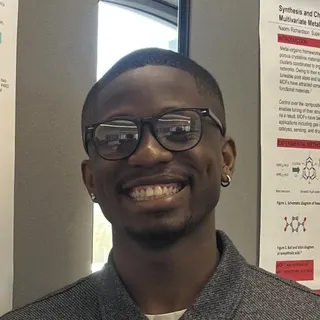
Portrait of Isshaq Miskin Sahibu

Isshaq Miskin Sahibu

Mathematics and Physics Specialist

United Kingdom

£19.00 per hourDBS checkediAccepting enquiriesHigh performing tutor
MathematicsMechanicsPhysicsPure Maths
  • Currently pursuing his Bachelors of Science in Computer Science.
  • Isshaq has over 2 years' of experience tutoring Mathematics and Physics at GCSE, A-Level, and SQA levels.
  • Currently pursuing a degree in Computer Science.
  • Holds straight-As for his A-Levels in Mathematics, Physics, and ICT.

Isshaq is a physics and maths tutor for KS3, GCSE/iGCSE and A/AS Level (CAIE, Edexcel, SQA), with 2+ years’ experience and a BSc Computer Science in progress. He provides structured lessons with session reports and optional homework.

Send a quick enquiry from here and the Latimer Tuition team will pass it on to Isshaq.

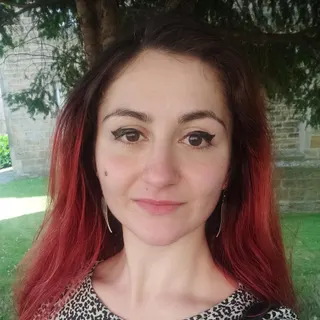
Portrait of Oliver Aldridge

Oliver Aldridge

5.0

Physics and Mathematics Specialist

Southampton, United Kingdom

£36.00 per hourDBS checkediAccepting enquiriesHigh performing tutor
Further MathsMathematicsPhysics
  • Holds a First for his Bachelor of Science in Mathematics with Physics from the University of Keele.
  • Currently on track to receive a distinction for his Masters of Science in Mathematics from the Open University.
  • Holds 6 years of private online tuition experience assisting students in Mathematics, and Science (especially Physics) of all levels from KS2/3 to GCSE and AS/A-Level.
  • Vast knowledge of UK syllabuses, and an ability to cover any topic in his area of expertise in a moment's notice.
  • Oliver is multilingual, with fluency in three languages and proficiency in two others.

Oliver is a physics and maths tutor offering online tutoring from KS2/3 to GCSE and AS/A-Level, plus degree-level support. First-class BSc Maths with Physics (Keele), MSc Maths in progress, 6 years’ experience, with lesson reports and optional homework.

Send a quick enquiry from here and the Latimer Tuition team will pass it on to Oliver.

Portrait of Justin Raine

Justin Raine

4.6

Mathematics, Chemistry, and Physics Specialist

Manchester

£25.00 per hourDBS checkediAccepting enquiriesHigh performing tutor
ChemistryMathematicsPhysics
  • Currently studying for his Masters of Science in Chemistry at the University of Nottingham.
  • Holds multiple years of tutoring experience assisting KS3, GCSE, and A-Level cohorts.
  • Justin is a member of the Royal Chemistry Society (RCS).
  • Holds A, A, A for Chemistry, Mathematics, and Physics at AS-Level.
  • In Secondary School, Justin remained in the top percentile of his students achieving a 3.5 GPA.

Justin Raine is a gcse maths tutor teaching KS2–A Level Maths and Chemistry plus KS2–GCSE Physics; he is studying for an MSc in Chemistry and is a Royal Chemistry Society member. Lesson reports included, with optional homework.

Send a quick enquiry from here and the Latimer Tuition team will pass it on to Justin.

Portrait of Daniel Denton

Daniel Denton

5.0

Qualified Mathematics Teacher

York, United Kingdom

£38.00 per hourDBS checkediAccepting enquiriesQualified teacherHigh performing tutor
Further MathsMathematicsPure Maths
  • Holds a PGCE for his Bachelors of Education in Mathematics at the University of York.
  • Holds a Bachelors of Science in Mathematics at the University of York.
  • Qualified UK state secondary school teacher for Mathematics.
  • Transitioned to Latimer Tuition for a work-at-home role from UK secondary schools in 2022.
  • Holds A*, A* for Mathematics and Further Mathematics at A-Level.
  • Holds A*, A*, A*, A* for Mathematics, Pure Mathematics (Extra), Statistics (Extra) and Further Mathematics at GCSE level.

Daniel Denton is a qualified UK secondary Maths teacher (PGCE, University of York) and experienced private tutor; a gcse maths tutor and a level maths tutor from KS3 to Further Maths, with lesson reports and optional free homework.

Send a quick enquiry from here and the Latimer Tuition team will pass it on to Daniel.

Portrait of Zayan Ajward

Zayan Ajward

Mathematics, Physics, and Computer Science Specialist

Leicester, United Kingdom

£30.00 per hourDBS checkediAccepting enquiries
Computer ScienceMathematicsPhysics
  • Currently studying for his Masters of Engineering in Computer Science/Software Engineering at the University of Birmingham.
  • Holds A, A for Mathematics and Physics at A-Level.
  • Holds A*s (8s) for Mathematics, Further Mathematics, and Physics among other subjects at GCSE level.
  • Possesses tutoring experience assisting students in KS3, GCSE and A-level cohorts.

Zayan Ajward is a GCSE and AS Level Computer Science tutor studying for an MEng in Computer Science/Software Engineering, with a methodical approach tailored to individual learning needs.

Send a quick enquiry from here and the Latimer Tuition team will pass it on to Zayan.

Portrait of Erica Moran

Erica Moran

Mathematics, Science, and Geography Specialist

London, United Kingdom

£30.00 per hourDBS checkediAccepting enquiries
BiologyChemistryGeographyMathematics+1 more
  • Currently studying for her BSc in Biological Sciences at Durham University, on track for a first class degree.
  • Holds 2 years' of tutoring experience.
  • Holds A*, A, A for Geography, Biology, and Mathematics at A-Level.
  • Holds all grade 9s for Mathematics, Biology, Chemistry, Physics, and Geography at GCSE level.

Erica Moran supports learners in Mathematics, Biology, Chemistry, Physics and Geography from KS2 to A-Level, using structured, individualised lessons with optional homework and a report after each session.

Send a quick enquiry from here and the Latimer Tuition team will pass it on to Erica.

OCR A or OCR B (MEI): choose the right papers

OCR offers two A Level Mathematics routes: Mathematics A (H240) and Mathematics B (MEI) (H640). The details below concern these England-regulated qualifications. Both cover pure mathematics, statistics and mechanics, including proof, algebra, trigonometry, calculus, probability, hypothesis testing, motion and forces.

Pure mathematics can appear on every paper. H240 separates pure and applied questions into sections on its mixed papers; H640 mixes them through Papers 1 and 2. A revision plan should follow the learner’s route as well as their weakest topics.

Mathematics A — H240
Paper 1 (01): Pure Mathematics. Paper 2 (02): Pure Mathematics and Statistics. Paper 3 (03): Pure Mathematics and Mechanics. Each paper lasts 2 hours, carries 100 marks and contributes one third of the A Level.
Mathematics B (MEI) — H640
Paper 1 (01): Pure Mathematics and Mechanics, 100 marks, 36.4%. Paper 2 (02): Pure Mathematics and Statistics, 100 marks, 36.4%. Paper 3 (03): Pure Mathematics and Comprehension, 75 marks, 27.3%. All last 2 hours. Paper 3 contains 60 pure mathematics marks and 15 marks for an unseen comprehension passage. Percentages are rounded.

Pure maths: finish the reasoning after differentiating

Across both full A Levels, the assessment objectives allocate about 50% to techniques (AO1), 25% to reasoning and communication (AO2), and 25% to problem solving and modelling (AO3), each with a two-percentage-point tolerance. Being able to carry out a calculation is only part of preparation.

The following constructed examples show the sort of difficulty a tutor can explore. They are illustrations, not OCR exam questions or accounts of a particular lesson.

Example: find and classify the stationary points of y = x³ − 3x² + 2. A stationary point has zero gradient. Differentiate to get dy/dx = 3x² − 6x = 3x(x − 2), then set this equal to zero: x = 0 or x = 2.

Stopping there misses the coordinates and the nature of the points. Substitute into the original function to get (0, 2) and (2, −2). The second derivative is 6x − 6: it is negative at x = 0, so (0, 2) is a local maximum; it is positive at x = 2, so (2, −2) is a local minimum.

For a follow-up, change the constant from +2 to +5. The derivative is unchanged, so the stationary points stay at the same x-values and keep their classification; their y-values rise by 3. Explaining that change shows understanding beyond repeating the method.

Statistics: turn a probability into a justified conclusion

Example: test whether a coin favours heads. Before tossing it, choose a one-sided test at the 5% significance level. Let p be the probability of heads, assumed constant across 20 independent tosses. The null hypothesis is H₀: p = 0.5; the alternative is H₁: p > 0.5.

Suppose there are 15 heads. Under H₀, the number of heads X follows a binomial distribution with n = 20 and p = 0.5. Calculate P(X ≥ 15) = 1 − P(X ≤ 14) ≈ 0.0207. This includes results at least as extreme in the direction of the alternative; P(X = 15) alone is the wrong probability for this test.

Since 0.0207 is below 0.05, reject H₀. A suitable conclusion is: there is sufficient evidence at the 5% level that the coin favours heads. This does not prove bias, and 0.0207 is not the probability that the coin is fair.

With 14 heads, P(X ≥ 14) ≈ 0.0577, so the same test would not reject H₀. A useful check is whether the learner can choose the correct tail and explain that changed conclusion without prompting. OCR’s hypothesis-test guidance explains why the wording of the conclusion matters.

Mechanics: distinguish distance from displacement

Example: a particle moves in a straight line with velocity v(t) = 6 − 2t metres per second, for 0 ≤ t ≤ 5 seconds. Positive velocity means motion in the chosen positive direction. The particle stops momentarily at t = 3 and then reverses.

Integrating velocity gives the signed displacement: an antiderivative is 6t − t², so from t = 0 to t = 5 the displacement is 30 − 25 = 5 m.

Distance counts the motion in both directions. Before the reversal, the particle travels 6(3) − 3² = 9 m. From t = 3 to t = 5, its displacement is 5 − 9 = −4 m, so it travels another 4 m. Total distance is therefore 13 m, although the final position is only 5 m from the starting position in the positive direction.

On a velocity–time graph, the area above the time axis is 9 and the area below has magnitude 4. Subtract them for displacement; add their magnitudes for distance. A tutor can use the graph to check why a learner who obtained 5 m for both quantities overlooked the reversal.

MEI comprehension: read the model before using it

H640 Paper 3 includes an unseen passage about applications of pure mathematics. Mechanics and statistics knowledge is assumed, but is not the focus of that section. OCR recommends practising mathematical reading throughout the course, once the relevant content has been taught.

Consider this short invented passage: “A model gives the concentration of a dye as C = 80e^(−0.2t) mg/L, where t is time in hours. The model is intended for 0 ≤ t ≤ 5.” Start by identifying the quantity, units and stated time interval.

A learner might read −0.2 as a fixed amount lost each hour. Instead, each extra hour multiplies C by e^(−0.2) ≈ 0.819, a reduction of about 18.1%. Differentiating gives dC/dt = −16e^(−0.2t), so the initial rate is −16 mg/L per hour; that rate changes as the concentration falls.

At t = 5, the model gives C ≈ 29.4 mg/L. A calculator can also evaluate the formula at t = 10, but the passage supplies no basis for trusting the model beyond five hours. A stronger answer connects the calculation with the stated limitation.

This miniature example practises extracting meaning and explaining a result. Later practice should use full H640 comprehension questions, with unfamiliar wording and notation.

Choose a tutor around the learner’s actual difficulty

Use a free introductory meeting to discuss the learner’s goals, the tutor’s approach and practical arrangements before paid lessons. It is an introductory conversation, not normally a full teaching lesson. A recent attempted question is more useful than a general request to “get better at maths”.

  1. Confirm relevant course experience

    Ask about recent work with the learner’s H240 or H640 course, especially the paper or topic causing difficulty. If a profile mentions teaching qualifications or examining, check the board and level behind that experience.

  2. Look at one piece of working

    Share an uncorrected attempt and explain where the learner lost the thread. Discuss whether the next lesson should address algebra, choosing a method, using a calculator, or explaining an answer. For MEI, include any difficulty reading unfamiliar mathematical passages.

  3. Make the explanation accessible

    Describe what helps the learner: one line of algebra at a time, an annotated graph, time to read a question, or a spoken explanation before writing. If specialist support is needed, ask about the tutor’s relevant experience and the adjustments they can provide.

  4. Agree how progress will be checked

    Choose a fresh question to attempt independently after practice. Look for a sensible method, clear working and an explanation of the result. Discuss confidence alongside those examples of work, and agree any parent updates with the learner and tutor.

Build lessons around practice the learner can complete

Choose a rhythm that leaves time to use feedback. For example, a regular lesson with two short practice periods between sessions may be manageable; the right frequency depends on the learner’s starting point, deadline, workload and budget. A focused topic problem may need a different plan from gaps across the course.

Use the learner’s work to decide which kind of support comes next:

  1. Repair the starting gap

    If differentiation is blocked by expanding brackets or factorising, revisit that algebra first. Work through one explanation, then attempt a similar question with less help. Record the specific error and the correction, rather than copying a whole solution.

  2. Practise a complete answer

    When the method is understood, focus on the missing reasoning. For a hypothesis test, define the parameter and write the conclusion in context. For a “show that” question, give a complete argument leading to the stated result.

  3. Prepare for the next assessment

    With a mock approaching, bring its topic list and recent feedback. Prioritise questions the learner can realistically improve before that date, then practise mixed questions under timed conditions. OCR’s exam hints can guide checks for signs, units, rounding and graph labels.

  4. Review on a fresh question

    Retry the skill later without the worked answer beside it. If the same error returns, revisit the explanation or prerequisite. If the learner can select and justify the method independently, move on or reduce the support for that topic.

Use official OCR resources for the right course

Start with the specification or student checklist, then choose questions on the topics identified in the learner’s work. OCR’s assessment pages provide public past papers, mark schemes and examiner reports. Select H240 or H640 carefully because the pages also contain AS resources; some newer materials are reserved for teachers.

For statistics, work with the prescribed large data set for the learner’s route and exam series. Read its variables, categories and context, and practise explaining what a calculation means in that setting. Use the official assessment pages to find the applicable set.

A learner who can diagnose and correct their own errors may make good use of these resources independently. Tuition is worth considering when an explanation, method choice or repeated mistake remains unresolved after practice.

Set up online lessons so the working is visible

Latimer’s standard service is online one-to-one tuition. Microsoft Teams is the default platform, with another meeting method possible by agreement. Any in-person lessons need a separate arrangement with the tutor.

For maths, agree how to share handwritten work: a clear photo, a camera view of paper or a writing tablet may suit the learner. Have the question, calculator and relevant working ready. Check that both sides can read small details such as indices, minus signs and graph labels.

Agree lesson times and length with the tutor, along with how practice work and feedback will be handled. The how tutoring works guide explains the wider process.

Tell us where OCR Maths is getting difficult

Include the course code if known, the topic or paper needing attention, the next assessment and your preferred schedule and budget. Submitting a tutor matching request is free.

Support and clarity

Frequently asked questions

Straight answers to the questions people ask most often.

What if I do not know which OCR course I am taking?

Look for H240 or H640 on a recent exam paper or course specification. H240 is Mathematics A; H640 is Mathematics B (MEI). If the material just says “OCR”, ask the school or college to confirm the code. You can still describe the topics causing difficulty when making an enquiry.

Can I use a calculator in OCR A Level Maths exams?

Yes. Scientific or graphical calculators are permitted on every H240 and H640 paper, subject to the examination rules. Check your model with the school or examination centre and practise with the calculator you will use. Know how to enter distributions and check settings, while still showing the working the question requires.

How much does OCR A Level Maths tuition cost?

Each tutor sets their own hourly rate, which is shown on their profile. Latimer uses pay-as-you-go billing. Before arranging lessons, confirm the rate, session length and proposed frequency with the tutor so you can work out the cost. Compare that with the help needed: a targeted explanation or feedback on a persistent error may be more useful than simply adding more practice papers.

Does my AS Maths result count towards the full A Level?

No. The reformed OCR A Level is assessed at the end of the course; an AS grade does not contribute to the full A Level result. The mathematical content learned earlier still matters, so a tutor should identify gaps in those foundations when planning later A Level work.

Is there coursework in OCR A Level Maths?

No. OCR A Level Mathematics has no assessed coursework. H640 comprehension is part of a written examination. Practice can therefore focus on solving questions independently, explaining reasoning and managing the demands of the correct exam papers.

Is OCR Mathematics B (MEI) the same as Further Maths?

No. H640 is an A Level Mathematics route covering pure mathematics, statistics and mechanics, with comprehension in Paper 3. Further Mathematics is an additional qualification. If the learner studies both, give the tutor the details of each course and the parts needing support. The Further Maths page below is a separate starting point.

Related tutor pages

Explore related tuition options and guidance for choosing the right support.