One-to-one Pure Maths tuition

Find a pure maths tutor for your course and goals

Work on algebra, calculus and proof with online support shaped around where you get stuck. Start with your school course, university module or personal learning goal.

  • One-to-one tuition
  • Pay as you go
  • Direct tutor contact
Pure Maths can mean the pure content within A-level Maths, a named international qualification or more abstract university work. Choose support by the course you are taking and the reasoning you want to improve. The examples below show how a lesson can move from a difficult step to an explanation you can use for yourself.

The form controls become available when the enquiry form has loaded.

Pure Maths tuition enquiry

Tell us what you know, skip anything you’re unsure about, and add a short description if you skip both subject and level.

  1. Tutoring brief
  2. Contact details

2 questions remaining

Tutoring brief

What level is the tuition for?

Choose a level

Choose a suggestion or type your own answer. You can skip this if you’re unsure.

This form works best for one learner at one level and up to six subjects. If your circumstances are more complicated, email us at Contact@LatimerTuition.com so you can explain everything properly.

How one-to-one tuition can help

  • Unpicking algebraic steps and the restrictions that make them valid
  • Connecting calculus methods with graphs and complete answers
  • Building proofs with clear assumptions and justified conclusions

Available tutors

Compare Pure Maths tutor profiles

6 tutor profiles selected

Look for experience with your course, the topics you need and the way you prefer to learn. For university study, name the module when you contact a tutor.

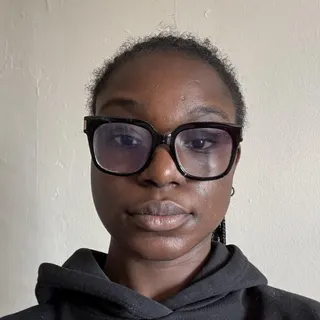
Portrait of Isshaq Miskin Sahibu

Isshaq Miskin Sahibu

Mathematics and Physics Specialist

United Kingdom

£19.00 per hourDBS checkediAccepting enquiriesHigh performing tutor
MathematicsMechanicsPhysicsPure Maths
  • Currently pursuing his Bachelors of Science in Computer Science.
  • Isshaq has over 2 years' of experience tutoring Mathematics and Physics at GCSE, A-Level, and SQA levels.
  • Currently pursuing a degree in Computer Science.
  • Holds straight-As for his A-Levels in Mathematics, Physics, and ICT.

Isshaq is a physics and maths tutor for KS3, GCSE/iGCSE and A/AS Level (CAIE, Edexcel, SQA), with 2+ years’ experience and a BSc Computer Science in progress. He provides structured lessons with session reports and optional homework.

Send a quick enquiry from here and the Latimer Tuition team will pass it on to Isshaq.

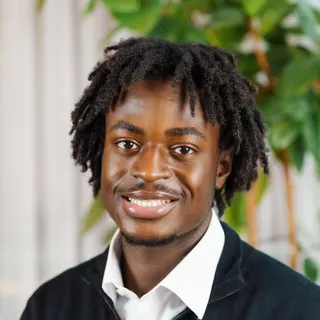
Portrait of Daniel Denton

Daniel Denton

5.0

Qualified Mathematics Teacher

York, United Kingdom

£38.00 per hourDBS checkediAccepting enquiriesQualified teacherHigh performing tutor
Further MathsMathematicsPure Maths
  • Holds a PGCE for his Bachelors of Education in Mathematics at the University of York.
  • Holds a Bachelors of Science in Mathematics at the University of York.
  • Qualified UK state secondary school teacher for Mathematics.
  • Transitioned to Latimer Tuition for a work-at-home role from UK secondary schools in 2022.
  • Holds A*, A* for Mathematics and Further Mathematics at A-Level.
  • Holds A*, A*, A*, A* for Mathematics, Pure Mathematics (Extra), Statistics (Extra) and Further Mathematics at GCSE level.

Daniel Denton is a qualified UK secondary Maths teacher (PGCE, University of York) and experienced private tutor; a gcse maths tutor and a level maths tutor from KS3 to Further Maths, with lesson reports and optional free homework.

Send a quick enquiry from here and the Latimer Tuition team will pass it on to Daniel.

Portrait of Steph Pick

Steph Pick

Mathematics Specialist

Starcross

£30.00 per hourDBS checkediAccepting enquiriesHigh performing tutor
MathematicsPure Maths
  • Holds a First for her BSc of Mathematics from Exeter University.
  • Over 4 years' of experience working with a school as a maths mentor, including regular training and feedback from qualified teachers.
  • Steph has experience supporting SEN students, and is therefore flexible on her approach to lessons, depending on the student's needs.
  • Holds an A* for Mathematics at A-Level.
  • Holds a 9 for Mathematics at GCSE level.

Steph Pick is a gcse maths tutor and a level maths tutor with a First-Class BSc Mathematics (Exeter) and 900+ tutoring hours. A school maths mentor with SEN experience, she provides lesson reports and optional free homework.

Send a quick enquiry from here and the Latimer Tuition team will pass it on to Steph.

Portrait of Sanidhi Amarasinghe

Sanidhi Amarasinghe

Mathematics and Science Specialist

Stoke-On-Trent

£25.00 per hourDBS checkediAccepting enquiries
BiologyChemistryMathematicsPure Maths
  • Currently studying for her Masters of Engineering in Civil Engineering at the University of Nottingham.
  • Over 100 hours' of tutoring experience teaching GCSE Maths, Science, and A-Level Mathematics.
  • Holds an A for Chemistry at A-Level.
  • Holds A, A, A for Biology, Chemistry, and Mathematics at GCSE level.

Sanidhi is a GCSE maths tutor and maths and science tutor, with 100+ hours' experience teaching GCSE Maths, Biology and Chemistry plus A-Level Pure Maths. MEng Civil Engineering student at the University of Nottingham; provides lesson reports and optional homework (£25/hr).

Send a quick enquiry from here and the Latimer Tuition team will pass it on to Sanidhi.

Portrait of Eugenia Amoah

Eugenia Amoah

Maths, Further Maths, and Science Specialist

London

£30.00 per hourDBS checkediAccepting enquiries
BiologyChemistryFurther MathsMathematics+4 more
  • Currently pursuing a degree in Medicine and Surgery at the University of Birmingham.
  • Holds A, A, A for Mathematics, Biology, and Chemistry at A-Level.
  • Holds Grade 9s in GCSE Science and Mathematics.
  • Eugenia is an i-medics ambassador.

Eugenia is a gcse maths tutor and maths and science tutor, a University of Birmingham Medicine and Surgery student with 3+ years’ experience teaching KS2–AS Maths, GCSE Further Maths and GCSE–A Level Biology/Chemistry plus GCSE Physics; session reports and optional homework.

Send a quick enquiry from here and the Latimer Tuition team will pass it on to Eugenia.

Portrait of Idris Adelakun

Idris Adelakun

Mathematics and Physics Specialist

Thurrock, United Kingdom

£30.00 per hourDBS checkediAccepting enquiries
Further MathsMathematicsPhysicsPure Maths
  • Idris has over 7 year of tutoring experience.
  • Holds a 2:1 (69%) for his BEng in Mechanical Engineering from the University of Nottingham.
  • Has delivered more than 500 hours of online Mathematics and Physics tuition to approximately 40 students.
  • Has received multiple UKMT Maths Challenge awards, ranging from Gold to Bronze.
  • Ranked among the top 10% of tutors on previous tutoring platforms based on performance and student feedback.
  • Achieved 42/45 points for his International Baccalaureate.

Idris is a Mathematics and Physics tutor for KS3, GCSE, A-Level and IB learners, using engineering-based real-world examples and clear step-by-step explanations.

Send a quick enquiry from here and the Latimer Tuition team will pass it on to Idris.

Which kind of pure maths support do you need?

Pure maths tuition might focus on a difficult exam topic, the step into Further Maths, or a proof in a university module. For exam preparation, give the full qualification name and board. The examples below distinguish named courses; use your own specification if you follow a different board or UK qualification.

Pure content within A-level Maths in England
OCR Mathematics A (H240), for example, combines pure maths with statistics and mechanics. Its pure content includes algebra, trigonometry, calculus, proof and vectors. Pure-focused lessons can address those topics; preparation for the whole award also needs the applied content.
Further Maths
OCR Further Mathematics A (H245) includes induction, complex numbers and matrices in Pure Core, alongside selected optional areas. Additional Pure Mathematics is one of those options. Tell the tutor which options you study so that the plan covers the right work.
Pearson Edexcel International Pure Mathematics
This is a named qualification route. International Advanced Subsidiary (IAS) Pure Mathematics uses P1, P2 and FP1; International Advanced Level (IAL) Pure Mathematics uses P1–P4 and FP1 plus FP2 or FP3. P means Pure Mathematics and FP means Further Pure Mathematics. Include the unit code when requesting help.
University modules
The Open University’s M208, for example, develops proof, group theory, linear algebra and analysis, including rigorous work on sequences and limits. Share your own module outline and a written attempt: the notation, definitions and expected depth of proof matter when choosing a tutor.


Algebra: keep the restriction when cancelling

A useful explanation shows why a step is valid. In this illustrative example, simplify (x² − 9)/(x − 3). A learner might write x + 3 correctly, then assume the expression works at every value of x.

Factorising gives (x − 3)(x + 3)/(x − 3). Cancelling the shared factor means dividing by x − 3, so it is allowed only when x is not 3. The complete answer is x + 3, with x ≠ 3. The symbol ≠ means “not equal to”. At x = 3, the original denominator is zero; the simplified formula does not remove that restriction.

For practice, try (x² − 16)/(x − 4). It simplifies to x + 4, with x ≠ 4. Being able to explain the excluded value, as well as factorise the numerator, is a useful sign that the reasoning has carried over.

Calculus: turn a derivative into a complete answer

For a learner studying differentiation, consider y = x³ − 3x. Finding where the derivative is zero is only part of a stationary-point question. The derivative gives the gradient; at a stationary point the gradient is zero.

Differentiating gives y′ = 3x² − 3. Here y′ denotes the first derivative. Setting it to zero gives x² = 1, so x = −1 or x = 1. Substitute into the original expression to find the coordinates: (−1, 2) and (1, −2).

The second derivative is y″ = 6x. At x = −1 it is negative, so the gradient is decreasing through zero: (−1, 2) is a local maximum. At x = 1 it is positive, so the gradient is increasing through zero: (1, −2) is a local minimum. A stationary point is not automatically a maximum or minimum; classification needs a reason.

An independent follow-up is y = x³ − 12x. The answers are a local maximum at (−2, 16) and a local minimum at (2, −16). Reproduce the differentiation, substitution and classification before checking those answers. These are constructed teaching examples of the differentiation skills in AQA A-level Mathematics 7357.

Proof: explain why the pattern always holds

To prove that two consecutive integers always have an odd sum, checking 2 + 3 = 5 and 8 + 9 = 17 only shows two cases. A proof must cover any pair.

Let n be any integer. The next integer is n + 1, so their sum is n + (n + 1) = 2n + 1. Twice an integer is even; adding one makes it odd. This establishes the claim for every integer n, including zero and negative integers.

This introductory example shows what a stronger written response contains: a defined variable, justified steps and a conclusion that answers the question. AQA A-level Mathematics 7357 includes this kind of logical reasoning from assumptions. In tuition, a useful next step is to explain each line aloud before writing a fresh proof without the earlier prompts.

When the difficulty is a new mathematical idea

Further Maths and university study can change the kind of reasoning required. These small illustrations show two different challenges to discuss with a tutor; the full lesson plan should follow your course.

  • Further Maths: changing the number system

    For real numbers, x² + 1 = 0 has no solution because a real square cannot be negative. In complex numbers, i is defined by i² = −1, so x = i and x = −i both solve it. The useful correction is to state which number system the answer uses. Complex numbers feature in OCR H245 Pure Core.

  • University analysis: testing a claim

    Consider the claim “every bounded sequence converges”. Let a_n = (−1)^n, where n is a positive integer and a_n means the nth term. The values are −1, 1, −1, 1, and so on. They stay between −1 and 1, but do not converge: even-indexed terms are always 1 and odd-indexed terms are always −1, so they cannot approach one common limit. This counterexample separates boundedness from convergence, a topic studied in OU M208. A tutor can help you express the argument using your module’s definitions.

Choose a tutor and agree what progress will look like

Compare profiles for experience with the exact course or topic you need. For Further Maths, check the optional areas; for university work, name the module and the type of proof or problem. Latimer tutors offer a free introductory meeting to discuss goals, teaching approach and arrangements before paid lessons. It is normally a conversation, rather than a full teaching lesson.

The following is a practical way to plan the teaching with your tutor:

  1. Start with your own working

    Bring a question and your attempt, including the point where you stopped. For an algebra error, separate a factorisation slip from uncertainty about why cancellation is allowed. That gives the first lesson a more precise focus than “I struggle with pure maths”.

  2. Agree the explanation and pace

    Describe what helps you follow a solution: larger written steps, a definition beside each new symbol, more time to think, or a graph alongside the algebra. Ask how the tutor would respond if an explanation did not make sense.

  3. Look for independent reasoning

    After working through an example, attempt a related question with fewer prompts. Keep the original and later attempts. Look for a corrected step you can justify, a method you can choose for yourself, and a complete answer. Use the remaining difficulty to decide the next priority.

Make your written maths clear online

Latimer’s service is online-first and one-to-one. Microsoft Teams is the default lesson platform; you and the tutor can agree another. Before the first teaching session, agree how you will show handwritten calculations, graphs or proofs.

A clear photo of the whole attempt lets a tutor trace the reasoning before the final line. During a lesson, a camera view of paper or a shared writing surface may suit you; discuss what you can use comfortably. Check that small details such as minus signs, powers and fraction bars remain readable. For longer proofs, number the lines so you can refer to the exact step that needs explanation.

Tell us where the maths gets difficult

Include your course or study goal, the topic causing difficulty and any deadline. Add your preferred lesson times and budget so the conversation can cover practical arrangements as well as the maths. Submitting a tutor-matching request is free.

Support and clarity

Frequently asked questions

Straight answers to the questions people ask most often.

Can tuition focus on one pure maths topic?

Yes, you can ask for a focused plan around a topic such as trigonometric equations, integration or proof. Bring an attempted question so the tutor can discuss whether the immediate difficulty comes from that topic or from an earlier skill it uses. Agree the scope before booking.

How often should I book pure maths lessons?

Agree a starting rhythm from your current work, intended goal or exam date, and time for practice between meetings. A learner preparing one topic may need a different plan from someone rebuilding algebra foundations. Review what you can now do independently before deciding whether to change the frequency or focus.

How much does pure maths tuition cost?

Each tutor sets the hourly rate shown on their profile. Latimer invoices after lessons on a pay-as-you-go basis. Discuss lesson length and a workable budget with the tutor, and compare the rate with their experience of the specific course or module you need.

Can I study pure maths without taking an exam?

You can make an enquiry for personal study or a return to maths after a break. Name a concrete goal, such as understanding functions or becoming comfortable with mathematical proofs, and share what you last studied. That gives the tutor a starting point even when there is no exam specification.

Which resources should I bring for exam preparation?

Bring the current specification or unit code, a recent marked paper and the questions you could not finish. Use materials for your own board and qualification. For example, Pearson Edexcel IAL Pure Mathematics has its own unit combination; a worksheet labelled only “A-level pure” may not identify the course you need.

Can pure maths lessons take place in person?

Latimer is online-first. An in-person arrangement would need to be agreed individually with a tutor; include your location and preference when discussing the practical arrangements.

Related tutor pages

Explore related tuition options and guidance for choosing the right support.