Primary French tuition

KS2 French tutors

One-to-one French lessons for children who are starting out, finding school French difficult or ready to use more of what they know. Compare tutors or ask for a free tutor match.

  • One-to-one tuition
  • Pay as you go
  • Direct tutor contact
Choose support with understanding spoken French, answering questions and building short sentences. The curriculum guidance below refers to England’s Key Stage 2; for a child studying elsewhere, share their school programme when enquiring.

The form controls become available when the enquiry form has loaded.

KS2 French tuition enquiry

Tell us what you know, skip anything you’re unsure about, and add a short description if you skip both subject and level.

  1. Tutoring brief
  2. Contact details

Final question

Contact details

Where should we send tutor options?

We’ll reply by email. Mobile is an optional fallback only.

Your tutoring brief

Subject
French
Level
KS2

Free matching request skip anything you’re unsure about pay as you go when lessons begin.

We use your contact details to reply to this enquiry. See our Privacy Policy for other uses.

How one-to-one tuition can help

  • Connect French sounds with words your child understands
  • Practise short answers before speaking without a prompt
  • Turn familiar words into sentences with clear explanations

Available tutors

Compare KS2 French tutors

6 tutor profiles selected

Read profiles with your child’s starting point in mind. Look for experience teaching primary-age French and an approach that suits how your child learns.

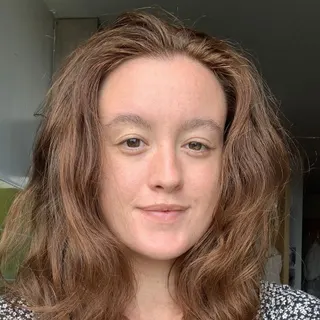
Portrait of Axenia Raulet

Axenia Raulet

MFL and Art Specialist

St Austell

£30.00 per hourDBS checkediAccepting enquiries
ArtFrenchGermanHistory of Art+1 more
  • Over 10 years' of experience in intercultural communication, art projects, and education.
  • Holds a Masters of Art in Didactics from Unibo, Bologna University, Italy.
  • Also holds a Bachelors of Art in Intercultural Mediation from La Sapienza University, Rome, Italy.
  • Currently pursuing a career as a professional artist.
  • Fluent in 8 European languages.
  • Adopts a trauma-informed approach to ensure a safe and respectful space for all students.

Axenia Raulet is a French tutor, Italian tutor and German tutor with 10+ years’ experience, a Master’s in Didactics (Unibo Bologna) and fluency in 8 European languages. She also teaches GCSE/A Level Art and History of Art with a trauma-informed approach.

Send a quick enquiry from here and the Latimer Tuition team will pass it on to Axenia.

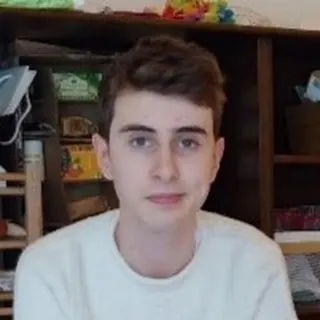
Portrait of Darcy Ind

Darcy Ind

French and Spanish Specialist

Bucknell, United Kingdom

£30.00 per hourDBS checkediAccepting enquiries
FrenchSpanishTEFL: Teaching English as a Foreign Language
  • Holds a Bachelor of Arts in Modern Languages (French, Spanish and German) from the University of Sheffield.
  • Holds over 4 years' of online tutoring experience both online, and in the classroom.
  • Darcy designs all her lesson plans from scratch to suit the individual's needs and learning goals.
  • Offers tutoring to KS2/3, GCSE, and AS/A-Level cohorts.

Darcy Ind is a French tutor and Spanish tutor with a BA in Modern Languages (University of Sheffield) and 4 years’ experience; she offers online tutoring for KS2–3, GCSE and AS/A-Level with tailored lesson plans and session reports.

Send a quick enquiry from here and the Latimer Tuition team will pass it on to Darcy.

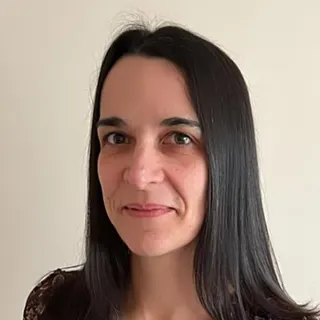
Portrait of Lucia Wood-Bonelli

Lucia Wood-Bonelli

Qualified French and Spanish Teacher

Sheffield

£35.00 per hourDBS checkediAccepting enquiriesQualified teacher
FrenchSpanish
  • Lucia is an approved examiner for Edexcel Spanish GCSE.
  • Holds a PGCE in Modern Foreign Languages with QTS from Sheffield Hallam University.
  • Holds a 2:1 in Modern Languages and Translation from the University of Leicester.
  • Holds over 1 year of online private tutoring experience.
  • Holds 3 A-Levels, and 12 GCSEs.

Lucia is a qualified Spanish teacher for GCSE and A-Level learners, and an approved Edexcel Spanish GCSE examiner with three years of teaching experience.

Send a quick enquiry from here and the Latimer Tuition team will pass it on to Lucia.

Portrait of Abeerah Zainab

Abeerah Zainab

English, Mathematics, and Science Specialist

Birmingham

£37.00 per hourDBS checkediAccepting enquiries
BiologyBusiness StudiesChemistryComputer Science+6 more
  • She is currently in her second year of Dentistry at University.
  • Experienced in tutoring GCSE and A-Level students with consistently positive feedback.
  • Holds A, A, A for Biology, Chemistry, and Mathematics at A-Level.
  • Holds grade 9s for all her subjects at GCSE level.

GCSE maths tutor and GCSE English tutor, also teaching Biology and Chemistry up to A Level; second-year Dentistry student with A grades at A Level and grade 9s at GCSE, providing exam-focused lessons with session reports and optional free homework.

Send a quick enquiry from here and the Latimer Tuition team will pass it on to Abeerah.

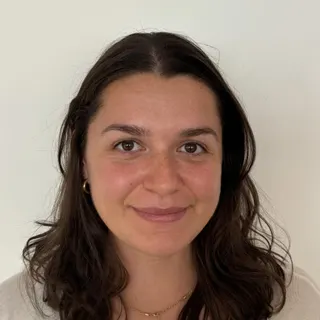
Portrait of Sara Dellapiana

Sara Dellapiana

Qualified French, Italian, and Spanish Teacher

Crewe

£32.00 per hourDBS checkediAccepting enquiriesQualified teacher
FrenchItalianSpanish
  • Holds a Postgraduate Certificate in Education (PGCE) with Qualified Teacher Status (QTS) in Modern Foreign Languages from Manchester Metropolitan University.
  • Holds a 1st (110/110 with distinction) for her Bachelors of Modern Foreign Languages Degree in Spanish and English Languages and Literature from the University of Bergamo.
  • Has over 16 years’ of experience teaching Modern Foreign Languages in UK schools from KS1/2/3, to GCSE level.
  • Sara has been teaching Italian to adults both in small classes and One-2-One for over 20 years.

Sara Dellapiana is a qualified French tutor, Spanish tutor and Italian tutor with PGCE (QTS) in MFL and 16+ years teaching KS2–GCSE in UK schools; a native Italian speaker offering tailored Italian lessons for adults and all levels.

Send a quick enquiry from here and the Latimer Tuition team will pass it on to Sara.

Portrait of Andi Graham

Andi Graham

English, Mathematics, and Science Specialist

Belfast, United Kingdom

£28.00 per hourDBS checkediAccepting enquiries
11+ (general)BiologyChemistryEnglish Language+9 more
  • Over 12 years' of experience teaching and tutoring.
  • Currently supporting students in UK secondary schools including those with SEN.
  • TEFL (Teaching English as a Foreign Language) certified.
  • Holds PTLLS Level 3 qualification in Lifelong Learning and a TEFL certification.
  • Andi has been a private tutor since 2011.

Andi Graham is a GCSE Maths tutor who supports learners from KS2 to GCSE with a calm, student-focused approach tailored to individual needs.

Send a quick enquiry from here and the Latimer Tuition team will pass it on to Andi.

What should my child learn in KS2 French?

In England, Key Stage 2 covers Years 3–6, normally ages 7–11. The national curriculum’s languages programme allows a modern or ancient foreign language; French is one choice. Local-authority-maintained schools must follow the national curriculum, while academies and private schools need not.

For French, the programme brings together listening, speaking, reading and writing. Children work towards understanding familiar speech, asking and answering questions, reading simple writing and changing remembered phrases to make new sentences. Basic grammar includes patterns such as verb forms and masculine and feminine nouns. Songs, rhymes and stories also connect sound, spelling and meaning.

These are aims across the key stage, rather than a nationally fixed French topic list for each year. A Year 3 beginner and a Year 6 learner may need different starting tasks.

Start with the French your child can use

A useful first check separates what a child recognises from what they can say or write without help. Choose a starting point like one of these, then agree a small learning goal.

  • If reading, concentration or speaking on demand is difficult, tell the tutor what helps at school. Discuss shorter instructions, a picture or word prompt and time to respond.
  • For one specific gap, agree a focused goal; for continuing support, plan how lessons will revisit and extend school learning.
  • New to French

    Begin with a few spoken words and their meanings, then connect them to the written form. A picture choice can let a child show understanding before giving a spoken answer.

  • Knows words but needs prompts

    Practise putting familiar words into a short answer. Move from hearing a model, to using a word prompt, to answering without copying it.

  • Ready to build on school French

    Read a short passage or adapt a known sentence by changing who or what it describes. Work on explaining the change as well as producing the answer.

A listening and speaking example: saying your age

Here is an example of how a familiar topic can become a useful learning task. The tutor would model the French aloud so the child can hear the phrase as well as see it.

  1. Listen for meaning

    Show number cards 8 and 9. Say “J’ai huit ans” and ask the child to point to the age they heard. The phrase means “I am eight years old”, so the correct choice is 8. Let the child choose before giving the answer or its English meaning. This checks understanding before asking for a spoken answer.

  2. Explain the correction

    A child might write “Je suis huit ans”, trying to translate “I am eight years old” word for word. For age, French uses avoir (“to have”): “J’ai huit ans” literally means “I have eight years”. The natural English meaning is “I am eight years old”.

  3. Try a changed answer

    Introduce neuf (“nine”). For a pretend nine-year-old character, ask “Quel âge as-tu ?” (“How old are you?”). The answer is “J’ai neuf ans” (“I am nine years old”). Once the model is hidden, check whether the child can choose the number and say the whole answer.

A writing example: describe a black dog

For a child who knows some animal words, try this sentence-building example. Imagine they write “J’ai un noir chien”, intending to say “I have a black dog”.

In this description, noir (“black”) follows chien (“dog”). Moving the colour gives “J’ai un chien noir” — “I have a black dog”. The child can underline the animal word and the colour to see what moved.

Now give them une vache (“a cow”) and ask for the black-cow version. The answer is “J’ai une vache noire” — “I have a black cow”. Vache is a feminine noun, so it takes une (“a”) and the feminine spelling noire (“black”); chien is masculine and takes un and noir. Here, the extra e makes the colour agree with the noun.

The useful next check is whether the child can explain the word order and spelling change. These examples show two patterns to practise, without asking a beginner to learn every adjective rule at once.

Agree a manageable practice routine

Plan lesson length and frequency around your child’s starting knowledge, attention, school work and goal. Between lessons, choose a small amount of familiar French to revisit on separate days. For example, replay an agreed age phrase, select its matching number, then cover the words and try saying it.

Keep the first attempt and return to a similar task later. Useful signs of progress include understanding a changed spoken phrase, answering with less prompting and changing a sentence accurately. If your child can repeat a model but cannot choose the right meaning, make that the next teaching focus.

Agree when to review the goal and whether to continue, change the focus or pause. Judge the value of support by what your child can use independently, alongside how manageable the work feels.

Choose a tutor and plan the first lessons

Latimer offers online-first, one-to-one tuition. Use the profiles or matching request to find a tutor whose approach fits your child, then discuss the practical details together.

  1. Explain the starting point

    Share your child’s year group, school French topics, any previous language learning and a small piece of work if you have one. Say whether the priority is getting started, a particular difficulty or more challenge.

  2. Use the free introductory meeting

    Discuss the tutor’s experience with primary-age French, how they model pronunciation and how they explain a small sentence change. This meeting is for goals, approach and arrangements; it is not normally a full teaching lesson.

  3. Agree the setup

    Confirm suitable times, lesson length, any practice between lessons and how you will hear about progress. Microsoft Teams is the default lesson platform, though you and the tutor can agree another. Check that your child can hear the spoken French clearly and see the words being discussed.

Support and clarity

Frequently asked questions

Straight answers to the questions people ask most often.

Is there a KS2 French SATs paper?

No. French is not part of England’s national Year 6 tests, often called SATs. Schools can still check progress in French through their own tasks. If an upcoming school assessment is the reason for tuition, share the task or topic information so the tutor can work towards that specific need.

How much does KS2 French tuition cost?

Tutors set their own rates, so check the current price on each profile. Latimer’s standard lesson billing is pay as you go. Before booking, confirm lesson length and whether any practice materials or feedback between lessons are included. Agree a schedule that fits your budget; a request for tutor matching is free.

Do I need to speak French to help my child practise?

You can help organise practice without supplying the French yourself. Use a short audio model and its meaning, chosen with the tutor. Your child can listen, point to the matching picture or number, then try the phrase. If neither of you is sure about a sound or answer, keep it as a question for the next lesson.

What if my child reaches Year 6 with very little French?

Tell the tutor what your child has actually studied so they can start from there. Find out which language the secondary school will teach before making transition plans. England’s KS3 languages programme builds on primary language learning whether pupils continue the same language or begin another; you do not need to assume that the next school teaches French.

Can we arrange in-person French lessons?

Latimer is online-first. In-person lessons need a separate agreement with the tutor. Include your location and travel requirements in the enquiry, and confirm the venue and any travel arrangements before booking.

Further information

Useful links and resources

Related tutor pages

Explore related tuition options and guidance for choosing the right support.