Primary French tuition

Primary French tutors for first words and school learning

One-to-one online French tuition for primary-age children starting the language, building on school lessons or learning to use familiar words in short conversations.

  • One-to-one tuition
  • Pay as you go
  • Direct tutor contact
Start with what your child can understand and say in French. A useful goal might be answering a simple question, recognising words they have heard, or writing a short sentence without copying every word.

The form controls become available when the enquiry form has loaded.

Primary French tuition enquiry

Tell us what you know, skip anything you’re unsure about, and add a short description if you skip both subject and level.

  1. Tutoring brief
  2. Contact details

Final question

Contact details

Where should we send tutor options?

We’ll reply by email. Mobile is an optional fallback only.

Your tutoring brief

Subject
French
Level
KS2

Free matching request skip anything you’re unsure about pay as you go when lessons begin.

We use your contact details to reply to this enquiry. See our Privacy Policy for other uses.

How one-to-one tuition can help

  • Turning remembered French words into short answers
  • Connecting French sounds, spellings and simple sentence patterns
  • Working through a missed school topic or preparing language foundations for secondary school

Available tutors

Compare Key Stage 2 French tutors

6 tutor profiles selected

Look for experience teaching French to primary-age children and an approach that suits your child’s starting point. Use the profile and introductory conversation to discuss the school topics, pace and lesson arrangements.

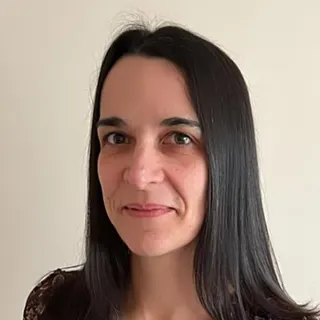
Portrait of Axenia Raulet

Axenia Raulet

MFL and Art Specialist

St Austell

£30.00 per hourDBS checkediAccepting enquiries
ArtFrenchGermanHistory of Art+1 more
  • Over 10 years' of experience in intercultural communication, art projects, and education.
  • Holds a Masters of Art in Didactics from Unibo, Bologna University, Italy.
  • Also holds a Bachelors of Art in Intercultural Mediation from La Sapienza University, Rome, Italy.
  • Currently pursuing a career as a professional artist.
  • Fluent in 8 European languages.
  • Adopts a trauma-informed approach to ensure a safe and respectful space for all students.

Axenia Raulet is a French tutor, Italian tutor and German tutor with 10+ years’ experience, a Master’s in Didactics (Unibo Bologna) and fluency in 8 European languages. She also teaches GCSE/A Level Art and History of Art with a trauma-informed approach.

Send a quick enquiry from here and the Latimer Tuition team will pass it on to Axenia.

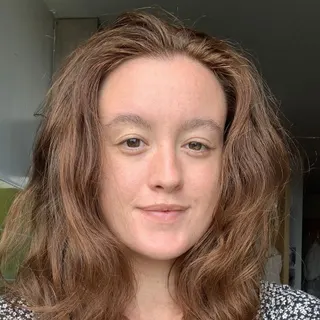
Portrait of Darcy Ind

Darcy Ind

French and Spanish Specialist

Bucknell, United Kingdom

£30.00 per hourDBS checkediAccepting enquiries
FrenchSpanishTEFL: Teaching English as a Foreign Language
  • Holds a Bachelor of Arts in Modern Languages (French, Spanish and German) from the University of Sheffield.
  • Holds over 4 years' of online tutoring experience both online, and in the classroom.
  • Darcy designs all her lesson plans from scratch to suit the individual's needs and learning goals.
  • Offers tutoring to KS2/3, GCSE, and AS/A-Level cohorts.

Darcy Ind is a French tutor and Spanish tutor with a BA in Modern Languages (University of Sheffield) and 4 years’ experience; she offers online tutoring for KS2–3, GCSE and AS/A-Level with tailored lesson plans and session reports.

Send a quick enquiry from here and the Latimer Tuition team will pass it on to Darcy.

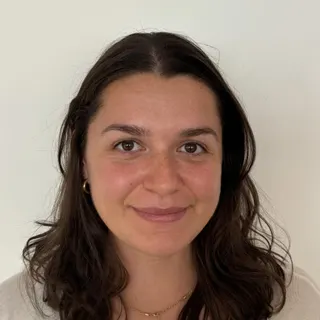
Portrait of Lucia Wood-Bonelli

Lucia Wood-Bonelli

Qualified French and Spanish Teacher

Sheffield

£35.00 per hourDBS checkediAccepting enquiriesQualified teacher
FrenchSpanish
  • Lucia is an approved examiner for Edexcel Spanish GCSE.
  • Holds a PGCE in Modern Foreign Languages with QTS from Sheffield Hallam University.
  • Holds a 2:1 in Modern Languages and Translation from the University of Leicester.
  • Holds over 1 year of online private tutoring experience.
  • Holds 3 A-Levels, and 12 GCSEs.

Lucia is a qualified Spanish teacher for GCSE and A-Level learners, and an approved Edexcel Spanish GCSE examiner with three years of teaching experience.

Send a quick enquiry from here and the Latimer Tuition team will pass it on to Lucia.

Portrait of Abeerah Zainab

Abeerah Zainab

English, Mathematics, and Science Specialist

Birmingham

£37.00 per hourDBS checkediAccepting enquiries
BiologyBusiness StudiesChemistryComputer Science+6 more
  • She is currently in her second year of Dentistry at University.
  • Experienced in tutoring GCSE and A-Level students with consistently positive feedback.
  • Holds A, A, A for Biology, Chemistry, and Mathematics at A-Level.
  • Holds grade 9s for all her subjects at GCSE level.

GCSE maths tutor and GCSE English tutor, also teaching Biology and Chemistry up to A Level; second-year Dentistry student with A grades at A Level and grade 9s at GCSE, providing exam-focused lessons with session reports and optional free homework.

Send a quick enquiry from here and the Latimer Tuition team will pass it on to Abeerah.

Portrait of Sara Dellapiana

Sara Dellapiana

Qualified French, Italian, and Spanish Teacher

Crewe

£32.00 per hourDBS checkediAccepting enquiriesQualified teacher
FrenchItalianSpanish
  • Holds a Postgraduate Certificate in Education (PGCE) with Qualified Teacher Status (QTS) in Modern Foreign Languages from Manchester Metropolitan University.
  • Holds a 1st (110/110 with distinction) for her Bachelors of Modern Foreign Languages Degree in Spanish and English Languages and Literature from the University of Bergamo.
  • Has over 16 years’ of experience teaching Modern Foreign Languages in UK schools from KS1/2/3, to GCSE level.
  • Sara has been teaching Italian to adults both in small classes and One-2-One for over 20 years.

Sara Dellapiana is a qualified French tutor, Spanish tutor and Italian tutor with PGCE (QTS) in MFL and 16+ years teaching KS2–GCSE in UK schools; a native Italian speaker offering tailored Italian lessons for adults and all levels.

Send a quick enquiry from here and the Latimer Tuition team will pass it on to Sara.

Portrait of Andi Graham

Andi Graham

English, Mathematics, and Science Specialist

Belfast, United Kingdom

£28.00 per hourDBS checkediAccepting enquiries
11+ (general)BiologyChemistryEnglish Language+9 more
  • Over 12 years' of experience teaching and tutoring.
  • Currently supporting students in UK secondary schools including those with SEN.
  • TEFL (Teaching English as a Foreign Language) certified.
  • Holds PTLLS Level 3 qualification in Lifelong Learning and a TEFL certification.
  • Andi has been a private tutor since 2011.

Andi Graham is a GCSE Maths tutor who supports learners from KS2 to GCSE with a calm, student-focused approach tailored to individual needs.

Send a quick enquiry from here and the Latimer Tuition team will pass it on to Andi.

Choose a goal from your child’s starting point

School year alone does not tell a tutor how much French a child knows. Share a recent word list, a piece of school work or an example of something your child finds difficult. These possible starting points call for different lesson goals.

Starting French
Begin with a small set of useful words and spoken phrases, supported by pictures, objects and a clear spoken model. A first goal could be understanding a familiar phrase and choosing the matching picture.
Knows words but gets stuck answering
Focus on how the words fit together. A child who recognises the word for dog can practise a whole sentence about having a dog, then use the same sentence pattern with a different familiar noun.
Needs help with a school topic
Use the teacher’s material to find the specific difficulty: recognising the spoken words, remembering a phrase, reading it or writing it. A defined gap can give a short course of support a clear focus.
Already hears or speaks French at home
Check spoken understanding and reading or writing separately. Discuss which skills need attention before repeating beginner vocabulary the child already uses.

What primary French lessons can cover

In England’s maintained schools, the national curriculum includes a modern or ancient foreign language at Key Stage 2: Years 3–6, usually ages 7–11. French is one possible choice. Academies and independent schools can have different curriculum arrangements, and Scotland, Wales and Northern Ireland have their own approaches. Use your child’s actual school programme to choose the lesson content.

For children studying French, the England KS2 programme includes listening and responding, speaking in sentences, reading simple language, writing and adapting familiar phrases, and basic grammar. These are goals across the stage, not a checklist every beginner must already meet. Sounds, vocabulary and sentence patterns need to be learned together.

Listening and pronunciation
Hear a short phrase, identify its meaning and practise saying it clearly. Then connect the spoken phrase to its spelling, rather than guessing the pronunciation from English.
Reading and writing
Match a written phrase to its meaning, then change a familiar word to express something different. This helps distinguish understanding from accurate copying.
Questions and conversation
Practise understanding a short question and choosing a relevant answer. A child can know a phrase by heart yet still need help recognising when to use it.

From “a dog” to “I have a dog”

Here is an illustrative teaching sequence using language from Oak National Academy’s primary French lessons. It shows how a tutor can connect listening, vocabulary and a small grammar pattern.

  1. Hear and recognise the whole phrase

    Start with un chien, meaning “a dog”. Hear it spoken, choose the dog picture, then look at the written phrase. Keep un with chien when learning it: un is part of the phrase, not an extra word to add later.

  2. Build a sentence and correct an omission

    J’ai means “I have”. Putting the pieces together gives J’ai un chien: “I have a dog”. If the child tries J’ai chien, point out the missing word for “a” and rebuild the complete phrase.

  3. Change one familiar item

    Introduce un sac, “a bag”. Keeping J’ai, “I have”, gives J’ai un sac: “I have a bag”. Try this with the first sentence covered so the child has to use the pattern, rather than copy it.

  4. Notice a different word for “a”

    For a child ready for another step, une peluche means “a cuddly toy”. The sentence becomes J’ai une peluche: “I have a cuddly toy”. Un goes with a masculine noun; une goes with a feminine noun. Learn the article with each noun because this is the word’s grammatical gender.

Why “I am nine” uses “j’ai” in French

Imagine a task about a puppet aged nine. A child translates from English and writes Je suis neuf ans. The difficulty is the verb: French uses avoir, meaning “to have”, to give an age.

J’ai neuf ans means “I am nine years old”. Literally, it is “I have nine years”: j’ai means “I have”, neuf means “nine”, and ans means “years” in this phrase. Je suis means “I am”, but it is not the expression to use for age here.

A useful follow-up is to cover the corrected sentence and offer two starting phrases, j’ai (“I have”) and je suis (“I am”), beside neuf ans (“nine years”). The child chooses the age expression, says the whole sentence and explains the choice in English. Choosing j’ai for a reason shows more than repeating a sentence immediately after an adult.

This constructed example follows the age pattern and misconception explained in Oak’s primary French lesson; it is not a report of a particular child’s lesson.

Make home practice small enough to repeat

Agree a small set of language with the tutor and revisit it between lessons. You do not need to teach French pronunciation from the spelling: use a spoken model from the tutor or the linked lesson resources, with an English meaning beside the phrase. The aim is to give your child another chance to remember and use what has been taught.

  1. Revisit before adding more

    Use the dog, bag and toy pictures from the example above. Listen to each taught phrase and check its meaning before hiding the written version. Keep the task short enough for your child to take part willingly.

  2. Try without the model

    Ask the child to choose a picture and say its sentence from memory. If they get stuck, offer a prompt, then let them try again. Keep a note of an uncertain phrase to revisit with the tutor.

  3. Notice the help needed

    Record whether the child needed the whole sentence, a small prompt or no help. Over later attempts, look for independent recall and a correct answer when the picture changes. Willingness to speak matters too, but it is useful to check what the child understands.

Choose a tutor who can work at your child’s pace

Look for evidence of experience explaining French to primary learners. In the introductory conversation, discuss how the tutor would find a starting point, model pronunciation and turn a mistake into one clear next step. Strong French knowledge and the ability to make it understandable to a child both matter.

  • Bring the school context

    Share your child’s age, school year, current French topics and previous language learning. Mention whether the aim is school support, enrichment or a particular gap, along with the times and budget that work for the family.

  • Describe useful support

    Explain any school approaches that help, such as giving one instruction at a time, using larger print or allowing more thinking time. Discuss whether an early task should involve pointing or speaking before adding writing. Confirm the tutor’s relevant experience where additional support is needed.

  • Agree a way to review the work

    Choose a small goal and how it will be checked, such as understanding and using a taught sentence with a different picture. Agree how you will hear about progress and what, if any, practice you will help with at home.

Preparing for secondary language learning

In England, KS3 language teaching is intended to build on primary foundations, even when a pupil begins a different language. Before choosing transition support, check which language the secondary school will teach.

For French continuing into secondary school, a useful handover is a small set of phrases the child understands, can say and can adapt, plus notes on the help they still need. If the next language is different, listening carefully, linking sounds to spelling and noticing sentence patterns remain sensible preparation goals. There is no need to turn primary lessons into GCSE exam practice.

Arrange primary French tuition around your child

Latimer offers online-first, one-to-one tuition. Before the first lesson, check that your child can hear the tutor clearly and show any pictures or written work they will use. Microsoft Teams is the default platform; you and the tutor can agree another option. Discuss whether you will help with setup, stay nearby or join part of the lesson. In-person lessons require an individual arrangement.

For help choosing, send a free matching request with your child’s starting point, the French they are learning and what you would like them to be able to do next.

Support and clarity

Frequently asked questions

Straight answers to the questions people ask most often.

How much does primary French tuition cost?

Each tutor sets their own hourly rate, shown on their profile. Latimer lessons are billed on a pay-as-you-go basis. Compare the proposed lesson focus and useful follow-up as well as the price, and agree the lesson length, any materials or feedback included, and cancellation terms before booking.

Is there a free trial lesson?

Latimer offers a free introductory meeting to discuss your child’s goals, the teaching approach and practical arrangements before paid lessons. It is normally a conversation rather than a full teaching lesson. Use it to see how the tutor would approach your child’s needs and to agree the next step.

Can a child younger than Key Stage 2 start French?

For a younger beginner, you can discuss introductory French through listening, spoken phrases, pictures and play. The tutor list here is for Key Stage 2 French, so use the matching request to give your child’s age and ask about experience with younger learners. A child does not need to meet KS2 end-of-stage goals before starting.

Does my child have to prepare for French SATs?

French is not part of England’s Year 6 national tests. Schools can still assess their own French teaching, so share any teacher feedback or upcoming classroom task with the tutor. For ordinary primary French support, the school’s topics and your child’s starting point are more useful than a GCSE exam-board name.

What if the school teaches a language other than French?

Set French as a separate learning goal, such as beginner enrichment, and tell the tutor which other language your child studies. If your priority is catching up with school work, choose support for the language actually taught there. Check the secondary school’s language offer before planning a French transition course.

How many lessons will my child need?

A specific gap and ongoing school support call for different plans. Agree an initial goal, a manageable lesson-and-practice rhythm and a point to review it. Use examples of what your child can understand or say with less help to decide what comes next. There is no set number of lessons that guarantees fluency or a particular result.

Further information

Useful links and resources

Related tutor pages

Explore related tuition options and guidance for choosing the right support.