One-to-one online tuition

Find an online A-level Biology tutor

Bring a marked answer, a statistics question or an essay plan and work through it on a shared screen. Compare A-level Biology tutor profiles or request a free match for your exam board and goals.

  • One-to-one tuition
  • Pay as you go
  • Direct tutor contact
Latimer Tuition offers online one-to-one lessons, on Microsoft Teams by default. For A-level Biology, start with your board and specification code, a recent marked answer and the question type that costs you marks. Recent examiner reports point to recurring weak spots: choosing and interpreting statistical tests, evaluating the data given and keeping extended answers focused.

The form controls become available when the enquiry form has loaded.

See tutors who fit what you need

Answer a few quick questions and we’ll show you the tutors who match, so you can choose and message one yourself. Skip anything you’re unsure about.

  1. Tutoring brief
  2. See tutors

Final step

See tutors

Ready to see your tutors?

No email needed to see them.

We’ll show you the available tutors who match your brief. Read their profiles and message the tutor you like directly.

Your tutoring brief

Subject
Biology
Level
A Level

Prefer us to look for you?

Having trouble with the form?

Email us at Contact@LatimerTuition.com or contact us on WhatsApp. These contact links include the page topic without your personal details.

How one-to-one tuition can help

  • Choose the right statistical test and explain what the result means
  • Use the data in the question instead of rote-learnt evaluation points
  • Plan focused extended answers, including the AQA 25-mark essay

Include your exam board and specification code (for example AQA 7402, OCR H420 or H422, Pearson Edexcel 9BN0 or 9BI0, Eduqas or WJEC) and your Eduqas Component 3 option if you take one.

Available tutors

Compare A-level Biology tutors

6 tutor profiles selected

These profiles list A-level Biology. Before arranging lessons, confirm that the tutor teaches online, ask about your exact specification and agree how you will share diagrams, data and written answers.

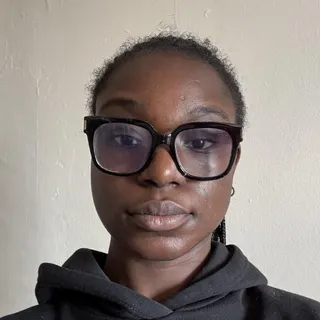
Portrait of Raqeebat Lekuti

Raqeebat Lekuti

Science and Psychology Specialist

West Bromwich, United Kingdom

£30.00 per hourDBS checkediAccepting enquiriesHigh performing tutor
BiologyChemistryMathematicsPhysics+1 more
  • Over 3 years’ of tutoring experience both in-person and online, in KS3 and GCSE Science.
  • Currently Studying for her Bachelors of Medicine & Surgery at the University of Birmingham.
  • Holds A*, A, A for Psychology, Biology, and Chemistry at A-Level.
  • Holds A**- A* (9s-8s) at GCSE level, including A** in all Sciences.

Raqeebat Lekuti is a medical student who tutors GCSE, AS Level and A-Level Biology, Chemistry and Psychology, using clear feedback and tailored support to build confidence.

Send a quick enquiry from here and the Latimer Tuition team will pass it on to Raqeebat.

Portrait of Olatade Fadeyi

Olatade Fadeyi

Rated 5.0 out of 5

Mathematics and Science Specialist

United Kingdom

£30.00 per hourDBS checkediAccepting enquiriesHigh performing tutor
11+ (general)BiologyChemistryCreative Writing+6 more
  • Currently working towards her Masters in Biochemistry.
  • Holds over 2 years' of tutoring and teaching experience.
  • Holds an A for Psychology at A-Level.
  • Holds 2 A*s, and 5 As at iGCSE level.
  • Olatade has experience working with SEN students.

Olatade is a gcse maths tutor and maths and science tutor for 11+ to A-Level, teaching GCSE/iGCSE Maths plus Biology, Chemistry and Physics, and A-Level Psychology. She has 2+ years’ experience, including SEN support, with session reports and optional homework.

Send a quick enquiry from here and the Latimer Tuition team will pass it on to Olatade.

Portrait of Kamsi Duru

Kamsi Duru

Biology, Chemistry & Psychology Specialist

Aylesbury, United Kingdom

£25.00 per hourDBS checkediAccepting enquiries
BiologyChemistryPsychology
  • Currently studying for his MBBS in Medicine at Kent and Medway Medical School.
  • Holds A*, A, A for Psychology, Biology, and Chemistry at A-Level.
  • Holds an A**, and 5 A*s for Triple Science, Maths, and English at GCSE level.
  • Experienced in tutoring GCSE Chemistry and Biology, as well as supporting students with medical school applications.

Biology tutor and chemistry tutor for GCSE and A Level; also a psychology tutor. MBBS medical student at Kent and Medway Medical School offering tailored lessons, homework and session reports, plus medical school application coaching.

Send a quick enquiry from here and the Latimer Tuition team will pass it on to Kamsi.

Portrait of Tanya Narendra

Tanya Narendra

Biology Specialist

Orpington, United Kingdom

£28.00 per hourDBS checkediAccepting enquiries
Biology
  • Currently studying Medicine at St George's University of London.
  • Over 2 years of experience tutoring GCSE and A-Level Biology.
  • Holds A*, A*, A* for Biology, Chemistry and Mathematics at A-Level.
  • Holds 10 A*s for her GCSEs including Triple Science.
  • Tanya enjoys covering content and questions to develop exam technique.

Tanya Narendra is a biology tutor for GCSE and A-Level, studying Medicine at St George's University of London. She provides online tutoring built around active learning, past paper questions and exam technique, with lesson reports and optional homework.

Send a quick enquiry from here and the Latimer Tuition team will pass it on to Tanya.

Portrait of Eugenia Amoah

Eugenia Amoah

Maths, Further Maths, and Science Specialist

London

£30.00 per hourDBS checkediAccepting enquiries
BiologyChemistryFurther MathsMathematics+4 more
  • Currently pursuing a degree in Medicine and Surgery at the University of Birmingham.
  • Holds A, A, A for Mathematics, Biology, and Chemistry at A-Level.
  • Holds Grade 9s in GCSE Science and Mathematics.
  • Eugenia is an i-medics ambassador.

Eugenia is a gcse maths tutor and maths and science tutor, a University of Birmingham Medicine and Surgery student with 3+ years’ experience teaching KS2–AS Maths, GCSE Further Maths and GCSE–A Level Biology/Chemistry plus GCSE Physics; session reports and optional homework.

Send a quick enquiry from here and the Latimer Tuition team will pass it on to Eugenia.

Portrait of Joannah Joseph

Joannah Joseph

Biology, Chemistry, and Psychology Specialist

Wolverhampton, United Kingdom

£20.00 per hourDBS checkediAccepting enquiries
BiologyChemistryPsychology
  • Currently studying for her Medicine (MBBS) at Kent and Medway Medical School.
  • Holds several years' of experience tutoring students aged 7–17.
  • Holds A, A for Psychology and Biology at A-Level.
  • Holds a 9 in Chemistry, 8 in Biology, 9 in English Literature, and a 7 in Mathematics at GCSE level.
  • Compassionate tutor and able to communicate various concepts in ways appropriate to each student.

Joannah Joseph is a biology tutor, chemistry tutor and psychology tutor, a Kent and Medway Medical School MBBS student with several years’ experience (ages 7–17), offering structured, exam-focused GCSE and A-Level support with lesson reports and optional free homework.

Send a quick enquiry from here and the Latimer Tuition team will pass it on to Joannah.

Having trouble with the form? Email Latimer Tuition or message us on WhatsApp.

Set up an online Biology lesson around your own work

Microsoft Teams is Latimer’s default lesson platform, and you can agree another with your tutor. Treat the arrangements below as choices to settle at the start rather than a fixed lesson format. If the learner is under 18, the NSPCC suggests agreeing boundaries before tutoring begins, using a desk or table rather than a bedroom, keeping another adult within earshot and asking the tutor for regular progress updates.

  1. Send the question, mark scheme and your attempt

    Share the whole question with its data table, graph or micrograph, your own answer and the board's mark scheme if you have it. Marking a real attempt against the scheme shows whether marks were lost on knowledge, wording or use of the data.

  2. Make diagrams and micrographs readable

    Agree whether you will annotate on a shared screen, hold paper up to the camera or send photos. Check that axis labels, scale bars and small structures are legible before discussing them. If busy screens or fast explanations are hard to follow, ask for larger text, one step at a time and time to write.

  3. Draft extended answers where both of you can see them

    Write a plan or paragraph in a shared document, or photograph handwritten work. Some practice should be handwritten and timed, because the final answer has to fit the exam paper.

  4. Keep a record between lessons

    Save the corrected answer with the tutor's comments, then attempt a similar unseen question before the next lesson so both of you can see what has changed.

Statistics: choose the test, then say what the result means

Examiners at three boards reported versions of the same problem in 2025. WJEC found only about half of candidates chose correctly between a t-test and a chi-squared test, and that null hypotheses were often written imprecisely. OCR found most H420 candidates could write a null hypothesis but could not identify the t-test or its degrees of freedom. AQA found students struggled to interpret a P < 0.01 result. Here is a constructed practice question of the kind a tutor might set.

A student measures 10 leaves from plants grown in sunlight and 10 from plants grown in shade, and wants to know whether mean leaf length differs.

  1. Choose the test. The data are measurements and the question compares the means of two separate groups, so an unpaired t-test fits. A chi-squared test would suit observed counts in categories compared with expected counts, such as offspring numbers from a genetic cross.
  2. Write a precise null hypothesis. “There is no significant difference between the mean length of leaves from sunlit and shaded plants.” Name the variable and both groups.
  3. Find the degrees of freedom. For an unpaired t-test, df = n₁ + n₂ − 2 = 10 + 10 − 2 = 18.
  4. Compare with the critical value. Suppose the calculated t is 3.2. At 18 degrees of freedom the critical value is 2.10 at p = 0.05 and 2.88 at p = 0.01. Because 3.2 is larger than 2.88, p < 0.01.
  5. Interpret the result. Reject the null hypothesis: the probability that a difference this large arose by chance alone is less than 1%. That supports a real difference in mean leaf length; on its own, it does not explain why the leaves differ.

Online, the learner can justify each step aloud before the next one is shown. A useful follow-up uses counts in categories instead, so the test choice has to change. Use the statistical tables your board provides.

Evaluate the data you are given, not a memorised list

In England, at least 10% of A-level Biology marks assess mathematical skills at Level 2 or above, compared with 20% in Chemistry and 40% in Physics. The maths is lighter, but it is tied to biological data. AQA’s June 2025 Paper 3 report noted difficulty with log-scale graphs and with using mark-release-recapture to estimate population size. It also found that fewer than 1% of students gained full marks on one data-evaluation question, partly because answers repeated rote points such as “small sample size” without using the information provided.

A constructed example: a student catches 40 woodlice, marks each with a dot of paint and releases them. A week later they catch 50, of which 10 are marked. The estimate is (40 × 50) ÷ 10 = 200 woodlice.

Now suppose the question adds that woodlice shed their exoskeleton as they grow. A generic answer says the sample was too small. A stronger answer uses that detail: if some marked woodlice moulted and lost their paint, too few marked animals would be recaptured, so 200 is likely to be an overestimate. The method assumes marks stay visible, marking does not affect survival, and the population does not change through births, deaths or migration between samples.

In a lesson, the tutor can hide the evaluation, ask the learner to find the useful detail in the stem, then compare their answer with the mark scheme.

The AQA 25-mark essay: four topics at depth

AQA 7402 Paper 3 includes a 25-mark essay chosen from two titles. In its June 2025 report, AQA said most essays ran to six to nine pages, although the paper leaves no more than 45 minutes for the essay. The most common score was 15 out of 25, and introductions and conclusions earned no marks. Examiners advise choosing about four topics, covering each at A-level depth and linking each to the title rather than to one another.

Here is a plan for a constructed practice title, “The importance of hydrogen bonds in living organisms”:

  • Water transport in xylem. Hydrogen bonds between water molecules provide cohesion, so a continuous column of water is pulled up the xylem as water evaporates from leaves.
  • DNA structure and replication. Hydrogen bonds between complementary bases hold the two strands together, yet are weak enough for DNA helicase to separate the strands during replication.
  • Protein structure and enzymes. Hydrogen bonds help maintain secondary and tertiary structure; breaking them at high temperature changes the shape of the active site and denatures the enzyme.
  • Cellulose in plant cell walls. Hydrogen bonds between parallel cellulose chains form microfibrils that give the wall its strength.

Each point ends by stating why the hydrogen bonds matter to the organism. A learner can share the plan on screen before writing, discuss depth and relevance against AQA’s essay guidance, then write one paragraph to time. Other boards assess extended writing in different formats, so check your own papers.

What differs between A-level Biology specifications

Give a prospective tutor your board and specification code, and ask how they prepare students for that paper format. The courses differ in paper length, essay format, pre-release material and practical assessment.

AQA Biology 7402
Three 2-hour papers. Papers 1 and 2 are 91 marks and 35% each; Paper 3 is 78 marks and 30%, including critical analysis of experimental data and the 25-mark essay.
OCR Biology A H420
Biological processes and Biological diversity are 100 marks, 2 hours 15 minutes and 37% each; Unified biology is 70 marks, 1 hour 30 minutes and 26%. All three papers are synoptic.
OCR Biology B (Advancing Biology) H422
Includes a separate Practical skills in biology paper worth 22%. OCR is withdrawing the course: September 2026 is the final first-teaching date and June 2028 the final exam, with no resit afterwards.
Pearson Edexcel Biology A (Salters-Nuffield) 9BN0
Three 2-hour, 100-mark papers worth a third each. Paper 3 draws on a scientific article released eight weeks before the exam. The course has 18 core practicals.
Pearson Edexcel Biology B 9BI0
Papers 1 and 2 are 1 hour 45 minutes, 90 marks and 30% each; the synoptic Paper 3 is 2 hours 30 minutes, 120 marks and 40%. The course has 16 core practicals.
Eduqas A level Biology (England)
Three 2-hour components, each 100 marks and a third of the A level. Component 3 includes one option: Immunology and Disease, Human Musculoskeletal Anatomy, or Neurobiology and Behaviour.
WJEC A level Biology (Wales)
A unitised course with a graded practical examination. Unit 5, worth 10% of the A level, combines an experimental task with a practical analysis task.


Practicals: what online lessons can and cannot cover

At least 15% of A-level Biology written-exam marks assess practical knowledge and skills, so methods, variables, results and evaluation are worth practising online. Bring your own results and the list of required or core practicals for your board.

The Practical Endorsement is separate. Students complete at least 12 practical activities, and teachers assess them against the Common Practical Assessment Criteria (CPAC). The result is reported as Pass or Not Classified, apart from the A* to E grade. Because teachers at the school, college or exam centre carry out that assessment, an online tutor cannot award it. WJEC’s course in Wales also includes the graded practical examination in Unit 5.

Private candidates need a centre willing to run and assess the practicals, and AQA warns this is likely to involve considerable cost. If you are resitting and already hold a Pass, Pearson’s guidance says it can be carried forward, including between boards, so only the written papers are retaken. Confirm the arrangement with your exam centre.

The endorsement can matter for applications. For 2027 entry, Sheffield Medicine asks for a pass in the practical element of any science A level taken. King’s College London Dentistry requires a pass in all science subjects, except for private candidates unable to take the practical.

Biology for medicine, dentistry and veterinary applicants

UK medical schools generally ask for at least three A grades at A level, with one and sometimes two lab sciences, chemistry or biology. Some also require maths or physics. Not every school requires Biology itself, and requirements change each year, so check each course you are considering.

Two examples for 2027 entry: Sheffield Medicine asks for AAA including Chemistry or Biology and a second science, alongside a UCAT threshold. King’s College London Dentistry asks for A*AA, including an A in Biology or Chemistry and an A in a second listed subject. Vet schools vary too. In the Veterinary Schools Council’s 2025-entry compendium, Bristol asked for AAA including Chemistry and one of Biology, Physics or Maths, while other schools required both Chemistry and Biology.

Tell your tutor the grade you need and when your exams are. Tuition can set priorities around that target; it cannot guarantee an offer. Admissions tests and application preparation are separate work.

Choose a tutor and judge whether lessons are working

Latimer’s matching request and the introductory meeting with a tutor are both free. Use the meeting to discuss goals, the tutor’s teaching approach and practical arrangements before booking a lesson.

  1. Confirm online teaching and your course

    Check that the tutor teaches online and ask about their experience with your specification. Appearing in an A-level Biology listing does not mean a tutor covers every board.

  2. Test their approach on a real question

    Bring one answer that lost marks, such as a data evaluation or an essay paragraph. Ask how they would mark it against the board's scheme and what you would practise next.

  3. Agree cost and schedule

    Each tutor sets their own rate, shown on their profile, and Latimer tuition is pay as you go. Agree lesson length, frequency and cancellation terms directly with the tutor.

  4. Check progress with fresh questions

    Compare a first attempt with a later unseen question of the same type: a correctly chosen statistical test, an evaluation tied to the data, or an essay paragraph that stays on the title.

Tell us what you need from online A-level Biology tuition

Include your board and specification code, the question types that cost you marks, your next mock or exam date and the times that suit you. Mention anything that would make online lessons easier to follow. Requesting a tutor match is free.

Support and clarity

Frequently asked questions

Straight answers to the questions people ask most often.

How much do online A-level Biology lessons cost?

Each tutor sets their own rate, which is shown on their profile, so the cost depends on the tutor you choose. Latimer tuition is pay as you go rather than a prepaid package. Requesting a tutor match and the introductory meeting are free; lessons are charged at the tutor’s rate.

Is there free A-level Biology tutoring online?

At Latimer, the matching request and the introductory meeting are free, and lessons are paid at the tutor’s rate. Free board resources are also worth using alongside any tuition: your specification, past papers, mark schemes and examiner reports, which explain where students lost marks in recent exam series.

How often should online A-level Biology lessons take place?

There is no single right frequency. In school tutoring programmes, the Education Endowment Foundation found the greatest impact typically came from frequent sessions, around three a week of up to an hour, over six to twelve weeks. For private lessons, agree a schedule around your budget, other subjects and time for independent practice, then review it. Spacing practice across days helps, so leave time to attempt questions between lessons.

Is online tuition as effective as face-to-face tuition?

The evidence does not settle it. In the EEF’s evaluation of the 2020–21 National Tutoring Programme, school leads felt face-to-face tuition was more effective, largely because of better attendance, while online tuition offered more flexibility. Latimer’s service is online first, and in-person lessons are not guaranteed. If attendance or concentration online is a concern, raise it in the introductory meeting and agree how the learner will stay active, such as answering on screen rather than watching.

I'm studying OCR Biology B. Is it still worth finding a tutor?

Yes, if you are taking the course now. OCR’s final H422 exam is in June 2028 and there is no resit opportunity afterwards, so plan any resit before then. Make sure lessons prepare you for the Practical skills in biology paper as well as the other two papers.

Further information

Useful links and resources

Related tutor pages

Explore related tuition options and guidance for choosing the right support.