One-to-one percussion tuition

Find a percussion tutor for the way you want to play

Starting with sticks, returning to a drum kit or preparing orchestral percussion? Tell us your instrument and goal so your tutor search starts with the skills you want to develop.

  • One-to-one tuition
  • Pay as you go
  • Direct tutor contact
Percussion lessons can focus on playing for enjoyment, reading rhythms, joining an ensemble or preparing for a grade. Start with the instrument: drum kit, snare drum, tuned percussion and timpani call for different skills and equipment. If you are unsure which to choose, describe the music you want to play and what you can practise on.

The form controls become available when the enquiry form has loaded.

Percussion tuition enquiry

Tell us what you know, skip anything you’re unsure about, and add a short description if you skip both subject and level.

  1. Tutoring brief
  2. Contact details

2 questions remaining

Tutoring brief

What level is the tuition for?

Choose a level

Choose a suggestion or type your own answer. You can skip this if you’re unsure.

This form works best for one learner at one level and up to six subjects. If your circumstances are more complicated, email us at Contact@LatimerTuition.com so you can explain everything properly.

How one-to-one tuition can help

  • Keeping the beat steady through rests, changing rhythms and fills
  • Developing stick or mallet control for your chosen percussion instrument
  • Connecting practice with the pieces, ensemble parts or grade you want to prepare

Available tutors

Compare music tutors for your percussion goals

6 tutor profiles selected

Look for experience teaching your chosen percussion instrument and stage. Use the profile and introductory conversation to discuss the music you want to play, teaching approach and equipment.

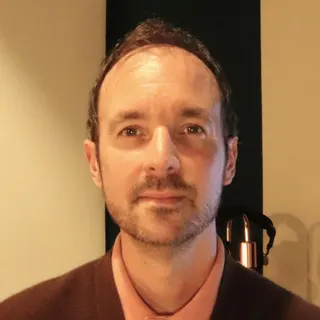
Portrait of Alexander Moretto

Alexander Moretto

Music Specialist

London, United Kingdom

£28.00 per hourDBS checkediAccepting enquiries
MusicMusic TechnologyMusic Theory
  • Over 4 years' of teaching experience.
  • Currently teaching Music Production (Level 2) part-time.
  • Currently a Teaching Assistant and an SEN support worker.
  • Fluent in English, French and Spanish.
  • Works as a DJ on a weekly basis (Signed to a DJ Agency).
  • Releases electronic music on Dance Record labels.
  • Played gigs all around the UK/ Europe - London, Bournemouth (PRIDE Festival), clubs (Ibiza/Amsterdam), and the Ministry of Sound.
  • Music played on BBC Radio Leicester, and BBC Music.

Alexander is a music tutor for learners from 11+ to A-Level, combining professional production experience with clear demonstrations, tailored feedback and practical project work.

Send a quick enquiry from here and the Latimer Tuition team will pass it on to Alexander.
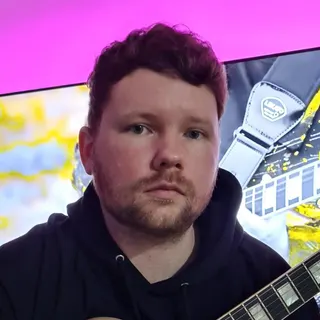
Portrait of Owen Evans

Owen Evans

Music, and Musical Instrument Specialist

Lumsden, United Kingdom

£30.00 per hourDBS checkediAccepting enquiries
GuitarMusicMusic PerformanceMusic Technology+1 more
  • Holds over 8 years' of online teaching experience.
  • Owen holds over 18 Years' experience teaching & in the Music industry.
  • Received over 1 million views & listens on Spotify, Youtube & social media.
  • A professional songwriter in all genres.
  • Over 10 years' experience using Logic Pro-x.
  • Owen has worked with Grammy-winning producers.

Owen Evans is a UK guitar tutor with 18+ years in teaching and the music industry, including 8+ years of online tutoring. He supports ABRSM/Rockschool, GCSE and A-Level Music, plus songwriting and Logic Pro X production with tailored lesson plans.

Send a quick enquiry from here and the Latimer Tuition team will pass it on to Owen.

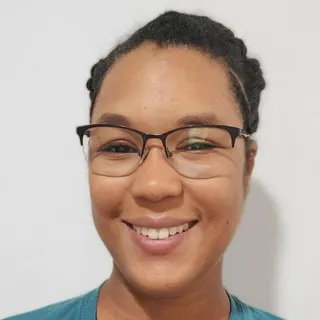
Portrait of Stacy Jarvis

Stacy Jarvis

Music and Russian Specialist

Manchester, United Kingdom

£35.00 per hourDBS checkediAccepting enquiries
MusicMusic PerformanceMusic TheoryPiano+2 more
  • She currently teaches Music at a primary school and provides private Violin lessons to a diverse range of students, including children with SEN.
  • Holds a Masters degree in Musicology from the University of Manchester.
  • Currently studying for her Doctorate of Music at the University of Birmingham, focusing on the conceptualisation of artistic ideas in nocturnes.
  • Holds a Bachelors degree in Violin Performance from the Royal Northern College of Music.
  • Has extensive experience teaching violin and piano to students of all ages, from Year 1 primary students to adult learners.

Stacy Jarvis is a music educator and violinist who teaches Music, Violin, Piano and Music Theory from KS2 to A-Level, with experience supporting children with SEN and adult learners.

Send a quick enquiry from here and the Latimer Tuition team will pass it on to Stacy.

Portrait of Darren Stone

Darren Stone

Music Specialist

Waterlooville, United Kingdom

£40.00 per hourDBS checkediAccepting enquiries
GuitarMusicMusic PerformanceMusic Technology+1 more
  • Over 10 years’ of experience teaching in UK secondary schools, tailoring lessons to each student’s learning style.
  • Professional composer with internationally published work in film, television, games, and advertising.
  • Expert in Music Technology, GCSE Music, A-Level Music, and Level 2 Music Technology.
  • Extensive studio and live performance experience as a guitarist, bridging real-world music with academic learning.
  • Guides students in composition, performance, music theory, and creative production.

Darren Stone is a private tutor and guitar tutor specialising in Music Technology, teaching GCSE and A-Level Music with 10+ years’ UK secondary school experience. Professional composer offering tailored help with composition, theory and performance, plus session reports.

Send a quick enquiry from here and the Latimer Tuition team will pass it on to Darren.

Portrait of Abigail Ajala

Abigail Ajala

Music, and Musical Instrument Specialist

Rushmere St Andrew, United Kingdom

£45.00 per hourDBS checkediAccepting enquiries
GuitarMusicMusic PerformanceMusic Technology+2 more
  • Over 11 years' of Music teaching experience.
  • Holds a Bachelor of Arts in Commercial Music.
  • Has been the vocal coach for the Stagecoach Performing Arts School (Ipswich).
  • Teaches guitar, ukulele, piano (up to intermediate), vocals, and music theory.

Abigail Ajala is a guitar tutor with 11+ years’ teaching experience, BA in Commercial Music, and Stagecoach Performing Arts (Ipswich) vocal coach. She is also a piano tutor (to intermediate) teaching ukulele and music theory for ages 4+, KS1–3, GCSE and A Level; online and Suffolk-based.

Send a quick enquiry from here and the Latimer Tuition team will pass it on to Abigail.

Portrait of David Knight

David Knight

Music Specialist

Chippenham, United Kingdom

£60.00 per hourDBS checkediAccepting enquiries
MusicMusic PerformanceMusic TechnologyMusic Theory+1 more
  • Holds a Degree in Composition from Guildhall School of Music and Drama.
  • Over five years of teaching experience.
  • Currently teaches Composition to A-Level Music students with Trinity Laban Conservatoire of Music and Dance.
  • Holds A*, A for English Literature and Music at A-Level.
  • Holds 6 A*s and 2 As for Music, English (Literature and Language), Mathematics, History, Geography, and Science at GCSE level.

David Knight is a Music and A-Level Composition tutor with a Guildhall composition degree and 5+ years' teaching experience, offering online tutoring and in-person lessons in Wiltshire; also a piano tutor at professional qualification level, with session reports and optional homework.

Send a quick enquiry from here and the Latimer Tuition team will pass it on to David.

Which percussion instrument do you want to learn?

“Percussion” covers more than a drum kit. Tuned instruments produce definite notes; a kit groups drums and cymbals for one player. These starting points help you describe the tuition you need.

Snare drum and orchestral percussion
Focus on stick control, rhythm reading and the character of the sound. In ensemble music, counting a long rest and entering at the right moment can matter as much as playing a busy passage. Name the instruments in the part when seeking help.
Tuned percussion
Instruments such as xylophone and glockenspiel bring pitch into the task. Reading the correct notes, finding them on the instrument and choosing a workable sequence of hands must fit the rhythm. Specify the instrument, since sound control and equipment differ.
Timpani
Timpani produce pitched notes, so preparation involves tuning as well as playing. Tell the tutor whether you can access timpani between lessons; a pad cannot reproduce tuning or the control needed to stop a ringing note.
Drum kit
Kit playing brings hands and feet together. A useful early goal is to keep a repeated beat steady while another limb adds its part; later work can include fills, or short rhythmic variations, and changes in style. If you mean a particular hand drum or tradition instead, name it in your enquiry.

A rhythm example: keep the beat through the silence

Try this constructed four-beat exercise by clapping or tapping. Count 1 and 2 and 3 and 4 and, with every spoken syllable equally spaced. Tap on 1, 2, the and after 2, and 4. Stay silent with your hands throughout beat 3.

If you skip the silence, the final tap arrives too early. Keep saying the full count, including 3 and, while your hands wait. The last tap should land exactly with 4, then the next repetition should begin on the next 1.

The improvement to listen for is a steady beat beneath both sound and silence. Once the pattern is secure, try it at the same speed with a quieter sound. If the timing changes, return to counting aloud before adding speed or a more complicated pattern. This is the sort of small task that lets a tutor distinguish a counting difficulty from a problem controlling the sticks.

Develop control as the playing becomes more demanding

A useful practice target names something you can hear or feel. “Play faster” is less informative than “keep the quiet notes even without tightening the grip”. The next task should build on the learner’s starting point.

  • Starting with sticks

    Try alternating right and left hands slowly, listening for an even sound. If one hand is consistently louder, work at a comfortable speed and compare the strokes. Relaxed handling and allowing the stick to rebound belong alongside learning the rhythm.

  • Coordinating a drum kit

    Build a simple repeating part before combining all the limbs. For example, keep a regular hand pulse, then add one agreed bass-drum stroke in each repetition. If the hand pulse shifts when the foot joins, separate the parts again and reassemble them slowly.

  • Controlling a ringing note

    On a glockenspiel, imagine one note that should sound for two beats, followed by silence. Simply lifting the mallet does not necessarily stop the note ringing. Practise striking on beat 1 and damping, or stopping the vibration, on beat 3 using a method demonstrated for the instrument. Better control means the silence starts on time without an extra unintended sound.

Playing for an ensemble or a grade

For ensemble playing, bring the part and identify the difficult entry, rhythm or change of instrument. Practise the lead-in as well as the difficult bar: being able to start a passage in isolation does not show that you can find it after several bars of rest.

For a grade, name the board, instrument, grade and exam format, and use the current syllabus to choose pieces. As one example, Trinity’s Classical & Jazz digital grades offer these two pathways. Other boards and formats have their own requirements.

Trinity digital: Technical Work pathway
This pathway uses three pieces, technical work and an overall-performance assessment. Technical work differs by instrument: tuned-percussion preparation can involve scales and arpeggios, while snare work includes rhythmic figures and rolls. Practise the actual tasks for your grade, listening for evenness and control as well as correct notes or strokes.
Trinity digital: Repertoire-only pathway
This pathway uses four pieces. Prepare a balanced programme that meets the route’s selection requirements, and practise carrying the character of each piece through to its ending. Being able to play a difficult bar is one step; sustaining a complete performance needs its own rehearsal.

Plan the instrument access and online setup

Latimer offers one-to-one tuition with an online-first approach. For percussion, discuss the practical setup before booking: what instrument you will use, where it can be played and how the tutor will see the relevant movements. Microsoft Teams is the default lesson platform; another platform can be agreed with the tutor.

A pad can give you somewhere to practise sticking and rhythm, but it cannot reproduce tuned notes, timpani tuning or a full kit’s hand-and-foot coordination. Tell the tutor about any instruments you can use at school or a rehearsal venue, and agree which tasks are realistic at home.

  • Check a camera position that shows the hands and instrument; include the feet when the lesson needs pedal work.
  • Test whether the tutor can hear quiet and louder playing clearly before relying on the setup for musical feedback.
  • Agree a practice space and suitable playing times. Confirm any instrument purchase with the tutor after discussing your goals.

Choose a tutor and agree the first priorities

Latimer’s matching request is free. A free introductory meeting gives you a chance to discuss the learner’s goals, teaching approach and arrangements; it is usually a conversation rather than a full teaching lesson.

  1. Describe the starting point

    Name the instrument, what the learner can already play and the music they would like to tackle. Include the equipment available and any exam or performance date. A returning adult can bring an old piece; a beginner can simply describe their interests.

  2. Check the teaching fit

    Discuss experience teaching that instrument and stage. Explain any needs around reading notation, concentration, sound or movement, and ask how demonstrations and practice instructions would be adapted. For in-person lessons, agree the location, travel and instrument access directly with the tutor.

  3. Agree a target you can review

    Choose a small priority for the first paid lessons, such as counting an ensemble entry correctly or keeping a groove steady when a fill ends. Agree manageable practice tasks and return to the same passage to hear what has changed.

Support and clarity

Frequently asked questions

Straight answers to the questions people ask most often.

Can I start percussion lessons without reading music?

Yes. Early learning can use listening, imitation, clapping and a steady pulse before introducing notation. Tell the tutor whether you are new to music or already play another instrument. The aim is to connect the written rhythm with a sound you understand, rather than learn symbols without hearing how they work.

How much do percussion lessons cost?

Each tutor sets their own hourly rate, shown on their profile. Latimer uses pay-as-you-go billing. Compare the proposed lesson length and frequency as well as the rate, and ask about any separate spending on instruments, music or exam entry before agreeing a budget.

How often should I have a lesson or practise?

Agree a pattern that fits your goal and access to the instrument. Someone using school percussion may need different home tasks from a learner with a kit in the house. Start with a manageable task and a clear stopping point, such as repeating a short pattern with an even pulse, and review the workload with the tutor.

How can I support my child between lessons?

Ask the tutor to leave one clear task and describe what to listen for. For the rest exercise above, you could count aloud together and listen for the final tap on beat 4. Let the child explain the task back in their own words; if the instruction is unclear, note the question for the next lesson rather than guessing at a new technique.

Can lessons focus on enjoyment instead of exams?

Yes: describe the piece, groove, ensemble part or skill you would like to work towards. A grade need not be the organising goal for your tutor enquiry. You can still agree a specific sign of progress, such as returning to the beat accurately after a fill or controlling a phrase at a quieter volume.

Further information

Useful links and resources

Related tutor pages

Explore related tuition options and guidance for choosing the right support.