Primary Science tuition

Find a primary science tutor

Help your child make sense of science through clear explanations, everyday examples and practice using evidence. Explore one-to-one online tuition for a difficult school topic, scientific vocabulary or more independent thinking.

  • One-to-one tuition
  • Pay as you go
  • Direct tutor contact
Start with your child’s school year, UK nation and current topic. A useful goal might be explaining what an object is made from, planning a fair comparison or giving a reason for a conclusion. The examples below show how the starting point and challenge can change with the child.

The form controls become available when the enquiry form has loaded.

Primary Science tuition enquiry

Tell us what you know, skip anything you’re unsure about, and add a short description if you skip both subject and level.

  1. Tutoring brief
  2. Contact details

Final question

Contact details

Where should we send tutor options?

We’ll reply by email. Mobile is an optional fallback only.

Your tutoring brief

Subject
Science
Level
KS2

Free matching request skip anything you’re unsure about pay as you go when lessons begin.

We use your contact details to reply to this enquiry. See our Privacy Policy for other uses.

How one-to-one tuition can help

  • Untangle scientific words using objects, pictures and clear explanations.
  • Practise choosing what to change, keep the same and measure in an investigation.
  • Move from a guessed answer to an explanation your child can give with less help.

Available tutors

Compare Key Stage 2 Science tutors

6 tutor profiles selected

These profiles are a starting point for Key Stage 2 science support. Check the tutor’s primary teaching approach and discuss your child’s school topic. For a younger child or a different curriculum, include the year group and UK nation in your matching request.

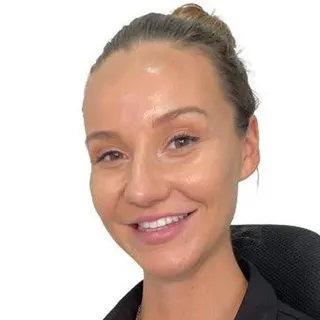
Portrait of Nida Ali

Nida Ali

Science Specialist

Southend on Sea, United Kingdom

£23.00 per hourDBS checkediAccepting enquiriesHigh performing tutor
BiologyChemistryEnglish skillsMathematics+2 more
  • Holds an M.Phil degree in Science and Management.
  • Worked as a Science teacher in secondary school for 4 years abroad.
  • Worked as a cover supervisor in secondary schools in UK for 3 months.

Nida Ali is a Science Specialist and physics tutor providing online tutoring for KS2–KS3 and GCSE Biology, Chemistry and Physics; M.Phil-qualified with 4 years’ secondary teaching experience. Session reports included; homework available free.

Send a quick enquiry from here and the Latimer Tuition team will pass it on to Nida.

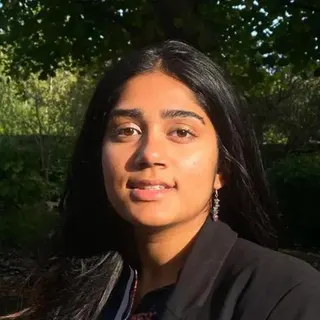
Portrait of Meshwa Patel

Meshwa Patel

Mathematics and Science Specialist

Hertsmere, United Kingdom

£27.00 per hourDBS checkediAccepting enquiries
BiologyChemistryMathematicsPhysics
  • Holds over 2 years' of tutoring experience.
  • Currently studying for her Bachelors of Dental Surgery at the University of Birmingham.
  • Holds A, A, A for Biology, Chemistry, and Mathematics at A-Level.
  • Holds 7 A*s and 2 As at GCSE level.
  • Meshwa offers guidance on medical and dental school applications, including support with personal statements and interview preparation.

Meshwa Patel is a GCSE maths tutor and maths and science tutor for KS2–KS3 and GCSE Biology, Chemistry and Physics. With 2+ years’ experience and Dentistry studies at the University of Birmingham, she also supports medical/dental applications.

Send a quick enquiry from here and the Latimer Tuition team will pass it on to Meshwa.

Portrait of Anika Fahmida

Anika Fahmida

Mathematics, Science, and Geography Specialist

Birmingham

£30.00 per hourDBS checkediAccepting enquiries
11+ (general)BiologyChemistryGeography+3 more
  • Currently studying for her Masters of Pharmacy at the University of Brighton.
  • Holds A-Levels in Mathematics, Biology, and Chemistry.
  • Holds grade 7s (As) for Mathematics, Triple Science, and Geography (amongst others) at GCSE level.
  • Anika has professional experience tutoring KS2/3 to GCSE level cohorts.
  • Anika has received Bronze and Silver awards in the Senior Maths Challenge.

Anika Fahmida is a gcse maths tutor and maths and science tutor for KS2–GCSE, covering Maths plus Biology, Chemistry, Physics and GCSE Geography. A University of Brighton pharmacy Masters student providing patient, clear lessons with session reports and optional homework.

Send a quick enquiry from here and the Latimer Tuition team will pass it on to Anika.

Portrait of Cameron Christie

Cameron Christie

English, Mathematics, and Science Specialist

Aberystwyth

£30.00 per hourDBS checkediAccepting enquiries
BiologyChemistryEnglish LanguageEnglish Literature+5 more
  • Cameron holds over 5 years' of tutoring experience.
  • Holds a 2:1 for his Bachelor’s degree in Sport and Exercise Science from the University of Nottingham.
  • Currently pursuing his Post-Graduate research career at the Institute of Biological, Environmental and Rural Sciences, Aberystwyth University.
  • Holds a Diploma in Sporting Excellence (DiSE) qualification - Level 3 BTEC.
  • Holds As at A-Level.
  • Holds As and A**s at GCSE level.

GCSE maths tutor and English tutor teaching KS2–KS3 and GCSE Maths, English and Science (Biology, Chemistry, Physics). Cameron has 5+ years’ experience, is a University of Nottingham graduate, and provides lesson reports plus optional homework.

Send a quick enquiry from here and the Latimer Tuition team will pass it on to Cameron.

Portrait of Rayyan Rizvi

Rayyan Rizvi

Mathematics Specialist

Plymouth, United Kingdom

£25.00 per hourDBS checkediAccepting enquiries
BiologyChemistryMathematicsPhysics
  • Currently studying for his Bachelors of Science in Medicine & Surgery at the University of Plymouth.
  • Holds 4 years' of experience working as an online tutor.
  • Holds A, A, A for Biology, Chemistry, and Psychology at A-Level.
  • Holds 7 A*s and 3 As at GCSE level.

gcse maths tutor offering online tutoring for 11+, KS2–KS3 and GCSE Maths plus GCSE/iGCSE Biology, Chemistry and Physics; third-year medical student with 4 years’ online experience, calm 1-to-1 support and lesson reports.

Send a quick enquiry from here and the Latimer Tuition team will pass it on to Rayyan.

Portrait of Ahmed Hasson

Ahmed Hasson

Mathematics and Science Specialist

Manchester

£22.00 per hourDBS checkediAccepting enquiries
BiologyChemistryMathematicsPhysics
  • Holds over 2 years' experience working as an online tutor.
  • Currently studying for his Bachelor of Science in Medicine & Surgery at the University of Plymouth.
  • Holds A, A, B for Mathematics, Biology, and Chemistry at A-Level.
  • Holds 7 A*s, 2 As, and 1 B at GCSE level.

Maths and science tutor offering online tutoring for 11+, KS2/KS3 and GCSE in maths, physics, biology and chemistry. Ahmed Hasson has 2+ years’ experience, studies Medicine at the University of Plymouth, and shares lesson reports.

Send a quick enquiry from here and the Latimer Tuition team will pass it on to Ahmed.

What would help your child most?

Begin with something your child finds difficult to explain. A correct answer to a familiar quiz can hide uncertainty about the idea behind it. Equally, a child who hesitates over a written answer may understand more than they can put into words. Use a recent piece of schoolwork or a short conversation to choose a starting goal.

  • One topic has become a sticking point

    Name the idea or task: sorting materials, reading a results table or explaining how an investigation could be fair. Focused support can work towards that specific next step.

  • Science words are getting in the way

    Choose the words needed for the current topic. Practise using them in an explanation, then return to them in another example.

  • Your child needs a steadier learning routine

    Connect tuition to school topics and revisit earlier ideas. Agree what independent work would show that the extra support is helping.

Match science tuition to the school curriculum

Primary science is organised differently across the UK. Share the school’s topic list as well as the year group; the same stage label can mean different things in different nations. In England, schools can sequence science content within a key stage, and academies and private schools need not follow the national curriculum exactly.

England
Key Stage 1 covers Years 1–2; Key Stage 2 covers Years 3–6. Use the child’s current topic and understanding to choose the lesson content.
Wales
Curriculum for Wales includes Science and Technology. Progression steps replace key stages, so discuss the child’s learning rather than assuming an England year-by-year sequence.
Scotland
Curriculum for Excellence generally places Early level up to P1, First level at P2–P4 and Second level at P5–P7. Children can progress at different rates.
Northern Ireland
Science and Technology sits within The World Around Us. Foundation covers Years 1–2, KS1 Years 3–4 and KS2 Years 5–7.

School topics and the thinking behind them

England’s primary science programme includes plants, animals, habitats and materials. At KS2, topics also include forces, electricity, light, sound, and Earth and space. Choose from the topics your child is studying; covering a longer list is not itself a useful lesson goal.

Scientific enquiry develops alongside this knowledge. Younger children observe and sort. Lower KS2 introduces fair tests and simple conclusions; upper KS2 adds more independent decisions about variables, repeated measurements and justified conclusions. A variable is something that can change in an investigation. The examples below illustrate two different starting points.

A younger-child example: is “spoon” a material?

Imagine showing a child a wooden spoon and a metal spoon. Asked what each is made from, the child answers “spoon”. They have named the object, but have not yet separated it from the material.

Separate the questions: “What is it?” and “What is it made from?” Both objects are spoons. One is made from wood and the other from metal. A clearer answer is: “This is a spoon. It is made from wood.”

Then add a metal cup. Ask the child to put together the objects made from the same material. The cup belongs with the metal spoon even though they are different objects. Explaining that choice shows more than repeating the first answer.

This is an illustrative teaching task based on the object/material distinction in England’s early primary curriculum. A child can start by pointing and sorting, then practise saying the full explanation.

A KS2 example: can these results answer the question?

Suppose the question is: “Does the surface affect how far a toy car travels?” In this invented example, car A travels 80 cm on a smooth floor and car B travels 30 cm on carpet. A child concludes, “The smooth surface made it go further.”

The difficulty is that both the car and the surface changed. The results do not show whether the surface alone explains the difference. A better first answer is: “We need to use the same car on both surfaces.”

To improve the comparison, keep the same car, ramp height and release point. Release it without a push, change the flat surface beyond the ramp, and measure the distance from the ramp’s end to where the car stops. Repeating the runs gives more observations to compare.

For practice, use these invented repeat results: smooth surface: 78, 80, 82 cm; carpet: 28, 30, 32 cm. A suitable conclusion is: “In these runs, the car went further on the smooth surface. Every smooth-surface distance was greater than every carpet distance.” That describes this setup without claiming that every car will travel the same distances.

For lower KS2, help the child identify what must stay the same. For upper KS2, ask them to explain why. A follow-up is to propose raising the ramp for only the carpet runs: can the child spot why that would spoil the comparison?


Build a lesson plan around an explanation your child can give

Agree one initial goal and a point to review it. Choose lesson length and frequency with the tutor around your child’s attention, schoolwork and family schedule. There is no fixed timetable that suits every primary science learner.

  1. Start with your child’s own answer

    Let them describe an object, draw an idea or explain a result before stepping in. This gives the tutor something specific to respond to.

  2. Model one piece of reasoning

    Work through the distinction or decision that caused difficulty. Keep the task small enough for the child to attempt it with guidance.

  3. Try a different example between lessons

    Use the metal-cup sorting task or the changed-ramp question above. Ask for a reason, then leave space for your child to think.

  4. Review what has changed

    Look for fewer prompts, more precise words or a better reason. If the idea is secure, agree whether to move on or reduce support; if it is still unclear, adjust the explanation or task.

How online primary science lessons can work

Latimer offers one-to-one tuition online. Microsoft Teams is the default lesson platform, and you can agree another meeting method with the tutor. Before the first lesson, check that your child can hear the tutor and show a drawing or piece of work clearly.

A proposed science session might use a labelled picture, a shared results table or a tutor demonstration. The toy-car example can be discussed from its data without setting up an experiment at home. If practical work is planned, agree the materials and any adult help beforehand, including what is suitable for your child and your space.

Use the introductory meeting to discuss how your child will take part: talking, drawing, sorting objects or writing short explanations. Agree when a parent should help and when to let the child answer independently.

When reading or communication makes science harder to show

Explain any reading, language, sensory or practical-access needs when choosing a tutor. A child learning English as an additional language may understand the science before they can explain it fluently in English. Slow writing alone is also an incomplete picture of understanding.

For the materials task, a child could first point to or group the objects, then say “made from wood” before writing a sentence. Discuss whether pictures, spoken answers, extra thinking time or smaller instructions would help your child attempt the same idea. Keep the scientific challenge appropriate while making the task accessible.

Ask the individual tutor about relevant experience and the adaptations they can offer. Share approaches that already work at school, so tuition starts from what is familiar and useful.

Use the introduction to decide whether the approach fits

Latimer’s tutor-matching request is free. Tutors also offer a free introductory meeting to discuss goals, teaching approach and arrangements before paid lessons. This is normally a conversation rather than a full teaching lesson.

  1. Give the tutor a concrete starting point

    Share the year group, UK nation, current topic and one answer your child finds difficult. Mention whether you want help with a single gap or continuing support.

  2. Discuss how the tutor would teach it

    Ask about primary-age teaching experience and how they would adapt the task. Notice whether the explanation is understandable to your child and leaves room for their questions.

  3. Agree the practical details

    Confirm the rate, lesson length, schedule, any between-lesson task and the feedback you would find useful. Set a review point based on the learning goal.

Choose the next science step

For a child approaching secondary school, a useful focus is explaining choices and using evidence with less prompting. Revisit a familiar investigation and let your child decide what to measure, what to keep the same and how to explain the results. Use that starting point when describing the support you want.

Support and clarity

Frequently asked questions

Straight answers to the questions people ask most often.

Will my child sit a science SATs paper?

In England, Year 6 science is assessed by teachers. The routine national test subjects are English reading, grammar, punctuation and spelling, and mathematics. The Standards and Testing Agency confirms that assessment arrangements remain unchanged for 2026–27. Schools can still use their own science quizzes and investigations. Tell the tutor about the actual school task your child needs help with. Read the official KS2 science assessment guidance.

Does primary science have a greater-depth grade?

England’s national KS2 science teacher-assessment framework has one standard: working at the expected standard. It has no separate greater-depth science category. A school may use its own language for extension work. For a child who understands the topic securely, tuition can focus on a more demanding question or on explaining and evaluating a method independently.

How much does primary science tuition cost?

Each tutor sets their own hourly rate, shown on their profile. Latimer invoices after lessons on a pay-as-you-go basis. Confirm the rate and planned lesson length with the tutor, then consider the total cost of the schedule you are agreeing. You can keep the first goal focused and review the need for further lessons against your child’s understanding.

Can we arrange primary science tuition near us?

Latimer’s service is online-first. An in-person lesson requires a separate agreement with the individual tutor. If meeting locally matters to you, include your location and preferred arrangement in your enquiry so suitability can be discussed.

Can science tuition support home education?

Describe the science topics and skills you want to work on, your child’s current understanding and how you organise learning at home. Discuss the tutor’s experience with home education and agree the part they would cover. A school worksheet is not needed to start that conversation; a drawing, an observation or a question your child has asked can give a useful starting point.

When might a free resource be enough?

If your child understands the idea and needs another chance to practise, start with a relevant school resource or our working scientifically guide. Ask for an explanation afterwards. If the same confusion persists, a tutor can work through that particular difficulty. Use what your child can do with the idea to judge the next step.

Can lessons help with science homework?

Yes: discuss the underlying idea or method the homework is testing. A useful approach is to model a similar example, then let your child attempt their own work and explain the answer. Share the school’s instructions so extra support stays connected to the task and builds independence.

Further information

Useful links and resources

Related tutor pages

Explore related tuition options and guidance for choosing the right support.