One-to-one French tuition

Find qualified French tutors

Choose a tutor who can explain French clearly and teach towards your goal, from a first conversation to school exams. Compare teaching backgrounds, or tell us what you need in a free matching request.

  • One-to-one tuition
  • Pay as you go
  • Direct tutor contact
A useful match brings together a relevant teaching qualification, French subject knowledge and an approach the learner can follow. Start with the work you want help with, then check the tutor’s named qualification and experience at that level.

The form controls become available when the enquiry form has loaded.

Qualified French Tutors tuition enquiry

Tell us what you know, skip anything you’re unsure about, and add a short description if you skip both subject and level.

  1. Tutoring brief
  2. Contact details

2 questions remaining

Tutoring brief

What level is the tuition for?

Choose a level

Choose a suggestion or type your own answer. You can skip this if you’re unsure.

This form works best for one learner at one level and up to six subjects. If your circumstances are more complicated, email us at Contact@LatimerTuition.com so you can explain everything properly.

How one-to-one tuition can help

  • Understand why a French sentence needs correcting, then use the pattern yourself
  • Build spoken answers with practice at a manageable pace
  • Focus exam preparation on the learner’s own course and assessed tasks

Available tutors

Compare French tutors

6 tutor profiles selected

Read each profile for the tutor’s teaching background and approach. If a particular qualification or course matters to you, include it in your enquiry.

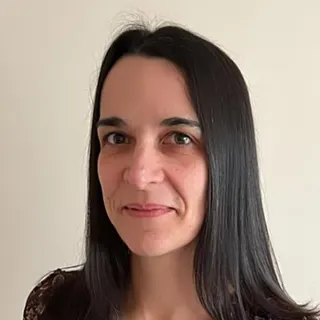
Portrait of Lucia Wood-Bonelli

Lucia Wood-Bonelli

Qualified French and Spanish Teacher

Sheffield

£35.00 per hourDBS checkediAccepting enquiriesQualified teacher
FrenchSpanish
  • Lucia is an approved examiner for Edexcel Spanish GCSE.
  • Holds a PGCE in Modern Foreign Languages with QTS from Sheffield Hallam University.
  • Holds a 2:1 in Modern Languages and Translation from the University of Leicester.
  • Holds over 1 year of online private tutoring experience.
  • Holds 3 A-Levels, and 12 GCSEs.

Lucia is a qualified Spanish teacher for GCSE and A-Level learners, and an approved Edexcel Spanish GCSE examiner with three years of teaching experience.

Send a quick enquiry from here and the Latimer Tuition team will pass it on to Lucia.

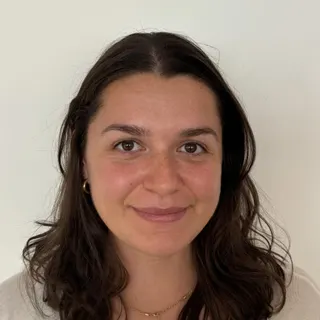
Portrait of Silvia Vescu

Silvia Vescu

Qualified Humanities & Business Teacher

Montrose, United Kingdom

£45.00 per hourDBS checkediAccepting enquiriesQualified teacher
Business StudiesCitizenshipEconomicsEnglish Language+13 more
  • Holds a PGCE from University College London.
  • Holds an LLB (Hons) in Law, 2:1, from King's College London, and is a qualified lawyer.
  • Currently teaches A-Level and GCSE Economics and Business, alongside Sociology, Politics, Law, English Language and English Literature.
  • Has delivered hundreds of one-to-one online lessons and uses a Socratic approach, tailored to each exam board and specification.

Silvia Vescu is an economics tutor and law tutor for GCSE/A-Level, PGCE-trained at UCL with an LLB from King’s. She offers online tutoring with Socratic, exam-board tailored 1:1 lessons plus session reports.

Send a quick enquiry from here and the Latimer Tuition team will pass it on to Silvia.

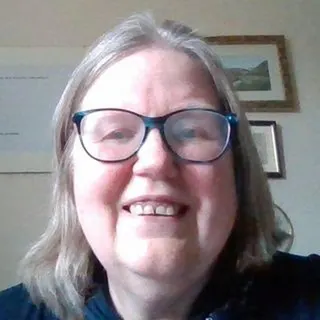
Portrait of Sara Dellapiana

Sara Dellapiana

Qualified French, Italian, and Spanish Teacher

Crewe

£32.00 per hourDBS checkediAccepting enquiriesQualified teacher
FrenchItalianSpanish
  • Holds a Postgraduate Certificate in Education (PGCE) with Qualified Teacher Status (QTS) in Modern Foreign Languages from Manchester Metropolitan University.
  • Holds a 1st (110/110 with distinction) for her Bachelors of Modern Foreign Languages Degree in Spanish and English Languages and Literature from the University of Bergamo.
  • Has over 16 years’ of experience teaching Modern Foreign Languages in UK schools from KS1/2/3, to GCSE level.
  • Sara has been teaching Italian to adults both in small classes and One-2-One for over 20 years.

Sara Dellapiana is a qualified French tutor, Spanish tutor and Italian tutor with PGCE (QTS) in MFL and 16+ years teaching KS2–GCSE in UK schools; a native Italian speaker offering tailored Italian lessons for adults and all levels.

Send a quick enquiry from here and the Latimer Tuition team will pass it on to Sara.

Portrait of Shelley Currie

Shelley Currie

Qualified French and Spanish Teacher

Pocklington, United Kingdom

£42.00 per hourDBS checkediAccepting enquiriesQualified teacher
FrenchSpanish
  • She has over 10 years experience working in UK Secondary Education and excellent knowledge of the KS3, and KS4 curriculum for Languages.
  • Holds a Postgraduate Certificate in Education (PGCE), (with Qualified Teacher Status (QTS)) for MFL French and Spanish from the University of Hull.
  • Holds a TEFL qualification and has experience of teaching English in Spain to students of all ages, including preparing them for Cambridge examinations.
  • Shelley also has extensive experience working for the UK examination boards, making her perfect to assist students for UK GCSE examinations, specifically with their exam technique.
  • Holds a Bachelors Joint Honors degree in Spanish, along with 3 A-Levels in Spanish, French and Business.

Shelley Currie is a French tutor and Spanish tutor for KS2, KS3 and GCSE. PGCE/QTS-qualified with 10+ years in UK secondary education and AQA/Edexcel GCSE marking experience, she builds confidence and sharpens exam technique.

Send a quick enquiry from here and the Latimer Tuition team will pass it on to Shelley.

Portrait of Owen Pocock

Owen Pocock

Qualified French Teacher

Cardiff, United Kingdom

£30.00 per hourDBS checkediAccepting enquiriesQualified teacher
FrenchWelsh
  • Over 4 years' of teaching experience as a school teacher, and as a private tutor.
  • Has also previously worked as a Teaching Assistant, supporting KS3 and GCSE students with additional learning needs.
  • Holds a Bachelor of Arts in French from Cardiff University.
  • Combines step-by-step guidance with regular testing to develop language proficiency and prepare students thoroughly for exams.

Qualified French tutor with 4+ years' experience as a school teacher and private tutor, with a BA in French (Cardiff) and experience living in France. Supports KS3-GCSE (AQA, Edexcel, WJEC/Eduqas) with step-by-step lessons, past papers and lesson reports.

Send a quick enquiry from here and the Latimer Tuition team will pass it on to Owen.

Portrait of Alex Norval

Alex Norval

Qualified French, German, and Spanish Teacher

Llandysul

£40.00 per hourDBS checkediAccepting enquiriesQualified teacher
FrenchGermanSpanish
  • Holds a Postgraduate Certificate in Education (PGCE), with Qualified Teacher Status (QTS) in Modern Foreign Languages.
  • More than six years of experience as a full-time teacher.
  • Tutored Private Online One-2-One students while she was a full-time teacher.
  • Currently shifting her focus from teaching in UK secondary schools, to tutoring full-time.
  • Able to assist KS2/3, GCSE, and AS/A-Level cohorts.
  • Experience as an examiner within the AQA exam board.
  • Holds a Bachelor of Arts in French, German, and Spanish from the University of Exeter.

Alex Norval is a qualified French tutor, German tutor and Spanish tutor (PGCE, QTS) with 6+ years' UK secondary teaching and online 1-to-1 experience, including AQA GCSE German examining. Supports KS2/3, GCSE and AS/A-Level; lesson reports and optional homework.

Send a quick enquiry from here and the Latimer Tuition team will pass it on to Alex.

Which teaching qualification matters to you?

Ask for the full qualification or professional status, which organisation awarded it and in which country, and the subject and age range the tutor trained to teach. A qualification is one part of the decision: you also need someone who can address the learner’s French difficulties.

For teachers in England, qualified teacher status (QTS) and a postgraduate certificate in education (PGCE) are different. Teacher-training courses can award QTS alone, QTS with a PGCE, or a PGCE without QTS. If QTS is important to you, confirm it separately. The Department for Education’s PGCE guidance explains these routes.

Professional teaching status
For an England-trained schoolteacher, ask about QTS and request confirmation of the stated status. For someone who trained elsewhere, ask about their own qualification and recognition; use the relevant country’s system.
French subject background
Ask what French or modern foreign languages study and teaching experience the tutor has. If a profile lists a degree, check its French content and ask separately about teacher training.
Experience with your learner’s goal
Match the background to the task: early French learning, the named school qualification, or adult conversation. Ask how the tutor would tackle a recent piece of work and explain the next practice task.

What a clear French explanation can look like

Here is an illustrative teaching example for a learner starting to describe completed events in the past. The intended message is “Yesterday I watched a film.” The learner writes “Hier, je regarde un film.” They have remembered hier (“yesterday”), but je regarde is the present-tense form (“I watch” or “I am watching”).

For this task, a suitable correction is “Hier, j’ai regardé un film.” This means “Yesterday I watched a film.” In this use of the perfect tense, the verb has two parts: j’ai, the “I” form of the helping verb avoir, and regardé, the past participle of regarder (“to watch”). For this regular -er verb, replace -er with to make the past participle. Adding hier alone does not change the verb’s tense.

A useful next step is to apply that pattern to a new message. Now use jouer (“to play”) in the phrase jouer au football (“to play football”). Try “Yesterday I played football.” The answer is “Hier, j’ai joué au football.” Both parts, j’ai and joué, are needed. Cover the model and try the new sentence before checking it.

The teaching value is in explaining the choice and checking whether the learner can make a new sentence. A beginner may need to hear and repeat the model before writing it; a more experienced learner can move on to recalling both verb parts without prompts. This is a worked language example, not a model answer for a particular exam. Other French verbs can form the past differently.

The Open University’s explanation of the French perfect tense gives further examples of this two-part form.

Match the teaching to your French goal

Bring a concrete goal and, where possible, something the learner has tried already. The same teaching qualification does not answer every question about course experience.

For the named exam tasks, see AQA’s GCSE French 8652 assessment guidance and A-level French 7652 assessment guidance. Other courses need their own materials.

  • Beginners and returning adults

    Choose a small speaking task, such as introducing yourself or asking about someone’s weekend. Start with a model, practise the reply, then change one detail. A useful sign of progress is responding to a new prompt without reading the whole answer.

  • GCSE French

    Give the tutor the exam board, specification and tier. For AQA GCSE French 8652, preparation includes dictation and reading aloud, alongside role-play and photo-card discussion. For dictation, compare what was heard with what was written: was the difficulty recognising a sound, remembering a word, or choosing a spelling? That identifies what to practise next.

  • A-level French

    Name the set book or film as well as the board. AQA A-level French 7652 includes critical essays on studied works. If a paragraph only retells events, choose a detail from the work and explain how it supports the paragraph’s argument. The tutor needs familiarity with the actual work to judge that reasoning and the French used to express it.

Use the introduction to agree a useful starting point

Latimer tutors offer a free introductory meeting to discuss goals, teaching approach and arrangements. It is normally a conversation before paid lessons, rather than a full teaching lesson. Use it to agree what the first lesson should establish.

  1. Show where the difficulty appears

    Bring a short paragraph, a marked exercise or an example of a question the learner finds hard to answer aloud. Say whether they understand the correction afterwards or still need the reasoning explained.

  2. Agree how explanations will work

    If speaking feels daunting, request time to rehearse before answering. If written instructions are hard to follow, ask for one instruction at a time and a visible model. Discuss any learning needs and the adaptations the individual tutor can offer.

  3. Keep a before-and-after comparison

    Save the starting task and return to a comparable new one after an agreed period. Look for a specific change: choosing the past tense independently, needing fewer prompts in conversation, or supporting an essay point with evidence. Use that comparison to choose the next priority.

Arrange lessons around speaking practice and your budget

Latimer’s service is built around online one-to-one tuition. Microsoft Teams is the default lesson platform; you and the tutor can agree another option. Before starting French lessons, check that you can hear each other clearly and share the short text or exercise you want to discuss. Use the introductory meeting to try the setup and explain any difficulty hearing speech or reading shared material.

Each tutor sets their own hourly rate, shown on their profile. Latimer invoices after lessons on a pay-as-you-go basis. Agree the lesson length and what preparation, resources or feedback are included before booking. Comparing the cost of an agreed lesson and the work it will cover is more useful than assuming a qualification automatically makes a higher rate worthwhile.

For the wider booking and payment process, see how Latimer tuition works.

Tell us what you need from a French tutor

You can request a tutor match free of charge. Include the learner’s starting point, the qualification you want the tutor to hold, and the goal for lessons. For example: “GCSE French; needs help turning ideas into spoken answers; looking for a teacher with experience of our board.” Add the board, tier, preferred times and budget if you know them.

Support and clarity

Frequently asked questions

Straight answers to the questions people ask most often.

Do I need to know my French level before enquiring?

No. Describe what you can do and what you want to do next: understand short conversations, speak on holiday, keep up with schoolwork or prepare for an exam. Bring a short example if you have one. For a school course, send the name shown on the course materials so the tutor can establish the right starting point.

How often should French lessons take place?

Agree a schedule that leaves time to use the French between lessons. Choose a manageable task, such as recalling the two parts of a past-tense sentence or answering a familiar spoken question, and review what the learner can do independently before adding more work.

What should I ask about work between lessons?

Agree whether the tutor will set practice, what feedback they will give and whether it is included in the lesson arrangement. Ask for a task with a clear way to check it: a short audio response, corrected sentences or a paragraph with one argument. Tell the tutor how much time is realistically available.

Can French lessons take place in person?

Latimer is an online-first service. An in-person lesson depends on a separate arrangement with the individual tutor. If meeting locally is essential, give your location and travel limits in the enquiry and confirm the arrangement before booking.

Should an A-level tutor help write my independent research presentation?

For AQA A-level French 7652, teachers may give general research guidance and help with the project title. They must not give specific language advice for the assessed presentation and discussion or feedback on preparatory drafts. For an oral practice presentation, they may only say whether it exceeds two minutes. Discuss these boundaries with your school. Use tuition for general language and analytical skills while keeping assessed project work your own. See AQA’s independent research guidance.

Further information

Useful links and resources

Related tutor pages

Explore related tuition options and guidance for choosing the right support.