One-to-one maths tuition

Find qualified maths tutors

Choose a tutor whose teaching qualification, maths experience and explanations fit the learner’s next step, from understanding fractions to tackling exam problems.

  • One-to-one tuition
  • Pay as you go
  • Direct tutor contact
If Qualified Teacher Status (QTS) is essential to your choice, say so in your enquiry and confirm the tutor’s named qualification and where it was awarded. Then look at their experience teaching the learner’s age, maths course and particular difficulties.

The form controls become available when the enquiry form has loaded.

Qualified Maths Tutors tuition enquiry

Tell us what you know, skip anything you’re unsure about, and add a short description if you skip both subject and level.

  1. Tutoring brief
  2. Contact details

2 questions remaining

Tutoring brief

What level is the tuition for?

Choose a level

Choose a suggestion or type your own answer. You can skip this if you’re unsure.

This form works best for one learner at one level and up to six subjects. If your circumstances are more complicated, email us at Contact@LatimerTuition.com so you can explain everything properly.

How one-to-one tuition can help

  • Understanding why a method works, from fraction diagrams to algebra
  • Finding where an error begins and practising the missing step
  • Explaining solutions independently in classwork and exam questions

Available tutors

Compare maths tutor profiles

6 tutor profiles selected

Look at teaching qualifications, maths levels taught and the tutor’s approach to explaining difficult topics. Use the introductory conversation to discuss the work the learner finds hardest.

Portrait of Daniel Denton

Daniel Denton

5.0

Qualified Mathematics Teacher

York, United Kingdom

£38.00 per hourDBS checkediAccepting enquiriesQualified teacherHigh performing tutor
Further MathsMathematicsPure Maths
  • Holds a PGCE for his Bachelors of Education in Mathematics at the University of York.
  • Holds a Bachelors of Science in Mathematics at the University of York.
  • Qualified UK state secondary school teacher for Mathematics.
  • Transitioned to Latimer Tuition for a work-at-home role from UK secondary schools in 2022.
  • Holds A*, A* for Mathematics and Further Mathematics at A-Level.
  • Holds A*, A*, A*, A* for Mathematics, Pure Mathematics (Extra), Statistics (Extra) and Further Mathematics at GCSE level.

Daniel Denton is a qualified UK secondary Maths teacher (PGCE, University of York) and experienced private tutor; a gcse maths tutor and a level maths tutor from KS3 to Further Maths, with lesson reports and optional free homework.

Send a quick enquiry from here and the Latimer Tuition team will pass it on to Daniel.

Portrait of Ashvin Ratnarajah

Ashvin Ratnarajah

Qualified Mathematics Teacher

Harrow, United Kingdom

£35.00 per hourDBS checkediAccepting enquiriesQualified teacher
Further MathsMathematics
  • Holds Qualified Teacher Status (QTS) as a Secondary Mathematics teacher.
  • Holds a PGCE in Secondary Mathematics from London Metropolitan University.
  • Holds a BSc in Mathematics from Newcastle University.
  • Currently studying for an MSc in Mathematics at the University of Liverpool.
  • Has experience teaching Mathematics across Key Stage 3, GCSE, and A-Level.
  • Holds A, A for Mathematics and Further Mathematics at A-Level.
  • Holds Grade 7 in GCSE Mathematics and Grade A in GCSE Further Mathematics.

Ashvin Ratnarajah is a qualified Secondary Mathematics teacher supporting KS3, GCSE and A-Level learners with structured lessons that identify knowledge gaps and build confidence.

Send a quick enquiry from here and the Latimer Tuition team will pass it on to Ashvin.

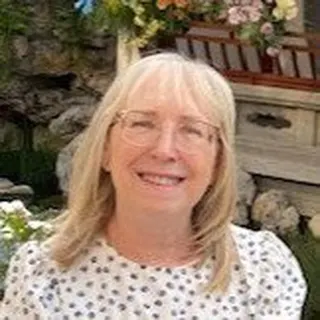
Portrait of Mandy McCarthy

Mandy McCarthy

Qualified Mathematics, Business, and Accounting Teacher

COVENTRY

£35.00 per hourDBS checkediAccepting enquiriesQualified teacher
11+ (general)ACAACCAAccountancy+5 more
  • Has 6 years' experience of teaching online.
  • Mandy has over 18 years' experience of teaching Maths KS2, KS3, and GCSE students.
  • Holds a Masters Degree in Professional Accounting from the University of London.
  • Experience teaching Accounting qualifications such as ACCA, AAT, ICAEW and degree level.
  • Has a DTLLS teaching qualification from the University of Warwick.
  • Mandy has taught in secondary schools, FE colleges and universities.

Mandy McCarthy is a qualified accounting and maths teacher who supports learners up to GCSE Maths, alongside accounting and business degree modules, with personalised lessons and clear session reports.

Send a quick enquiry from here and the Latimer Tuition team will pass it on to Mandy.

Portrait of Smriti Rathi

Smriti Rathi

4.5

Qualified Mathematics, Accounting and Business Teacher

Stockton-on-tees

£35.00 per hourDBS checkediAccepting enquiriesQualified teacher
ACAACCAAccountancyAccounting+3 more
  • Holds a Postgraduate Certificate in Education in Mathematics with Qualified Teacher Status (PGCE with QTS) from Sheffield Hallam University.
  • Currently teaching Mathematics, Accounting and Business to KS2, KS3 and GCSE students in UK Secondary Schools.
  • Holds a First-Class Bachelor’s Degree in Commerce from University of Delhi.
  • Holds a First-Class Masters’ Degree (Specialisation in Accounting and Finance) from University of Delhi.
  • Qualified Chartered Accountant holding Fellowship of Institute of Chartered Accountants of India.
  • Over 12 years of school teaching experience.

Smriti Rathi is a qualified Maths teacher with QTS, supporting learners from KS2 to GCSE through tailored, interactive lessons that build confidence and responsible study habits.

Send a quick enquiry from here and the Latimer Tuition team will pass it on to Smriti.

Portrait of Maryam Albasri

Maryam Albasri

Qualified Mathematics Teacher

Mirfield, United Kingdom

£40.00 per hourDBS checkediAccepting enquiriesQualified teacher
Mathematics
  • Holds a PGCE with QTS from the University of London.
  • Over 10 years of experience teaching Mathematics to KS3, GCSE and A-Level cohorts in the classroom.
  • Holds over 5 years of online One-2-One tuition experience.
  • Currently part time teaching in a UK secondary school and fills the rest of her time with One-2-One tuition.
  • Also holds a Bachelors in Middle Eastern Studies.

Maryam Albasri is a qualified GCSE maths tutor and A Level maths tutor with a PGCE and QTS (University of London), 12 years classroom teaching and 5+ years of online tutoring, with session reports and optional homework.

Send a quick enquiry from here and the Latimer Tuition team will pass it on to Maryam.

Portrait of Rifna Irshath Mohamed

Rifna Irshath Mohamed

5.0

Qualified Mathematics Teacher

Swansea, United Kingdom

£44.00 per hourDBS checkediAccepting enquiriesQualified teacher
English LanguageMathematicsNumeracy
  • Holds QTS (Qualified Teacher Status) in Wales, UK.
  • Rifna has over 17 years' of experience teaching Maths across secondary schools in the UK.
  • Specialises in supporting students with SEND and ALN, using tailored lesson plans to meet individual needs.
  • Holds a Bacherlors of Arts in English with TESOL, a Level 7 Diploma in Educational Management and Leadership, and a Level 5 Diploma in Education and Training.

Rifna is a qualified Mathematics teacher with QTS (Wales) and 17+ years’ experience in UK secondary schools. A gcse maths tutor for 11+, KS2–3 and Years 7–11, she specialises in SEND/ALN support with tailored lesson plans, session reports and optional homework.

Send a quick enquiry from here and the Latimer Tuition team will pass it on to Rifna.

Understand the qualification behind the profile

Compare the exact award or professional status, the maths the tutor has taught, and how they explain it. These answer different questions about fit. The QTS and PGCE distinctions below follow guidance for England. For qualifications awarded elsewhere, ask which country and institution awarded them and discuss their relevance to the learner’s course. Ask for evidence of the qualification that matters to you.

Maths study and relevant teaching experience
Ask what maths the tutor has studied and how they have used that knowledge in teaching. A subject degree, school-teaching experience and experience helping an individual learner describe different parts of their background. Connect each to your goal: primary number sense, GCSE problem-solving or A-level reasoning.

What a clear maths explanation looks like

These constructed examples show the kind of reasoning to look for in teaching. They illustrate content from England’s primary and KS3 maths curriculum, AQA GCSE Maths and AQA A-level Maths. Use the learner’s own course when agreeing exam preparation. These are illustrations, not accounts of a Latimer lesson.

Primary fractions: keep the pieces the same size

For 1/3 + 1/4, a learner might add the top and bottom numbers to get 2/7. The problem is that thirds and quarters are different-sized pieces. Draw two equal-length bars, divide each into twelve equal parts, then show that one third covers four parts and one quarter covers three. Now 4/12 + 3/12 = 7/12: seven pieces, each one twelfth of the whole. A useful follow-up is 1/2 + 1/3. The learner can draw sixths and explain why 3/6 + 2/6 = 5/6.

KS3 algebra: unpack a bracket without losing a term

In 3(x + 4) = 21, the bracket means three lots of the whole quantity x + 4. Dividing both sides by three gives x + 4 = 7, then subtracting four gives x = 3. Substituting it back checks the answer: 3 × (3 + 4) = 21. If expanding first, both terms must be multiplied: 3x + 12, not 3x + 4. The useful question is why those two routes give the same answer.

GCSE percentages: identify what counts as 100%

A price is £92 after a 15% increase. Subtracting 15% of £92 gives £78.20, but that takes the percentage of the new price. The original price is 100%; the new price is 115%. If p is the original price, 1.15p = 92, so p = £80. Check forwards: 15% of £80 is £12, giving £92. For a follow-up, suppose a price is £72 after a 10% discount. Here £72 represents 90% of the original price, so 0.9p = 72 gives p = £80. The learner should be able to explain why the multiplier changed.

A-level calculus: connect a derivative to a tangent

For the curve y = x² + 3x, the derivative dy/dx = 2x + 3 gives the gradient at each value of x. At x = 2, the gradient is 7 and the point on the curve is (2, 10). A tangent line needs both pieces of information: y − 10 = 7(x − 2), giving y = 7x − 4. Stopping at “7” finds the gradient but does not answer a question asking for the tangent’s equation. Asking the learner to explain the roles of the point and gradient reveals whether the method makes sense.


Use the first conversations and lessons to assess fit

Bring a recent piece of maths work with the learner’s attempt still visible. An incorrect line can be more useful than a list of topic names because it gives the tutor something specific to discuss.

  1. Name the course and the difficulty

    Give the year group or qualification, the UK nation and, for an exam course, its board and specification. Include the GCSE tier if relevant. Explain the difficulty in ordinary words: “They can follow the example but cannot start a new question” is more useful than “They need confidence”.

  2. Discuss a teaching approach

    Use the free introductory meeting to ask how the tutor would approach that difficulty and which similar maths courses they have taught. Discuss the learner’s pace, how they prefer to share working and any support that already helps at school. The introduction is a conversation about fit and arrangements, rather than a full free teaching lesson.

  3. Check what the learner can do independently

    Agree a small first target, such as choosing a common denominator or setting up a percentage equation. After explanation and guided practice, try a similar question without prompts. At the next lesson, revisit it with different numbers and ask the learner to explain the method. This gives you something concrete to discuss when reviewing progress.

Agree the cost, format and practice before booking

Latimer offers online-first one-to-one tuition, with tutor-set hourly rates and pay-as-you-go billing after lessons. A free matching request can help you explain the qualification and teaching experience you are seeking.

The actual session cost
Check the rate on the tutor’s profile and agree the lesson length and total charge. Ask what feedback or practice materials are included and confirm cancellation or rescheduling terms before committing to a slot.
Working together online
Microsoft Teams is the default lesson platform; another can be agreed with the tutor. Check how the learner will show handwritten working, such as holding a page to the camera or sharing a clear photograph. Have paper, a pen and any calculator required for the chosen task ready.
A manageable routine
Agree a recurring time and a realistic amount of practice between lessons. Ask for a short task tied to the difficulty you are working on, and keep the attempt so the tutor can see where help is needed. If you want in-person lessons, discuss an individual arrangement with the tutor.

Support and clarity

Frequently asked questions

Straight answers to the questions people ask most often.

Does a teaching qualification cover every maths level or exam board?

Check the course experience separately. A family seeking help with primary fractions has different needs from a student working on A-level calculus. For an exam course, give the full qualification and board, and ask about teaching that specification. For example, AQA A-level Maths includes pure maths, statistics and mechanics, so a calculus example checks only part of the course. If the learner is taking Further Maths, name it explicitly so the discussion covers its content rather than assuming A-level Maths experience is enough.

What if the learner is anxious about maths or needs a slower pace?

Explain what happens during maths work and what already helps: reading the question together, using a diagram, allowing more thinking time or writing one step at a time. Ask how the tutor would adapt an ordinary lesson around those needs. Where specialist experience matters, discuss it explicitly rather than inferring it from a teaching qualification. Agree a small starting task the learner can attempt without being rushed.

How often should maths lessons take place?

Choose a schedule around the starting point, goal, deadline, budget and time for practice. You can agree a short initial period, then review the learner’s unaided work before deciding whether the frequency needs to change. For an approaching exam, bring the date and school feedback so the tutor can help prioritise topics within the time available.

Can an adult use a qualified maths tutor?

Yes. Start with the actual goal, such as revisiting fractions, preparing for a named qualification or understanding calculations used at work. Ask about teaching adult learners and bring an example of the maths involved. If an employer, college or training provider requires a qualification or assessment, check its exact requirement before choosing the preparation. See the adult maths tuition page for that route.

I searched for a QTS maths skills-test tutor. Is that test still required?

In England, the former teacher literacy and numeracy skills tests were replaced from 1 April 2020. Current teacher-training criteria place responsibility for assuring fundamental English and maths with the training provider. If you need numeracy support for teacher training, ask your chosen provider what it requires and bring that information to the tutor. Provider-specific entry or equivalence assessments are a separate question from the former national skills tests.

Related tutor pages

Explore related tuition options and guidance for choosing the right support.