One-to-one Spanish tuition

Find qualified Spanish tutors

Choose Spanish support by teaching credentials, experience at your level and how clearly a tutor explains the language.

  • One-to-one tuition
  • Pay as you go
  • Direct tutor contact
If you want a qualified Spanish tutor, check the named teaching qualification or professional status alongside their Spanish knowledge and experience with learners like you. A parent seeking school support and an adult returning to conversation may need different teaching experience. Start with the individual profile, then explain the goal you want lessons to serve.

The form controls become available when the enquiry form has loaded.

Qualified Spanish Tutors tuition enquiry

Tell us what you know, skip anything you’re unsure about, and add a short description if you skip both subject and level.

  1. Tutoring brief
  2. Contact details

2 questions remaining

Tutoring brief

What level is the tuition for?

Choose a level

Choose a suggestion or type your own answer. You can skip this if you’re unsure.

This form works best for one learner at one level and up to six subjects. If your circumstances are more complicated, email us at Contact@LatimerTuition.com so you can explain everything properly.

How one-to-one tuition can help

  • You want to understand which teaching qualification a Spanish tutor holds.
  • Your child recognises model answers but struggles to build their own Spanish sentences.
  • You need experience of a particular course, or patient support returning to Spanish.

Available tutors

Compare Spanish tutors and teaching backgrounds

6 tutor profiles selected

Read the named qualifications and relevant Spanish teaching experience on each profile. Discuss the learner’s course or personal goal before choosing.

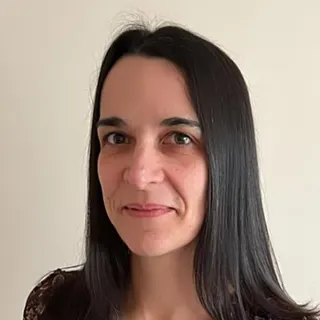
Portrait of Ana Ramirez Centeno

Ana Ramirez Centeno

Qualified Spanish & TEFL Teacher

London, United Kingdom

£28.00 per hourDBS checkediAccepting enquiriesQualified teacher
SpanishTEFL: Teaching English as a Foreign Language
  • Currently teaching Spanish to KS3, GCSE, and A-Level students in UK Secondary Schools.
  • Experience with SEN students, providing both 1-1, and in-class Spanish teaching.
  • Works with private students on a One-2-One basis at all Spanish levels.
  • Ana nurtured students struggling to learn a foreign language and tailored teaching to enhance competency.

Ana is a qualified Spanish teacher with a PGCE in Modern Foreign Languages, supporting learners from KS1 to KS5 and adults through tailored, creative teaching.

Send a quick enquiry from here and the Latimer Tuition team will pass it on to Ana.

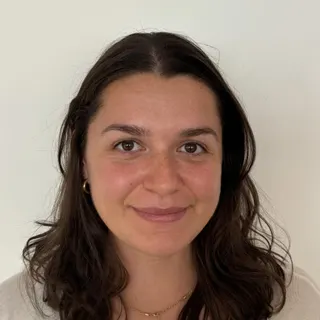
Portrait of Lucia Wood-Bonelli

Lucia Wood-Bonelli

Qualified French and Spanish Teacher

Sheffield

£35.00 per hourDBS checkediAccepting enquiriesQualified teacher
FrenchSpanish
  • Lucia is an approved examiner for Edexcel Spanish GCSE.
  • Holds a PGCE in Modern Foreign Languages with QTS from Sheffield Hallam University.
  • Holds a 2:1 in Modern Languages and Translation from the University of Leicester.
  • Holds over 1 year of online private tutoring experience.
  • Holds 3 A-Levels, and 12 GCSEs.

Lucia is a qualified Spanish teacher for GCSE and A-Level learners, and an approved Edexcel Spanish GCSE examiner with three years of teaching experience.

Send a quick enquiry from here and the Latimer Tuition team will pass it on to Lucia.

Portrait of Silvia Vescu

Silvia Vescu

Qualified Humanities & Business Teacher

Montrose, United Kingdom

£45.00 per hourDBS checkediAccepting enquiriesQualified teacher
Business StudiesCitizenshipEconomicsEnglish Language+13 more
  • Holds a PGCE from University College London.
  • Holds an LLB (Hons) in Law, 2:1, from King's College London, and is a qualified lawyer.
  • Currently teaches A-Level and GCSE Economics and Business, alongside Sociology, Politics, Law, English Language and English Literature.
  • Has delivered hundreds of one-to-one online lessons and uses a Socratic approach, tailored to each exam board and specification.

Silvia Vescu is an economics tutor and law tutor for GCSE/A-Level, PGCE-trained at UCL with an LLB from King’s. She offers online tutoring with Socratic, exam-board tailored 1:1 lessons plus session reports.

Send a quick enquiry from here and the Latimer Tuition team will pass it on to Silvia.

Portrait of Sara Dellapiana

Sara Dellapiana

Qualified French, Italian, and Spanish Teacher

Crewe

£32.00 per hourDBS checkediAccepting enquiriesQualified teacher
FrenchItalianSpanish
  • Holds a Postgraduate Certificate in Education (PGCE) with Qualified Teacher Status (QTS) in Modern Foreign Languages from Manchester Metropolitan University.
  • Holds a 1st (110/110 with distinction) for her Bachelors of Modern Foreign Languages Degree in Spanish and English Languages and Literature from the University of Bergamo.
  • Has over 16 years’ of experience teaching Modern Foreign Languages in UK schools from KS1/2/3, to GCSE level.
  • Sara has been teaching Italian to adults both in small classes and One-2-One for over 20 years.

Sara Dellapiana is a qualified French tutor, Spanish tutor and Italian tutor with PGCE (QTS) in MFL and 16+ years teaching KS2–GCSE in UK schools; a native Italian speaker offering tailored Italian lessons for adults and all levels.

Send a quick enquiry from here and the Latimer Tuition team will pass it on to Sara.

Portrait of Shelley Currie

Shelley Currie

Qualified French and Spanish Teacher

Pocklington, United Kingdom

£42.00 per hourDBS checkediAccepting enquiriesQualified teacher
FrenchSpanish
  • She has over 10 years experience working in UK Secondary Education and excellent knowledge of the KS3, and KS4 curriculum for Languages.
  • Holds a Postgraduate Certificate in Education (PGCE), (with Qualified Teacher Status (QTS)) for MFL French and Spanish from the University of Hull.
  • Holds a TEFL qualification and has experience of teaching English in Spain to students of all ages, including preparing them for Cambridge examinations.
  • Shelley also has extensive experience working for the UK examination boards, making her perfect to assist students for UK GCSE examinations, specifically with their exam technique.
  • Holds a Bachelors Joint Honors degree in Spanish, along with 3 A-Levels in Spanish, French and Business.

Shelley Currie is a French tutor and Spanish tutor for KS2, KS3 and GCSE. PGCE/QTS-qualified with 10+ years in UK secondary education and AQA/Edexcel GCSE marking experience, she builds confidence and sharpens exam technique.

Send a quick enquiry from here and the Latimer Tuition team will pass it on to Shelley.

Portrait of Alex Norval

Alex Norval

Qualified French, German, and Spanish Teacher

Llandysul

£40.00 per hourDBS checkediAccepting enquiriesQualified teacher
FrenchGermanSpanish
  • Holds a Postgraduate Certificate in Education (PGCE), with Qualified Teacher Status (QTS) in Modern Foreign Languages.
  • More than six years of experience as a full-time teacher.
  • Tutored Private Online One-2-One students while she was a full-time teacher.
  • Currently shifting her focus from teaching in UK secondary schools, to tutoring full-time.
  • Able to assist KS2/3, GCSE, and AS/A-Level cohorts.
  • Experience as an examiner within the AQA exam board.
  • Holds a Bachelor of Arts in French, German, and Spanish from the University of Exeter.

Alex Norval is a qualified French tutor, German tutor and Spanish tutor (PGCE, QTS) with 6+ years' UK secondary teaching and online 1-to-1 experience, including AQA GCSE German examining. Supports KS2/3, GCSE and AS/A-Level; lesson reports and optional homework.

Send a quick enquiry from here and the Latimer Tuition team will pass it on to Alex.

What does a Spanish tutor’s qualification show?

Ask for the exact credential, who awarded it and the country it relates to. A teaching qualification, professional status and evidence of Spanish proficiency answer different questions. If QTS is a requirement for your family, ask about QTS specifically rather than relying on the word ‘qualified’.

The QTS explanation below concerns England. For teaching credentials from elsewhere in the UK or overseas, ask which qualification or professional body is involved and how the tutor’s experience relates to your learner’s course.

Qualified Teacher Status (QTS), England
QTS is a professional status for school teaching in England. It is separate from the tutor’s particular Spanish teaching experience: ask which ages and courses they have taught and how recently.
Postgraduate Certificate in Education (PGCE)
A PGCE is an academic qualification in education. Courses may award a PGCE with QTS or a PGCE without QTS, so check the qualification and status separately. Ask whether the training involved Spanish or modern languages and the learner’s age range.
A degree involving Spanish
Read the degree subject and ask what Spanish study it included. Then ask separately about teacher training and experience explaining Spanish to learners at the relevant stage. A degree title alone does not answer those teaching questions.
DELE Spanish diploma
DELE diplomas certify a level of Spanish language proficiency. If a tutor lists one, check the level and consider it as language evidence; ask separately about teaching qualifications and experience.
Relevant teaching experience
Look for the actual age group, course or adult-learning goal. Ask how the tutor identifies a misunderstanding, explains it and checks whether the learner can use the correction independently.

A useful explanation lets the learner try again

Here is a constructed beginner example of the kind of explanation you can look for in Spanish teaching. A learner writes Me gusta los libros to mean ‘I like books’. Simply replacing gusta with gustan fixes this sentence, but leaves the learner without a reason for the change.

In this use of gustar, the thing liked is the grammatical subject. Los libros means ‘books’ and is plural, so the verb must be plural: Me gustan los libros — ‘I like books’. Me identifies the person who likes them; it does not make the verb singular.

Compare Me gusta el libro — ‘I like the book’. Here el libro is singular, so gusta fits. For a follow-up, give the learner las películas (‘films’) and ask them to say ‘I like films’. The answer is Me gustan las películas, because las películas is plural.

The useful sign of understanding is that the learner can choose the verb for the new noun and explain why. When comparing tutors, listen for explanations that make the language usable, with translations and enough practice for the learner’s starting point.

Match teaching experience to the Spanish you need

Describe a difficulty as well as a level. ‘I can recognise vocabulary but cannot follow a spoken question’ gives a tutor more to work with than ‘I need better Spanish’. For school or exam support, give the nation, qualification, exam board and course code where known. The AQA examples below are specific to those qualifications; use your own course details when enquiring.

Beginners and returning adult learners
Start with a task you want to manage, such as greeting someone, introducing yourself or understanding a simple reply. Look for teaching that connects pronunciation, meaning and a short exchange. Being able to repeat an introduction is a starting point; responding when the other person changes a detail is a useful next goal.
School foundations
Bring a short piece of schoolwork and identify where the learner gets stuck. If they can copy a correct sentence but cannot change it, a useful lesson could connect one grammar explanation to a new sentence, as in the gustar example, before extending it into speech or writing.
AQA GCSE Spanish (8692)
This qualification includes dictation and a read-aloud task. Look for experience connecting Spanish spelling with sounds as well as practising answers. For a misheard word, a useful correction can compare what the learner heard, what they wrote and the correct spelling. Share the learner’s tier so practice fits the relevant paper.
AQA A-level Spanish (7692)
The written assessment of a studied text or film requires critical analysis supported by evidence. Ask about experience with the learner’s actual work. Useful support should help the learner move from recounting events to explaining how a detail, a character’s behaviour or a stylistic choice supports an interpretation that answers the question.

Use the introduction to plan a useful start

Latimer offers a free introductory meeting to discuss goals, teaching approach and arrangements. Use it to explain what you want help with and decide whether the proposed first paid lesson addresses that need. A recent paragraph, a difficult listening task or a description of a conversation you want to manage can make the discussion more specific.

  • Describe the starting point: what the learner can do alone, where they need prompts and what they want to do next.
  • Agree one early priority and how it will be checked. For speaking, that might be answering a familiar question and then handling a changed detail without reading a script.
  • Discuss the amount of independent practice that is realistic. A short task linked to the lesson makes it easier to see whether a correction can be used again.
  • Agree when to review the approach. Compare a new piece of work with the starting example, and check whether explanations, pace and practice still suit the learner.

Describe the Spanish tutor you are looking for

Include the teaching credential you want to check, the learner’s level, one difficult topic or task, preferred lesson times and budget. If the learner follows a school course, add the exam board where known. A matching request is free.

Support and clarity

Frequently asked questions

Straight answers to the questions people ask most often.

How much does a qualified Spanish tutor cost?

Each tutor sets their own hourly rate, shown on their profile. To plan your budget, consider the agreed lesson length and frequency as well as the rate. Latimer invoices for lessons after they take place on a pay-as-you-go basis. Check the individual rate and arrangements before starting.

How often should Spanish lessons take place?

Agree a frequency that fits the learner’s goal, deadline, budget and time for practice. A learner preparing for an exam and an adult building everyday conversation may need different plans. Start with a manageable routine and review it against what the learner can now do independently, rather than committing to a fixed number of lessons as a promise of fluency or a grade.

Can I arrange Spanish tuition near me?

Latimer’s service is online-first. In-person lessons depend on proximity and a separate agreement with the individual tutor. If meeting locally is important, give your location and confirm the arrangement before booking. For online lessons, Microsoft Teams is the default platform; another meeting method can be agreed with the tutor.

What if the learner is nervous about speaking Spanish?

Explain what makes speaking difficult: finding a word, pronunciation, understanding a question or being corrected in front of someone. Ask to begin with a short supported response, then try a small change without the model. Agree when corrections should be given so the learner can finish a thought. Where a particular learning or communication need matters, discuss the adjustments and the tutor’s relevant experience directly.

What if I want to learn a particular variety of Spanish?

Name the country, region or situation that matters for family, travel or work when enquiring. Ask about the tutor’s experience with that variety and how it would shape lessons. Consider Spanish knowledge, teaching qualifications and the ability to explain unfamiliar language separately, then judge whether the proposed approach fits your goal.

Further information

Useful links and resources

Related tutor pages

Explore related tuition options and guidance for choosing the right support.