One-to-one French tuition

Find online French tutors

Build your first French sentences, practise conversation or work on a school course with one-to-one online tuition. Choose support around what you want to say, understand or improve.

  • One-to-one tuition
  • Pay as you go
  • Direct tutor contact
Online French lessons give you time to speak, ask questions and work through corrections with a tutor. Start with a clear goal, such as understanding spoken questions, building accurate sentences or preparing for your named qualification. Latimer’s tutor matching request is free.

The form controls become available when the enquiry form has loaded.

Online French Tutors tuition enquiry

Tell us what you know, skip anything you’re unsure about, and add a short description if you skip both subject and level.

  1. Tutoring brief
  2. Contact details

2 questions remaining

Tutoring brief

What level is the tuition for?

Choose a level

Choose a suggestion or type your own answer. You can skip this if you’re unsure.

This form works best for one learner at one level and up to six subjects. If your circumstances are more complicated, email us at Contact@LatimerTuition.com so you can explain everything properly.

How one-to-one tuition can help

  • Recognising spoken French when familiar words sound different in a sentence
  • Knowing vocabulary but getting stuck when building your own answer
  • Turning corrections into French you can use again without a prompt

Available tutors

Explore French tutors

6 tutor profiles selected

Use tutor profiles to compare French teaching backgrounds and the goals they support. In your enquiry, include your starting point, preferred lesson times and what you need help with.

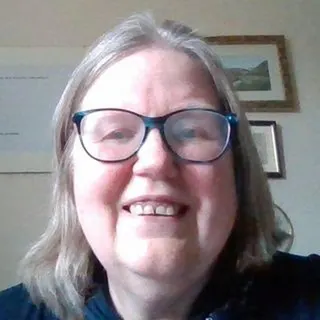
Portrait of Axenia Raulet

Axenia Raulet

MFL and Art Specialist

St Austell

£30.00 per hourDBS checkediAccepting enquiries
ArtFrenchGermanHistory of Art+1 more
  • Over 10 years' of experience in intercultural communication, art projects, and education.
  • Holds a Masters of Art in Didactics from Unibo, Bologna University, Italy.
  • Also holds a Bachelors of Art in Intercultural Mediation from La Sapienza University, Rome, Italy.
  • Currently pursuing a career as a professional artist.
  • Fluent in 8 European languages.
  • Adopts a trauma-informed approach to ensure a safe and respectful space for all students.

Axenia Raulet is a French tutor, Italian tutor and German tutor with 10+ years’ experience, a Master’s in Didactics (Unibo Bologna) and fluency in 8 European languages. She also teaches GCSE/A Level Art and History of Art with a trauma-informed approach.

Send a quick enquiry from here and the Latimer Tuition team will pass it on to Axenia.

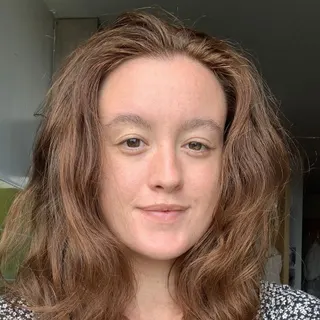
Portrait of Darcy Ind

Darcy Ind

French and Spanish Specialist

Bucknell, United Kingdom

£30.00 per hourDBS checkediAccepting enquiries
FrenchSpanishTEFL: Teaching English as a Foreign Language
  • Holds a Bachelor of Arts in Modern Languages (French, Spanish and German) from the University of Sheffield.
  • Holds over 4 years' of online tutoring experience both online, and in the classroom.
  • Darcy designs all her lesson plans from scratch to suit the individual's needs and learning goals.
  • Offers tutoring to KS2/3, GCSE, and AS/A-Level cohorts.

Darcy Ind is a French tutor and Spanish tutor with a BA in Modern Languages (University of Sheffield) and 4 years’ experience; she offers online tutoring for KS2–3, GCSE and AS/A-Level with tailored lesson plans and session reports.

Send a quick enquiry from here and the Latimer Tuition team will pass it on to Darcy.

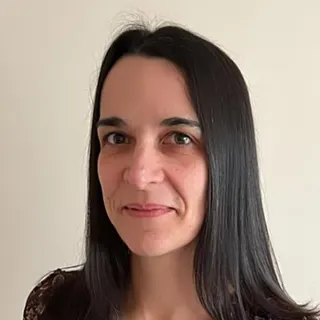
Portrait of Lucia Wood-Bonelli

Lucia Wood-Bonelli

Qualified French and Spanish Teacher

Sheffield

£35.00 per hourDBS checkediAccepting enquiriesQualified teacher
FrenchSpanish
  • Lucia is an approved examiner for Edexcel Spanish GCSE.
  • Holds a PGCE in Modern Foreign Languages with QTS from Sheffield Hallam University.
  • Holds a 2:1 in Modern Languages and Translation from the University of Leicester.
  • Holds over 1 year of online private tutoring experience.
  • Holds 3 A-Levels, and 12 GCSEs.

Lucia is a qualified Spanish teacher for GCSE and A-Level learners, and an approved Edexcel Spanish GCSE examiner with three years of teaching experience.

Send a quick enquiry from here and the Latimer Tuition team will pass it on to Lucia.

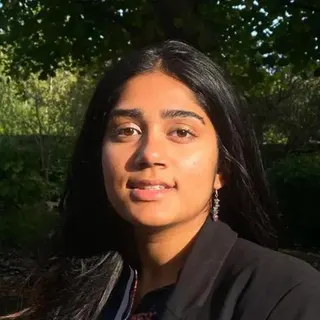
Portrait of Abeerah Zainab

Abeerah Zainab

English, Mathematics, and Science Specialist

Birmingham

£37.00 per hourDBS checkediAccepting enquiries
BiologyBusiness StudiesChemistryComputer Science+6 more
  • She is currently in her second year of Dentistry at University.
  • Experienced in tutoring GCSE and A-Level students with consistently positive feedback.
  • Holds A, A, A for Biology, Chemistry, and Mathematics at A-Level.
  • Holds grade 9s for all her subjects at GCSE level.

GCSE maths tutor and GCSE English tutor, also teaching Biology and Chemistry up to A Level; second-year Dentistry student with A grades at A Level and grade 9s at GCSE, providing exam-focused lessons with session reports and optional free homework.

Send a quick enquiry from here and the Latimer Tuition team will pass it on to Abeerah.

Portrait of Silvia Vescu

Silvia Vescu

Qualified Humanities & Business Teacher

Montrose, United Kingdom

£45.00 per hourDBS checkediAccepting enquiriesQualified teacher
Business StudiesCitizenshipEconomicsEnglish Language+13 more
  • Holds a PGCE from University College London.
  • Holds an LLB (Hons) in Law, 2:1, from King's College London, and is a qualified lawyer.
  • Currently teaches A-Level and GCSE Economics and Business, alongside Sociology, Politics, Law, English Language and English Literature.
  • Has delivered hundreds of one-to-one online lessons and uses a Socratic approach, tailored to each exam board and specification.

Silvia Vescu is an economics tutor and law tutor for GCSE/A-Level, PGCE-trained at UCL with an LLB from King’s. She offers online tutoring with Socratic, exam-board tailored 1:1 lessons plus session reports.

Send a quick enquiry from here and the Latimer Tuition team will pass it on to Silvia.

Portrait of Sara Dellapiana

Sara Dellapiana

Qualified French, Italian, and Spanish Teacher

Crewe

£32.00 per hourDBS checkediAccepting enquiriesQualified teacher
FrenchItalianSpanish
  • Holds a Postgraduate Certificate in Education (PGCE) with Qualified Teacher Status (QTS) in Modern Foreign Languages from Manchester Metropolitan University.
  • Holds a 1st (110/110 with distinction) for her Bachelors of Modern Foreign Languages Degree in Spanish and English Languages and Literature from the University of Bergamo.
  • Has over 16 years’ of experience teaching Modern Foreign Languages in UK schools from KS1/2/3, to GCSE level.
  • Sara has been teaching Italian to adults both in small classes and One-2-One for over 20 years.

Sara Dellapiana is a qualified French tutor, Spanish tutor and Italian tutor with PGCE (QTS) in MFL and 16+ years teaching KS2–GCSE in UK schools; a native Italian speaker offering tailored Italian lessons for adults and all levels.

Send a quick enquiry from here and the Latimer Tuition team will pass it on to Sara.

What can you work on in an online French lesson?

A video lesson can combine listening, speaking and a shared written example. The useful part is the correction: understanding why a sentence needs to change, then trying the pattern yourself. For example, imagine a beginner learning to say their age. This example uses the French age expression explained in the University of Texas at Austin’s French grammar guide.

  1. Start with the difficulty

    A learner translating “I am fifteen” word for word might write “Je suis quinze ans”. The English sentence uses “am”, but French expresses age with avoir, meaning “to have”.

  2. Explain and correct

    “J’ai quinze ans” means “I am fifteen”. J’ai means “I have”, quinze means “fifteen” and ans means “years”. The tutor can put the two sentences side by side, model the corrected version aloud and let the learner try it.

  3. Use the pattern independently

    Now say “I am sixteen”: “J’ai seize ans”, with seize meaning “sixteen”. Cover the model and try again. Choosing j’ai without copying shows that the learner has begun to use the pattern beyond the first sentence.

Choose French support for your starting point

The same lesson plan will not suit a first-time learner and an exam candidate. Tell the tutor what you can already do and bring one example of where you get stuck. School learners should include their qualification, exam board and exam year; include the tier if their course uses one.

  • Beginners and adult conversation

    Begin with a situation you want to handle: introducing yourself, ordering food or talking about your day. A useful task is to practise a short exchange, change one detail and answer a follow-up question. Keep English meanings beside new phrases until you can use them unaided.

  • Building school foundations

    Bring the vocabulary or grammar from class. If you recognise a word on the page but miss it in speech, work from hearing it to seeing its spelling, then use it in a short answer. If you know separate words but cannot form a sentence, practise changing one part of a model.

  • GCSE French

    For AQA GCSE French 8652, first examined in 2026 in England, preparation includes dictation in listening and reading aloud in speaking, alongside other assessed tasks. Practise hearing a short sentence, writing it, checking the sound–spelling link and retrying the missed part. Use the specification for your own board and tier.

  • A-level French

    AQA A-level French 7652 includes analysis of set texts or films and an individual research project for speaking. Move beyond retelling what happens: choose a specific detail from your studied work, explain what it suggests and connect it to the question. In a discussion, practise explaining the evidence behind a view.

Prepare for speaking, listening and shared work

Microsoft Teams is Latimer’s default lesson platform; you and the tutor can agree another option. Before the first lesson, test the setup you will actually use. Being able to hear a French sentence clearly matters more than having elaborate equipment.

  1. Check the sound and screen

    Test your microphone, speakers or headphones and connection. Check that you can hear both the tutor and any shared audio. A laptop or tablet may make it easier to view a text while speaking; if you plan to use a phone, discuss how written work will be shared.

  2. Have one useful piece of work ready

    Send the relevant exercise or agree how to show it on screen. Keep paper and a pen nearby, and check how to type French accents if you will edit a shared document. An adult beginner can bring a practical goal instead of a school worksheet.

  3. Agree support that helps you take part

    Explain if you need a larger text, written instructions, extra thinking time or shorter tasks. For pronunciation work, discuss whether seeing the tutor’s mouth helps. Agree when a transcript is useful for explanation and when to hide it for a listening attempt.

  4. Set arrangements for a child

    Agree where lessons will take place, how a parent can stay involved and how messages and work will be shared. Discuss recording before anyone records a session. Check the safeguarding information and raise any practical concerns before lessons begin.

Choose the teaching approach as well as the format

Look for experience relevant to your goal. For exams, discuss the exact board and course; for conversation, explain the situations you want to manage in French. At the free introductory meeting, ask how the tutor would approach your main difficulty and how much of a lesson you would spend speaking. The introduction is a chance to discuss fit and arrangements, rather than a full free teaching lesson.

Online lessons remove the journey and let you work on spoken and written French in the same session. Consider whether you have somewhere to speak aloud and can concentrate while using a screen. If you need physical presence to stay engaged, explain that preference: in-person or mixed arrangements depend on a nearby tutor and individual agreement.

A learner who freezes when asked a question may need time to prepare a short answer before trying an unscripted exchange. Someone who talks readily but repeats the same verb error may need a brief correction followed by another attempt. Discuss which approach fits, including whether corrections should interrupt an answer or come after it.

Make practice between lessons specific

Agree one small task that reuses what you have just learned. After the age example, that could be recalling “J’ai quinze ans” (“I am fifteen”) without looking, then listening to the phrase and repeating it. For a learner working on listening, it could be replaying a short passage, identifying the missed phrase and listening once more without the transcript.

Choose lesson frequency around the goal, available practice time and any school deadline. Avoid filling the week with new material if earlier language still needs revisiting. Agree a point to review progress using a similar but unfamiliar task: can you answer with fewer prompts, understand the changed detail or explain why your earlier sentence was wrong?

Free learning resources can provide extra listening and vocabulary practice. Bring a specific question from that work to the tutor, so paid time can focus on an explanation or response you cannot yet manage independently.

Understand the cost before booking

Tutors set their own hourly rates, shown on their profiles. Compare the rate alongside the planned lesson length and how often you expect to meet. Agree what preparation, feedback and work between sessions will involve so you know what you are choosing.

Latimer invoices for lessons after they have taken place on a pay-as-you-go basis. Ask the tutor about cancellation terms before booking. In a matching request, include your budget, online lesson preference, French goal and schedule.

Support and clarity

Frequently asked questions

Straight answers to the questions people ask most often.

Do I need a native French speaker as my tutor?

Make your learning goal the starting point. Ask about French teaching experience, clear explanations and the kind of practice you need. For an exam, check familiarity with your board and specification. Native-speaker status alone does not tell you how someone teaches or whether they know your course.

Can online tuition help with a French speaking exam?

You can rehearse spoken answers, respond to follow-up questions and get feedback through a video call. Share the exact qualification, board and tier so practice uses the right tasks. Tuition supports preparation; confirm the arrangements for the actual assessment with your school or exam centre.

How long will it take to become fluent?

There is no fixed timetable that fits every learner. Make the goal more specific first: holding a short conversation on a familiar topic is different from following fast discussion or analysing a film. Review what you can do independently and adjust the plan as your starting point, practice time and priorities become clearer.

Are free online French resources enough?

They may be enough if you can keep practising and resolve your questions yourself. A tutor becomes useful when you need a live response, an explanation of a recurring mistake or support aimed at your course. You can also use free resources between lessons and bring the parts you find difficult.

Related tutor pages

Explore related tuition options and guidance for choosing the right support.