
One-to-one geography tuition

Find an online geography tutor

Work on map skills, physical and human geography, fieldwork analysis and written answers. Find a tutor for your course and the parts you want to understand.

  • One-to-one tuition
  • Pay as you go
  • Direct tutor contact
For school or exam support, share the learner’s nation, year group, qualification, board and selected topics. The curriculum examples here concern England, with AQA GCSE and A-level details where named. For another course or personal learning, explain the material and goal you want to work on.

The form controls become available when the enquiry form has loaded.

Online Geography Tutors tuition enquiry

Tell us what you know, skip anything you’re unsure about, and add a short description if you skip both subject and level.

  1. Tutoring brief
  2. Contact details

2 questions remaining

Tutoring brief

What level is the tuition for?

Choose a level

Choose a suggestion or type your own answer. You can skip this if you’re unsure.

This form works best for one learner at one level and up to six subjects. If your circumstances are more complicated, email us at Contact@LatimerTuition.com so you can explain everything properly.

How one-to-one tuition can help

  • Making sense of map scales, diagrams and geographical data
  • Using place-specific evidence to build a clearer written answer
  • Discussing fieldwork methods and what a conclusion can support

Available tutors

Compare geography tutors

6 tutor profiles selected

Use the profiles to compare teaching approaches and relevant course experience, then discuss your online lesson goals with the tutor.

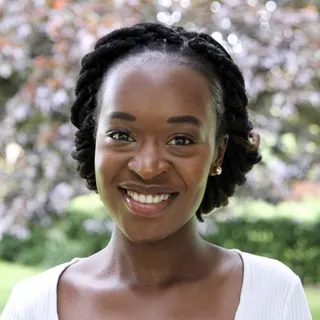
Portrait of Celine Henry

Celine Henry

5.0

Qualified Geography and Humanities Teacher

London

£30.00 per hourDBS checkediAccepting enquiriesQualified teacherHigh performing tutor
GeographyGovernment and PoliticsHistoryPolitics+1 more
  • Celine holds Qualified Teacher Status (QTS).
  • Currently working on a PhD in History, and teaching a Modern History module at the University of Birmingham.
  • Holds Bachelor of Arts in Politics History from the University of Hull.
  • Holds a Master of Science in International Development from the University of Edinburgh.
  • Regularly teaches History, Politics, and Geography to KS2, KS3, GCSE and A-Level cohorts.
  • Celine is an experienced examiner and moderator for GCSE and A-Level examination boards.

Celine is a qualified history teacher and A-Level History tutor, currently undertaking doctoral research at the University of Birmingham, with experience teaching and tutoring across school and undergraduate levels.

Send a quick enquiry from here and the Latimer Tuition team will pass it on to Celine.

Portrait of Anika Fahmida

Anika Fahmida

Mathematics, Science, and Geography Specialist

Birmingham

£30.00 per hourDBS checkediAccepting enquiries
11+ (general)BiologyChemistryGeography+3 more
  • Currently studying for her Masters of Pharmacy at the University of Brighton.
  • Holds A-Levels in Mathematics, Biology, and Chemistry.
  • Holds grade 7s (As) for Mathematics, Triple Science, and Geography (amongst others) at GCSE level.
  • Anika has professional experience tutoring KS2/3 to GCSE level cohorts.
  • Anika has received Bronze and Silver awards in the Senior Maths Challenge.

Anika Fahmida is a gcse maths tutor and maths and science tutor for KS2–GCSE, covering Maths plus Biology, Chemistry, Physics and GCSE Geography. A University of Brighton pharmacy Masters student providing patient, clear lessons with session reports and optional homework.

Send a quick enquiry from here and the Latimer Tuition team will pass it on to Anika.

Portrait of Zakariya Balogun

Zakariya Balogun

Biology, Chemistry, and Geography Specialist

Ashford

£22.00 per hourDBS checkediAccepting enquiries
BiologyChemistryGeographyMathematics
  • Currently studying Medicine (MBChB) at the University of Birmingham.
  • Holds A, A, A for Chemistry, Biology and Geography at A-Level.
  • Holds 8 A*s at GCSE level.
  • Experienced in providingOne-2-One and small group academic support.

Zakariya supports GCSE Biology, Chemistry and Geography students with calm, structured teaching that develops subject understanding, exam technique and confidence.

Send a quick enquiry from here and the Latimer Tuition team will pass it on to Zakariya.

Portrait of Erica Moran

Erica Moran

Mathematics, Science, and Geography Specialist

London, United Kingdom

£30.00 per hourDBS checkediAccepting enquiries
BiologyChemistryGeographyMathematics+1 more
  • Currently studying for her BSc in Biological Sciences at Durham University, on track for a first class degree.
  • Holds 2 years' of tutoring experience.
  • Holds A*, A, A for Geography, Biology, and Mathematics at A-Level.
  • Holds all grade 9s for Mathematics, Biology, Chemistry, Physics, and Geography at GCSE level.

Erica Moran supports learners in Mathematics, Biology, Chemistry, Physics and Geography from KS2 to A-Level, using structured, individualised lessons with optional homework and a report after each session.

Send a quick enquiry from here and the Latimer Tuition team will pass it on to Erica.

Portrait of Lois Wright

Lois Wright

Qualified Geography and History Teacher

Devizes, United Kingdom

£30.00 per hourDBS checkediAccepting enquiriesQualified teacher
GeographyHistory
  • Lois has multiple years' of experience teaching KS2/3 to GCSE cohorts in UK state schools across a variety of Humanities subjects.
  • Three years of privately tutoring Geography.
  • Holds a PGCE (Postgraduate Certificate in Education) in Secondary Geography (with Post-16 Enhancement) from Bath Spa University.
  • Holds a 2:1 in BA Geography from Swansea University.
  • Lois was awarded a scholarship from the Royal Geographical Society during her PGCE.
  • Holds A-Levels in Business Studies, Geography, and Psychology.
  • Holds 13 GCSEs (A-C).

Lois is a qualified geography tutor and history tutor with a PGCE in Secondary Geography; she teaches KS2-3 and GCSE, with 3 years’ private tutoring and EAL support. Lesson reports included; homework available.

Send a quick enquiry from here and the Latimer Tuition team will pass it on to Lois.

Portrait of Alexander Olsen

Alexander Olsen

Humanities Specialist

Southamptom, United Kingdom

£35.00 per hourDBS checkediAccepting enquiries
Business StudiesConsultancyEnglish LanguageEnglish Literature+10 more
  • Over 10 years' of experience in tutoring students from GCSE to A Level.
  • Holds a Master of Science in Education Studies from the Open University.
  • Holds a Postgraduate Certificate in Professional Studies in Education from the Open University.
  • Holds a Bachelor of Science in Humanities from the Open University.
  • Holds a Master of Arts in Political Science and International Relations from Kings College, University of Aberdeen.
  • Currently employed as a Training Needs Analyst for a FTSE 100 global engineering corporation.
  • Average grade boundary shift of +2 with over 90% of students achieving 7-9 at GCSE and 85% A and A* at A Level.

Politics tutor and history tutor with 10+ years’ experience from GCSE to A Level and university; holds an MSc in Education Studies (Open University). Students typically improve by 2 grades, with 85% achieving A and A* at A Level.

Send a quick enquiry from here and the Latimer Tuition team will pass it on to Alexander.

Start with your course and your sticking point

Bring a recent question or piece of marked work. It helps to distinguish a gap in geographical knowledge from difficulty reading the resource or explaining an answer. The examples below show how the demands change through school; use your own course materials to choose the right starting point.

  • KS3 geography in England

    Build confidence with physical and human processes, map scale, grid references and fieldwork data. A useful lesson might begin with locating a feature on a map, then explaining what the map tells you about that place. Share the school topic list so practice connects with classroom work.

  • GCSE geography

    Match the tutor to your board and selected topics. For example, AQA GCSE Geography 8035 includes map measurement, graph interpretation and arguments supported by evidence. Practise choosing the relevant figures or place detail, then explaining how they answer the question.

  • AS and A-level geography in England

    The work develops more complex concepts, models and theories, alongside greater independence in choosing and evaluating methods. A useful discussion goes beyond spotting a pattern to asking how well a model explains it and where the evidence is limited. For AQA A-level, keep assessed investigation support within the boundaries explained below.

Work on the geography behind the answer

A map calculation or well-structured paragraph still needs accurate subject knowledge. These AQA GCSE Geography 8035 examples show useful areas to discuss with a tutor; the school’s chosen topics and case studies determine which apply.

  • Physical geography

    Natural hazards and ecosystems sit alongside a choice of two UK landscape topics: coasts, rivers or glaciation. If you study rivers, bring a hydrograph showing rainfall and river discharge, meaning the volume of water flowing past a point each second. A useful task is to identify what each axis measures before describing how the two patterns relate.

  • Human geography

    Urban issues, economic development and resource management involve particular places and case studies. Start with a claim such as a change having benefited residents, then identify which group, the place-specific evidence and any limitations. This gives a tutor something more precise to discuss than a list of memorised facts.

A map-scale mistake you can work through online

Here is an illustrative task for KS3 map practice or GCSE geographical skills: on a correctly scaled 1:25,000 paper map, two points are 4 cm apart in a straight line. How far apart are they on the ground?

A learner might multiply 4 by 25,000 and write “100,000 metres”. The multiplication is right, but the units have changed too soon. The scale compares the same unit on the map and on the ground:

  • 4 × 25,000 = 100,000 cm on the ground.
  • Divide by 100 to get 1,000 metres.
  • Divide by 1,000 to get 1 kilometre.

A clearer answer is: “The straight-line distance is 1 km.” If the question asks for distance along a winding path, follow the path’s bends when measuring; joining the endpoints answers a different question.

There is an extra check in an online lesson. Zooming a map image can change its physical size on screen, so a ruler held against the screen may no longer match the printed ratio. Use a scale bar that stays with the map and resizes in the same proportions, or use a correctly scaled printout.

For a follow-up, try 6 cm at the same scale: 1.5 km. Explain the conversion aloud and state which distance you measured. That checks whether the method transfers to a new question.

Turn a vague observation into an answer with evidence

Consider this invented pedestrian-count exercise, using equal ten-minute counts at three sites:

Distance from a stationPeople counted in ten minutes
0 m120
200 m80
400 m40

“There are fewer people farther away” identifies the pattern but leaves out its size. A more precise description is: “Counts fall from 120 people at the station to 40 at 400 m away, a decrease of 80 people per ten-minute count.”

Now separate description from explanation. “The station caused the difference” goes further than these figures support. Other shops or destinations, the time of day and the sampling method could matter. A better conclusion is: “These samples show lower counts at sites farther from the station, but they do not establish why.”

AQA’s GCSE fieldwork guidance distinguishes describing data, adding numerical precision and explaining findings. In an online practice lesson, put the table beside your answer and identify which figures support each sentence. For further practice, suggest one way to investigate the uncertainty: repeat equal-duration counts at the same sites at other times, then compare the patterns. Explain that this would test whether the first pattern persists; it would not, by itself, prove the cause.

At A-level, develop this habit by weighing how the method, alternative explanations and the limits of the sample affect the strength of your conclusion.

Set up a lesson around maps, diagrams and written work

Microsoft Teams is Latimer’s default lesson platform; you and the tutor can agree another option. Teams supports sharing a screen or window. Before paid lessons begin, test a real geography resource on the device you expect to use.

  1. Make the resource readable

    Open a map or graph and check that you can read its key, labels and axes while hearing the tutor clearly. A larger screen or a paper copy may be useful. Agree any software or printing needs before buying equipment.

  2. Show your own working

    Agree whether to share a document, hold written work to the camera or send a clear image. Keep the original question with your answer so the tutor can see what you were asked to do. Check how you will reconnect if the call drops.

  3. Adjust the presentation

    Ask for a larger extract, one step at a time or written prompts if those would help. Teams offers live captions; test the options on your account and device. Leave space to explain your reasoning, rather than only watching the tutor work.

Choose a tutor and agree what progress will look like

Latimer offers a free introductory meeting to discuss goals, teaching approach and arrangements. Use it for that conversation; it is not normally a full teaching lesson. A specific geography difficulty gives you a useful way to discuss fit.

  1. Discuss relevant experience

    Check the tutor’s experience with your course, board and topics. For example, explain whether you need help understanding river processes, interpreting a graph or selecting evidence for an extended answer. If you follow another qualification or study for personal interest, share the actual materials and goal.

  2. Agree a manageable plan

    Choose a priority, the time available before any assessment and what you can practise between lessons. Confirm how homework and feedback would be arranged, along with lesson length and scheduling. These details depend on the agreement with the tutor.

  3. Check independent work

    Keep an initial attempt and agree a later task testing the same skill. For maps, look for correct units and the right distance method; for data, look for relevant figures and a justified conclusion. Discuss any remaining difficulty and adjust the next task.

  4. Agree family arrangements

    If the learner is a child, discuss parent involvement, supervision and how concerns will be raised. England’s guidance for families using tuition recommends meeting the provider and asking about child-protection and complaints arrangements. Read the service’s safeguarding information as part of that discussion.

Tell us what you want to work on

Share the learner’s course or goal, the geography topic causing difficulty, your budget and suitable times. State that you want online lessons. Submitting a matching request is free.

Support and clarity

Frequently asked questions

Straight answers to the questions people ask most often.

How much does online geography tuition cost?

Tutors set their own rates, so check the rate on the tutor’s profile and confirm the lesson arrangements before booking. Latimer uses pay-as-you-go billing. When comparing costs, ask about lesson length and how any work between lessons would be handled, so you know what you are agreeing to.

How often should I have a geography lesson?

There is no single timetable to prescribe before knowing the learner’s needs. One topic gap and preparation across several exam topics call for different plans. Agree a frequency that fits the goal, the assessment date if relevant, your budget and the time available for practice. Set a review point with the tutor and use independent work to judge what to change.

Can online lessons replace geography fieldwork?

They can support practice with enquiry methods, data and evaluation, but do not replace required fieldwork. For AQA GCSE Geography 8035, students complete two enquiries using primary data, with fieldwork outside the classroom and school grounds on at least two occasions in contrasting environments, covering physical and human geography. Confirm your own course requirements and arrangements with the school or exam centre.

Can a tutor help with an A-level geography NEA?

For AQA A-level Geography 7037, the non-exam assessment (NEA) is an independent investigation. General methods and separate practice exercises can be useful learning topics, but the student must develop their own question and analysis. Ask the supervising teacher to confirm the permitted support before working with a tutor on assessed material. Assistance beyond permitted general guidance must be recorded and considered in marking. A tutor should not choose the investigation title, supply its answers or rewrite the assessed draft.

What if reading maps on screen or speaking on a call is difficult?

Describe the particular difficulty before starting: small labels, switching between a map and an answer, unfamiliar vocabulary or time needed to respond. Ask the tutor to discuss adjustments such as a readable copy in advance, short written prompts, pauses or caption options. If the learner has special educational needs or a disability, discuss the tutor’s relevant experience and the support required; agree and test the arrangement with that tutor.

Can I combine online and in-person geography lessons?

Latimer is built around online one-to-one tuition. An in-person arrangement would need to be agreed individually with the tutor. If that matters to you, explain which activity you want to do in person and where it would take place before deciding whether the arrangement fits.

Related tutor pages

Explore related tuition options and guidance for choosing the right support.