French tuition

Find a French tutor for school, exams or conversation

One-to-one online French tuition for beginners, school learners and adults. Choose support for understanding spoken French, building accurate sentences or preparing for your course.

  • One-to-one tuition
  • Pay as you go
  • Direct tutor contact
Choose a tutor around the French you need to use: a first conversation, a school speaking task, an analytical essay or everyday communication. Start with the learner’s current work and agree the next step.

The form controls become available when the enquiry form has loaded.

French tuition enquiry

Tell us what you know, skip anything you’re unsure about, and add a short description if you skip both subject and level.

  1. Tutoring brief
  2. Contact details

2 questions remaining

Tutoring brief

What level is the tuition for?

Choose a level

Choose a suggestion or type your own answer. You can skip this if you’re unsure.

This form works best for one learner at one level and up to six subjects. If your circumstances are more complicated, email us at Contact@LatimerTuition.com so you can explain everything properly.

How one-to-one tuition can help

  • Linking French sounds and spellings so familiar words are easier to recognise
  • Building accurate sentences and adapting them when the person or time changes
  • Practising spoken replies, course tasks or real-life exchanges around the learner’s goal

Available tutors

Compare French tutor profiles

6 tutor profiles selected

Look for experience with the learner’s stage and goal. Compare teaching approach and the hourly rate, then discuss the support you need.

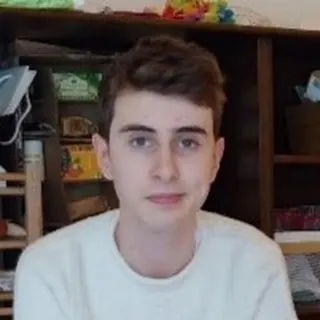
Portrait of Axenia Raulet

Axenia Raulet

MFL and Art Specialist

St Austell

£30.00 per hourDBS checkediAccepting enquiries
ArtFrenchGermanHistory of Art+1 more
  • Over 10 years' of experience in intercultural communication, art projects, and education.
  • Holds a Masters of Art in Didactics from Unibo, Bologna University, Italy.
  • Also holds a Bachelors of Art in Intercultural Mediation from La Sapienza University, Rome, Italy.
  • Currently pursuing a career as a professional artist.
  • Fluent in 8 European languages.
  • Adopts a trauma-informed approach to ensure a safe and respectful space for all students.

Axenia Raulet is a French tutor, Italian tutor and German tutor with 10+ years’ experience, a Master’s in Didactics (Unibo Bologna) and fluency in 8 European languages. She also teaches GCSE/A Level Art and History of Art with a trauma-informed approach.

Send a quick enquiry from here and the Latimer Tuition team will pass it on to Axenia.

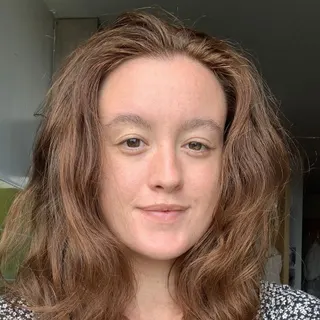
Portrait of Darcy Ind

Darcy Ind

French and Spanish Specialist

Bucknell, United Kingdom

£30.00 per hourDBS checkediAccepting enquiries
FrenchSpanishTEFL: Teaching English as a Foreign Language
  • Holds a Bachelor of Arts in Modern Languages (French, Spanish and German) from the University of Sheffield.
  • Holds over 4 years' of online tutoring experience both online, and in the classroom.
  • Darcy designs all her lesson plans from scratch to suit the individual's needs and learning goals.
  • Offers tutoring to KS2/3, GCSE, and AS/A-Level cohorts.

Darcy Ind is a French tutor and Spanish tutor with a BA in Modern Languages (University of Sheffield) and 4 years’ experience; she offers online tutoring for KS2–3, GCSE and AS/A-Level with tailored lesson plans and session reports.

Send a quick enquiry from here and the Latimer Tuition team will pass it on to Darcy.

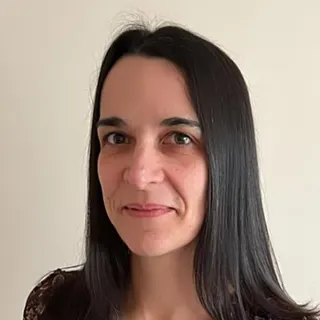
Portrait of Lucia Wood-Bonelli

Lucia Wood-Bonelli

Qualified French and Spanish Teacher

Sheffield

£35.00 per hourDBS checkediAccepting enquiriesQualified teacher
FrenchSpanish
  • Lucia is an approved examiner for Edexcel Spanish GCSE.
  • Holds a PGCE in Modern Foreign Languages with QTS from Sheffield Hallam University.
  • Holds a 2:1 in Modern Languages and Translation from the University of Leicester.
  • Holds over 1 year of online private tutoring experience.
  • Holds 3 A-Levels, and 12 GCSEs.

Lucia is a qualified Spanish teacher for GCSE and A-Level learners, and an approved Edexcel Spanish GCSE examiner with three years of teaching experience.

Send a quick enquiry from here and the Latimer Tuition team will pass it on to Lucia.

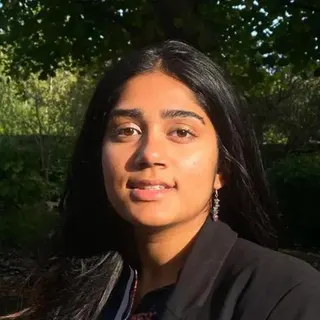
Portrait of Abeerah Zainab

Abeerah Zainab

English, Mathematics, and Science Specialist

Birmingham

£37.00 per hourDBS checkediAccepting enquiries
BiologyBusiness StudiesChemistryComputer Science+6 more
  • She is currently in her second year of Dentistry at University.
  • Experienced in tutoring GCSE and A-Level students with consistently positive feedback.
  • Holds A, A, A for Biology, Chemistry, and Mathematics at A-Level.
  • Holds grade 9s for all her subjects at GCSE level.

GCSE maths tutor and GCSE English tutor, also teaching Biology and Chemistry up to A Level; second-year Dentistry student with A grades at A Level and grade 9s at GCSE, providing exam-focused lessons with session reports and optional free homework.

Send a quick enquiry from here and the Latimer Tuition team will pass it on to Abeerah.

Portrait of Silvia Vescu

Silvia Vescu

Qualified Humanities & Business Teacher

Montrose, United Kingdom

£45.00 per hourDBS checkediAccepting enquiriesQualified teacher
Business StudiesCitizenshipEconomicsEnglish Language+13 more
  • Holds a PGCE from University College London.
  • Holds an LLB (Hons) in Law, 2:1, from King's College London, and is a qualified lawyer.
  • Currently teaches A-Level and GCSE Economics and Business, alongside Sociology, Politics, Law, English Language and English Literature.
  • Has delivered hundreds of one-to-one online lessons and uses a Socratic approach, tailored to each exam board and specification.

Silvia Vescu is an economics tutor and law tutor for GCSE/A-Level, PGCE-trained at UCL with an LLB from King’s. She offers online tutoring with Socratic, exam-board tailored 1:1 lessons plus session reports.

Send a quick enquiry from here and the Latimer Tuition team will pass it on to Silvia.

Portrait of Sara Dellapiana

Sara Dellapiana

Qualified French, Italian, and Spanish Teacher

Crewe

£32.00 per hourDBS checkediAccepting enquiriesQualified teacher
FrenchItalianSpanish
  • Holds a Postgraduate Certificate in Education (PGCE) with Qualified Teacher Status (QTS) in Modern Foreign Languages from Manchester Metropolitan University.
  • Holds a 1st (110/110 with distinction) for her Bachelors of Modern Foreign Languages Degree in Spanish and English Languages and Literature from the University of Bergamo.
  • Has over 16 years’ of experience teaching Modern Foreign Languages in UK schools from KS1/2/3, to GCSE level.
  • Sara has been teaching Italian to adults both in small classes and One-2-One for over 20 years.

Sara Dellapiana is a qualified French tutor, Spanish tutor and Italian tutor with PGCE (QTS) in MFL and 16+ years teaching KS2–GCSE in UK schools; a native Italian speaker offering tailored Italian lessons for adults and all levels.

Send a quick enquiry from here and the Latimer Tuition team will pass it on to Sara.

What do you want to do with French?

Start with what the learner can already understand and say, and what they need French for. A school pupil who knows vocabulary but cannot form a sentence needs different work from an adult preparing for travel or a student analysing a film. Use the learning goal to choose relevant teaching experience.

Beginners and early secondary learners
Build links between sounds, spellings and meanings, then use familiar words in short questions and answers. In England, KS3 language study develops listening, speaking, reading and writing, including talking about present, past and future events. Bring the school topic list if there is one.
GCSE French
Name the awarding body, examination year and Foundation or Higher tier. Choose support around the actual difficulty: recognising spoken words, reading aloud, translation, accurate writing or answering an unexpected speaking question.
A-level French
Bring the course specification and titles of the works being studied. Look for teaching that connects accurate French with an argument, a close reading of a passage or scene, and discussion of researched ideas.
International and other courses
Send the exact qualification and syllabus. Cambridge IGCSE French 0520 has separate syllabuses for examinations in 2025–2027 and 2028–2030; select by examination year. For another international course, or a qualification in Scotland, Wales or Northern Ireland, give its title and awarding body.
Adults, returners and conversation
Set a practical goal: follow a reply at a ticket counter, talk about your weekend or take part in a work conversation. Describe the setting and the French you already use, even if your speaking, reading and writing are at different stages.

Build a sentence you can change for yourself

Here is a short practice example for a learner beginning past-tense work. Je joue au tennis can mean “I play tennis” or “I am playing tennis”, depending on the context.

Now the task is to describe a completed event yesterday using the passé composé, a French past tense. Adding hier (“yesterday”) alone leaves the verb in the present. The response for this task is Hier, j’ai joué au tennis: “Yesterday I played tennis.”

With jouer (“to play”), use ai, the “I” form of avoir, as the helping verb, followed by joué, the past participle. For a regular -er verb, that participle ends in . Both parts matter: j’ai joué, rather than je joué.

Try changing the person next: Hier, nous avons joué au tennis means “Yesterday we played tennis”. Nous means “we”, so the helping verb becomes avons; joué stays the same here. Explaining that change and using it without copying gives the tutor something specific to check.

Why a familiar spoken word can be hard to spell

Compare je joue (“I play”), tu joues (“you play”) and ils jouent (“they play”). The verb endings -e, -es and -ent are silent here: hearing the verb alone will not tell you which ending to write. The subject changes, so the whole phrases are different.

A useful practice task is to listen for who is doing the action, say the meaning, then write the matching verb form. Try the same pattern with parler, “to speak”: je parle (“I speak”), tu parles (“you speak”) and ils parlent (“they speak”). Keep the written forms visible first, then cover them and try again. This separates recognising the sound from choosing the spelling.

Match exam practice to the course

The school assessment examples here are for England and name AQA where its tasks are described. England’s revised French GCSE was first taught from September 2024 and first examined in summer 2026. Check the specification before reusing older practice material.

  • GCSE: connect listening, pronunciation and writing

    AQA GCSE French 8652 includes dictation and translation. Speaking combines a role-play, reading aloud with unprepared questions, and a photo task with conversation. A learner may need to hear a phrase, write it accurately and then respond aloud using similar language. Higher tier requires greater complexity than Foundation, so select practice for the learner’s tier.

  • A level: explain what the evidence shows

    AQA A-level French 7652 requires analytical writing about one text and one film, or two texts. Its speaking assessment includes a theme discussion and an individual research project. For writing, practise moving from a detail to an interpretation. In an invented scene, a character promises to help a friend but leaves when a group arrives. “He leaves” retells the action; “His departure suggests that fitting in matters more to him than keeping the promise” explains a possible meaning and points to the contrast. Apply that reasoning to a passage or scene from the learner’s actual set work, checking whether the evidence supports the interpretation.

Adult French: practise the reply as well as the request

A useful conversation goal is to handle what the other person says next. Try this short practice exchange:

  • Je voudrais un billet pour Lyon. — “I would like a ticket to Lyon.”
  • Un aller simple ou un aller-retour ? — “Single or return?”
  • Un aller-retour, s’il vous plaît. — “A return, please.”

A learner may know the opening sentence but get stuck at the choice. Un aller simple is a single ticket; un aller-retour is a return. Practise recognising those two meanings before answering. Then change the goal: Un aller simple, s’il vous plaît means “A single, please”. The response now follows the intended journey instead of repeating a memorised line.

For work or family conversation, choose an equally concrete situation and rehearse both sides. If you are returning to French, start with something you can already discuss, then identify the missing words or forms that stop you continuing.

Choose a tutor and agree a useful starting point

Use the profile to check relevant teaching experience and qualifications, then discuss the learner’s actual work. Latimer tutors offer a free introductory meeting to talk about goals, approach and arrangements before paid lessons.

  1. Describe the difficulty precisely

    Bring a recent piece of writing, a marked question or an example of a conversation that felt difficult. “I know these words on paper but miss them in a recording” gives a clearer starting point than “I am bad at French”. Include the course, deadline and any feedback from school.

  2. Discuss how teaching will respond

    For a beginner, discuss how new words will become usable sentences. For an exam learner, name the board and the assessed task. For an adult, describe the situations to practise. Explain any helpful adjustments, such as time to rehearse an answer, larger text or written instructions alongside spoken French.

  3. Agree the first lesson focus

    A useful opening assessment could combine a short spoken answer, a few written sentences and a listening item suited to the learner. Agree which difficulty to tackle first and what the learner should be able to do afterwards. Ask how feedback and any practice between lessons will work.

Make practice manageable and progress visible

Agree a lesson rhythm around the learner’s goal, workload, budget and time to practise. There is no fixed number of lessons that can establish when an individual will become fluent or reach a grade.

Keep between-lesson work small enough to complete. For example, revisit a few previously learned verb forms on different days, use each in a sentence, and check the correction afterwards. For school language learning, Ofsted’s languages review supports spaced practice and recalling earlier learning. It does not prescribe a private-tuition schedule.

At an agreed review point, try a fresh task of similar difficulty: write about a different day, answer a new follow-up question or understand a short recording without its transcript. Compare what the learner can do independently and which prompts they still need. If too much new language is overwhelming, reduce it and practise one pattern before combining it with another.

Costs and online lesson arrangements

Compare the practical arrangements alongside the teaching. A sustainable schedule and a clear focus help you decide what fits the learner’s time and budget.

For remote lessons, compare online French tutors and discuss speaking practice and feedback on written work.

  • Tutor rates and payment

    Tutors set their own hourly rates, shown on their profiles. Latimer’s standard billing is pay as you go. Before booking, agree the lesson length, frequency and any separate resource costs, and check the cancellation and rescheduling terms for the arrangement.

  • Online French lessons

    Latimer is online-first, with one-to-one lessons. Microsoft Teams is the default platform, although you and the tutor can agree another. For speaking and listening work, check the microphone and audio together; have the reading or writing task ready to share.

  • In-person requests

    If you want lessons near you, state the location when enquiring. In-person tuition needs an individual agreement with the tutor.

Tell us what you want French to help you do

Share the learner’s starting point, school course or practical goal, the main difficulty and suitable lesson times. Add a budget and deadline if you have them. A tutor-matching request is free.

Support and clarity

Frequently asked questions

Straight answers to the questions people ask most often.

Can I start French tuition as a complete beginner?

Yes. Say that you are starting from scratch and describe what you want to use French for. An initial focus could be recognising a few useful spoken phrases, understanding their meanings and making a short response. Ask for English explanations where helpful and a manageable amount of new language.

Can I help my child if I do not speak French?

Ask for the practice instructions and the aim of the task in English. You can help your child find a quiet time, play an assigned recording and explain what a sentence means without judging the accent yourself. Leave detailed language correction to the tutor and share any difficulties your child reports.

Should I choose a native speaker or a qualified teacher?

Start with the teaching needed. For exam work, look for experience of the course, tasks and chosen texts or films. For a beginner, discuss how the tutor explains a new pattern and checks understanding. A native-speaker label alone does not show how someone teaches; relevant qualifications are one part of the profile to consider.

Can free resources or an app replace a French tutor?

You may be able to practise vocabulary or follow a structured course independently. Consider tuition when you need a person to explain why an answer is wrong, listen to your spoken French or adapt a conversation to your reply. Bring an example from the resource you use so that paid lesson time addresses the difficulty you cannot resolve alone.

Can lessons focus on school homework?

Yes, homework can provide a starting point for discussing the support needed. Bring the instructions and your own attempt. A useful approach is to explain one error, practise a similar sentence and then return to the original task independently. Agree with the tutor how homework support will fit alongside gaps in earlier learning.

What if an exam is close or a mock result was disappointing?

Send the exam date, board, tier where relevant, and marked work when enquiring. Prioritise specific errors and assessed tasks instead of trying to relearn the whole course at once. Agree what can reasonably be covered in the time available and how to use practice between lessons; a predicted improvement should not be treated as a promised grade.

Further information

Useful links and resources

Related tutor pages

Explore related tuition options and guidance for choosing the right support.